-
E-mail
157213166@qq.com
-
Phone
18019769925
-
Address
578 Xiangshi Road, Kunshan City
Shanghai Yongcheng Experimental Instrument Co., Ltd
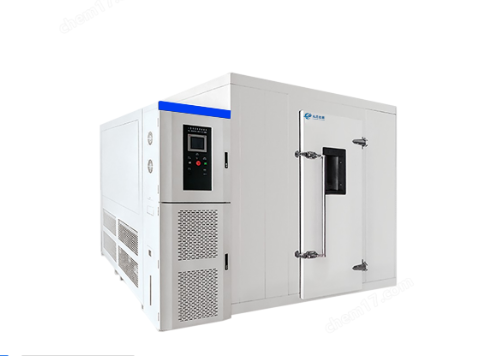
Long term stability testing chamber for drugs: ushering in a new era of drug stability testing
Date: 2025-07-24Read: 0
Traditional stability testing methods are often time-consuming, inefficient, and difficult to simulate complex environmental conditions. The emergence of long-term stability testing chambers for drugs has brought revolutionary changes to drug stability testing and opened up a new era of drug stability testing.
1、 Accurately simulate environmental conditions
Capable of accurately simulating various environmental conditions that drugs may encounter during actual storage and use. It can precisely control parameters such as temperature, humidity, and light intensity according to different testing requirements. For example, the test chamber can simulate tropical climate conditions with high temperature and humidity, as well as cold and dry climate conditions with low temperature, and even simulate changes in light intensity between day and night. This precise environmental simulation capability makes drug stability testing more closely related to actual usage scenarios, providing a more reliable basis for drug quality assessment.
2、 Efficient testing and data recording
Not only can it efficiently complete stability testing, but it can also record data in real-time during the testing process. Test chambers are usually equipped with advanced control systems and data acquisition systems, which can automatically record changes in parameters such as temperature, humidity, and light, and generate detailed data reports. These data reports can help R&D personnel and quality control personnel timely understand the stability changes of drugs under different environmental conditions, thereby optimizing the formulation and packaging design of drugs and extending their shelf life.
3、 Intelligent and Automated Operations
Intelligent design makes operation more convenient and efficient. The device is equipped with multiple preset programs, and users only need to select the corresponding program according to their testing needs. The test box can automatically complete the testing task. At the same time, the test chamber also has an automatic alarm function, which can issue an alarm in a timely manner when there are abnormalities in the testing environment, reminding operators to take measures. This intelligent and automated operation not only reduces manual intervention and operational errors, but also improves the stability and repeatability of testing.
4、 Widely applicable fields
Suitable for stability testing of various drugs, including chemical drugs, biological products, traditional Chinese medicine preparations, etc. In the development of chemical drugs, test chambers can help researchers evaluate the chemical stability of drugs under different environmental conditions, optimize the synthesis process and formulation of drugs. In the production of biological products, the test chamber can simulate the storage and transportation environment of biological products, ensuring their activity and safety. In the research of traditional Chinese medicine preparations, test chambers can be used to evaluate the stability of traditional Chinese medicine preparations and provide technical support for the modernization of traditional Chinese medicine production.
5、 Future Development Trends
With the continuous advancement of technology, drug stability testing chambers will develop towards higher precision, intelligence, and environmental friendliness. In the future, test chambers will be able to simulate complex environmental conditions more accurately, such as dynamic temperature and humidity changes, and multi factor coupled environments. At the same time, the intelligent control system will be able to achieve remote monitoring and data analysis, making it convenient for users to stay informed of testing progress anytime and anywhere. In addition, the test chamber will also pay more attention to environmentally friendly design, reducing energy consumption and waste emissions.
The long-term stability testing chamber for drugs is becoming a device in the field of drug stability testing due to its advantages of precise simulation of environmental conditions, efficient testing and data recording, intelligent and automated operation, etc. It can not only significantly improve testing efficiency and accuracy, but also provide strong support for drug development and production, ushering in a new era of drug stability testing.