-
E-mail
312467011@qq.com
-
Phone
13386116000
-
Address
No. 124, Group 1, Wangjiawei Baqiao, Zhelin Town, Fengxian District, Shanghai
Shanghai Yingpai Weighing Instrument Co., Ltd
Explosion proof electronic truck scale vs ordinary weighing scale: differences and selection suggestions
Date: 2025-10-30Read: 43
1、 The core difference between explosion-proof electronic truck scales and ordinary weighing scales
1. Definition and Classification
-Explosion proof electronic truck scale: specially designed for explosive environments, certified for explosion-proof (such as Ex certification), equipped with core components such as explosion-proof sensors and explosion-proof junction boxes. The whole machine can be placed in flammable and explosive hazardous areas (such as chemical, oil and gas storage and transportation, mining, etc.).
-Ordinary weighing scale: a universal weighing device with a small range (commonly 1T-20T), mainly used in non hazardous environments such as factory workshops and logistics centers, weighing light goods or small vehicles.
2. Key performance comparison
3. Differences in applicable scenarios
-Explosion proof electronic truck scale:
(1) High risk industries: places with explosive substances such as chemical, petroleum, natural gas, and coal mines.
(2) Special requirements: Lightning protection, waterproofing, anti-corrosion, and remote monitoring and automated operation functions (such as unmanned license plate recognition) are required.
-Ordinary weighing scale:
(1) Conventional scenarios: non hazardous environments such as factory interiors, logistics centers, and agricultural product purchasing stations.
(2) Weighing objects: small trucks, forklifts, palletized goods, etc.
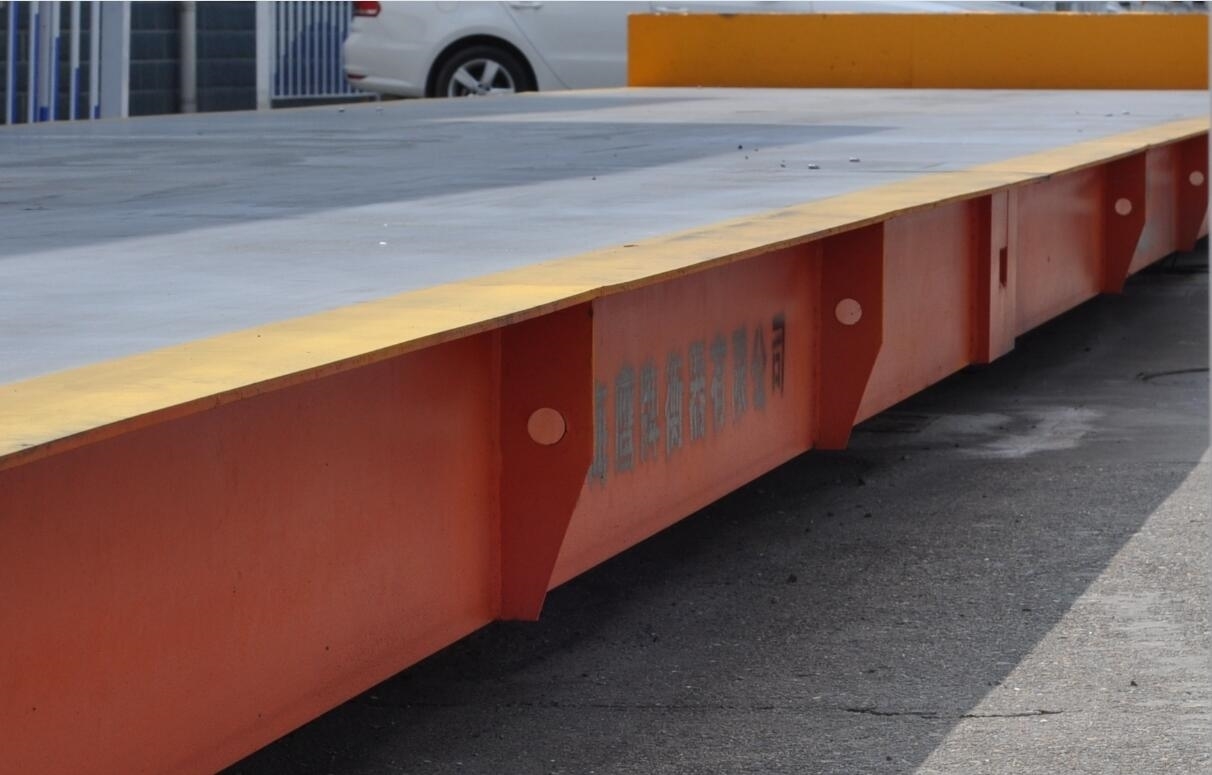
2、 Selection suggestion: How to choose suitable equipment?
1. Clearly define the usage scenario and hazard level
(1) Explosion proof requirement: If there are explosive gases or dust (such as methane, hydrogen, coal dust) in the usage environment, an explosion-proof electronic truck scale must be selected and the explosion-proof level (such as Ex d II BT4) must be confirmed.
(2) Ordinary scenario: When there is no risk of explosion, ordinary weighing scales can meet the demand and have lower costs.
2. Determine the range and table size
-Range selection:
(1) Explosion proof electronic truck scale: Select based on the maximum weight of the weighed vehicle plus a safety margin of 20% -30% (for trucks weighing over 100T, choose a range of 120T-150T).
(2) Ordinary weighing scale: Select based on the maximum daily weighing demand plus 10% margin (for goods weighing over 10T, choose a range of 12T-15T).
-Table size:
(1) Explosion proof electronic truck scale: The width is 0.5m-1m wider than the wheelbase of the vehicle, and the length is 1.5m-2m longer than the wheelbase (such as selecting 3m × 16m for semi-trailer).
(2) Ordinary weighing scales: Common sizes are 2m × 3m and 3m × 6m, and customized sizes need to be confirmed in advance.
3. Focus on core functionality and scalability
-Explosion proof electronic truck scale:
(1) Necessary functions: explosion-proof certification, corrosion-resistant materials, remote monitoring interface.
(2) Optional features: unmanned system, license plate recognition, data cloud transmission (suitable for high-frequency usage scenarios).
-Ordinary weighing scale:
(1) Basic functions: high-precision sensor, stable display.
(2) Optional features: printer, large screen display (suitable for warehouse management).
4. Material and structural durability
-Explosion proof electronic truck scale: Stainless steel or explosion-proof alloy should be preferred, and the structure should be sealed to prevent dust and water (such as U-shaped plate reinforcement beams, with a lifespan of 6-10 years).
-Ordinary weighing scale: Carbon steel structure is sufficient, with a lifespan of 5-8 years and lower cost.
5. Budget and Brand Selection
1. Explosion proof electronic truck scale: The price is relatively high (about 1.5-2 times that of a regular weighing scale), and it is necessary to choose a brand to ensure explosion-proof certification and after-sales service.
2. Ordinary weighing scales: cost-effectiveness priority, domestic brands (such as Shanghai Yaohua and Hangzhou Weighing) can meet the demand.