-
E-mail
design@sealtex.cn
-
Phone
18019714807
-
Address
502, Building 23, Baoshi Garden, No. 487 Tianlin Road, Xuhui District, Shanghai (200233)
Shanghai Yikesuotuo Sealing Materials Co., Ltd
The importance of gasket relaxation and torque in bolted flange joints
Date: 2025-08-29Read: 48
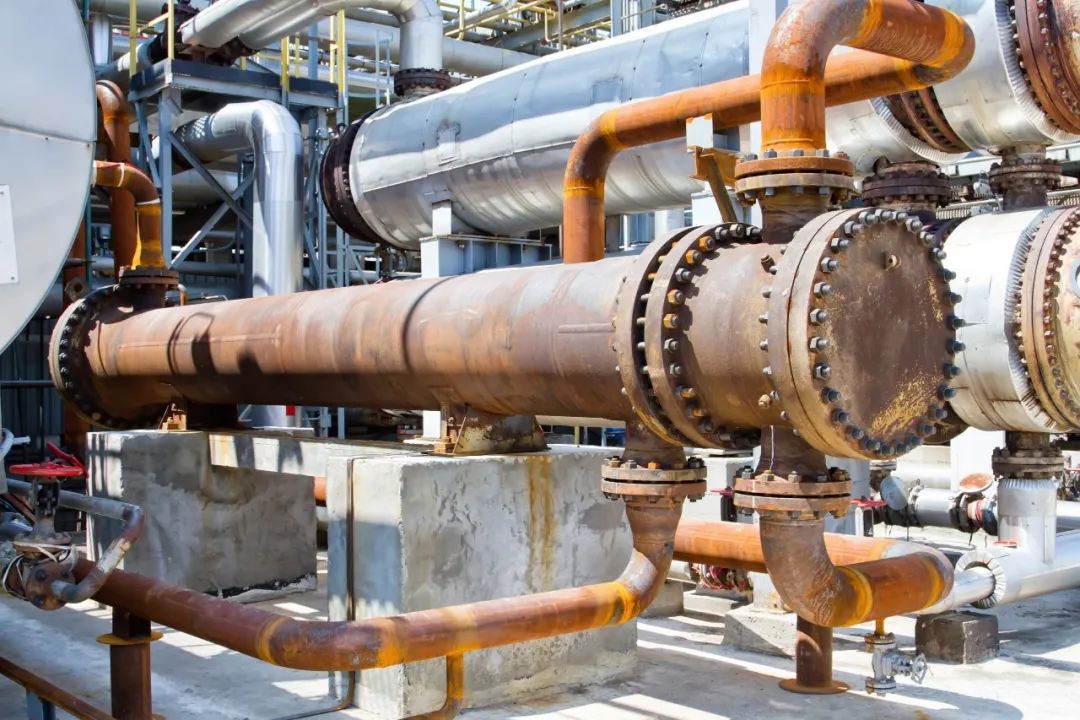
Bolt flange connection component(BFJA)As a critical pressure boundary connection in pipelines, pressure vessels, and heat exchangers. The reliability of these connections depends not only on engineering design, but also on the quality of material selection, assembly, and maintenance. The looseness of gaskets and bolts is a key factor affecting reliability. If not properly managed, looseness can lead to a decrease in sealing performance and long-term damage to connection integrity. To enhance the bolted flange connection components(BFJA)To ensure reliability, it is necessary to have a deep understanding of the behavior characteristics of gasket materials under stress, the changes in bolt stress over time, and when to implement a re tightening procedure.
When does relaxation occur?
Sheet gasket (e.g. turning PTFE)[PTFE])Relaxation usually occurs at room temperature. However, semi metal gaskets (such as metal wrap gaskets)[SWG])Low sensitivity to gasket relaxation. Although semi metallic gaskets are often attributed to gasket relaxation, when the bolt temperature rises to about500°F(260°C)When the gasket becomes loose, it reduces the stress on the gasket.
Key points for selecting gasket materials
For polymer based gaskets, especially those made of polytetrafluoroethylene(PTFE)The mechanical properties of the produced sealing gasket under stress conditions may vary depending on the material type and processing quality. Native to turning or moldingPTFEHas excellent chemical resistance, but may have issues with low mechanical strength and significant creep under stress. This leads to greater relaxation and sealing stress loss of the gasket over time. In contrast, modified polytetrafluoroethylene(rPTFE)And expanded polytetrafluoroethylene(ePTFE)By using higher quality resins and engineered microstructures, creep is significantly reduced and strength is improved.rPTFEInorganic fillers such as hollow glass microspheres, barium sulfate, and silica can also be added to enhance specific properties. These materials typically perform better in flange joints and have practical value in critical applications that require dimensional stability. When higher compression strength is required, semi metal gaskets (such as metal wrap gaskets and metal tooth shaped gaskets) can provide better load holding capacity and minimal deformation under dynamic conditions.
TEADITTeddy can provide expanded PTFEePTFE 24SHGlass microbeads modified PTFETF1570Barium sulfate modified tetrafluoroethyleneTF1580Silicon dioxide modified tetrafluoroethyleneTF1590.

Choose gasket material
Due to differences in material properties, the selection of suitable gasket materials must be based on specific application requirements, including:
* Working temperature and pressure
* chemical compatibility
* Expected flange movement, vibration, or thermal cycling
* Long term stress retention ability
 Figure 1: Test bench (image provided by Teadit Teddy)
After selecting gasket materials, ensuring the long-term integrity of the joint requires strict adherence to established assembly procedures, especially regarding the regulations on bolt load application and holding time, such as the American Society of Mechanical Engineers(ASME)PCC-1Pressure boundary bolt flange connection assembly(Pressure Boundary Bolted Flange Joint Assembly)》As outlined in the standard.ASMEresponsible forPCC-1The subcommittee is currently expanding the standard to cover the issue of looseness in gaskets and bolts. The next version of the standard will be released on2026Annual release. Due to the fact that the standard has not yet been released, this article cannot include relevant content, but this update will be based on the following practice categories.
assembly
1. Stay time
The residence time of the gasket material allows the gasket to relax after initial loading. This pause helps ensure that any early loss of bolt preload is resolved before applying the 'stress relief treatment', thereby restoring the gasket stress that may have been lost due to relaxation. Please note that stress relief is based on the final torque value obtained by passing around the flange at ambient temperature. Restart the torque(PCC-1)This is an operation to release stress, but it is applicable when there are temperature or process conditions inside the container.

image2Software interface. The test bench used for this study is shown in the figure1As shown, consisting of twoASME B16.5 NPS 4Composed of inch flange covers, with a pressure rating of150Equipped with eight5/8Inch bolts.
Real time monitoring of bolt stress through strain gauges. The flange material is adoptedASTM A105Standard, bolt material isSAEGrade (tensile strength of)180Thousand pounds per square inch[ edit ]). The top flange has a hole leading to an internal chamber that can be pressurized. In this study, this feature was not used.
According to industry practice, it is recommended to stay and relax for several hours or days. However, studies have shown that shorter dwell times (such as only15Minutes can provide a practical compromise between the time required for re tightening and the ability of the gasket to maintain stress. The optimal dwell time depends on factors such as the type of gasket and specific operating conditions. Therefore, it should be verified through on-site experience or following the manufacturer's guidelines.
2.Torque Application Technology
A controlled and consistent torque mode (usually star mode) is crucial for uniformly compressing gaskets. The application guide emphasizes the use of multiple star shaped patterns to apply torque, ending in a final circular pattern, while using calibration tools to ensure accurate loading. The relaxation compensation after the dwell time is to restore the pre tension force lost due to relaxation. Some end users have started using ultrasonic or digital torque verification tools to record bolt stress values (where feasible). Although proper assembly lays the foundation for joint integrity, to maintain this integrity in the long term, proactive monitoring and follow-up procedures need to be implemented.
Maintenance and monitoring
Two key measures have been taken to address the issues of bolt stress loss and gasket creep: stress relief operation and re tightening after startup.
However, for systems that will heat up during operation, additional looseness may occur due to thermal expansion and gasket deformation. In this case, it is recommended to re tighten after starting to restore the appropriate bolt load and ensure long-term sealing performance.
For high-temperature systems, it is recommended to maintain component temperatures below450°F(232°C)Re tighten when necessary. After exceeding this threshold, lubricant degradation and friction coefficient(KThe variation of factors may significantly affect torque accuracy, leading to unreliable stress calculations. Therefore, if the flange is expected to reach high temperatures, re tightening operations should be planned during the preheating phase before these adverse effects occur1It should be noted that,ASME PCC-1The term 'hot torque' has been replaced with 'start re tightening' to avoid confusion with 'hot bolt' (single bolt replacement). This is a planned maintenance procedure, not a live working maintenance activity. Although these programs are based on best practices and industry standards, their effectiveness may vary depending on the gasket material and application conditions. On site testing and data-driven validation are crucial for optimizing re tightening strategies and ensuring long-term joint reliability.
Verified through on-site testing
Recently, several weeks of controlled testing were conducted on various gasket materials to better understand the response of different types of gaskets over time under compressive loads and stress relaxation. This study analyzed gaskets at room temperature to evaluate whether all types of gaskets require the commonly recommended four hour dwell time before re tightening, or whether shorter intervals can provide similar sealing performance and reduce downtime. The main findings include:
-Half metal gaskets (such as metal wound gaskets and metal toothed gaskets) exhibit extremely low bolt stress loss in all tested dwell time intervals. Even without re tightening, these gaskets can still maintain most of the initial load. For example, the stress loss of a metal wrapped gasket remains intact without re tightening24The hourly cycle only changes by about1.6%This indicates that for semi metal gaskets, the benefits of re tightening after a few hours are minimal.
-On the other hand, polytetrafluoroethylene(PTFE)The base gasket exhibits greater differences in relaxation behavior, which further emphasizes the necessity of developing material specific fastening strategies:
ePTFEWithout re tightening,20Early stress loss occurred after hours, and the stress relaxation rate reached12.6%After installation, only15Tighten again in minutes, and the stress loss is almost halved7.5%But1Hour by hour(7%)The4Hour by hour(5.9%)And24Hour by hour(3%)The improvement afterwards is only minor. This indicates that most effects can be achieved within a short dwell time, while longer delays bring diminishing benefits.
Modified PTFErPTFEShow a similar trend of relaxation. Stress loss never occurs when re tightening12.5%drop to 15In minutes7.8%、1At the hour6.6%、4At the hour5.3%and24At the hour4.4%Although some improvement was observed after extending the stay time, most of the benefits can be achieved within the first hour.
Turning polytetrafluoroethylene(sPTFE)Significantly poor performance, with the highest stress loss among all tested materials: reaching when not re tightened20%Although its stress loss tends to stabilize relatively early(15Reduced in minutes12.3%)But1Still maintained after hours11.7%,4After hours, it will be11.3%, showing sustained high residual stress loss. even if24After hours, its stress loss still reached8%Significantly higher thanePTFEorrPTFEThis indicates that althoughsPTFEThe stress loss quickly stabilizes, but its absolute stress release is much higher than other materials, so the reliability of long-term sealing in harsh application environments is low.
Although it is always preferable to extend the dwell time as much as possible before re tightening, research has shown that not all gasket materials require the same treatment. A one size fits all approach cannot reflect the true behavior of different gasket types. If there is a time limit, semi metal gaskets may not require re tightening in some applications because their stress release is minimal. In contrast, polytetrafluoroethylene(PTFE)The base gasket benefits from early re tightening and can usually be done before the standard four hour mark. Depending on the material, most stress losses can occur within a short period of time15to60Recovered within minutes. These findings enable maintenance teams to make wiser and more material specific decisions, optimize bolt connection procedures to improve sealing performance, while minimizing unnecessary downtime.
The impact of high temperature
Above500°F(260°C)At operating temperatures, bolt loosening may significantly increase. At the American Society of Mechanical Engineers(ASME)Pressure Vessel and Pipeline Conference3A study published in the journal shows that:
American Society for Testing and Materials(ASTM)A193 B7Grade bolt in725°F(385°C)The loss of preload force is as high as60%.
ASTM A193levelB16The bolt is25%It performs better under creep conditions.
ASTM A193levelB8MStainless steel bolts even gain preload due to differences in thermal expansion.
For high-temperature service applications, careful selection of materials is crucial for maintaining joint integrity under thermal stress. Bolt components should be upgraded to materials with reliable performance at high temperatures, such asASTM A193 B16To reduce the risk of bolt stress relaxation.
In addition, it is crucial to use these bolts in conjunction with nuts of the appropriate grade. For example,B16Bolts need to be matched4Grade or7Grade nuts are used to minimize the loosening of nuts to the greatest extent possible.
The integrity of bolted flange connections depends not only on torque values and gasket selection, but also on a deep understanding of the long-term behavior of materials under compression and thermal loads. Gasket relaxation, bolt stress loss, and flange displacement are not isolated events, but continuous phenomena that require predictive maintenance strategies, material science insights, and strict adherence to assembly processes.
As on-site data continues to reveal the complex interactions between gasket types, load retention, and temperature, engineers must adopt proactive, data-driven strategies to extend joint performance and reduce unplanned downtime through material specific testing, time optimization, and validated re tightening procedures.
By using high-quality sealing materials, standardized assembly processes, and strict maintenance measures, various industries can effectively extend the service life of flange connections and reduce the risk of unplanned downtime.
Author: Cheng YingwenTEADIT Teddy Group Angelica Pajkovic, Scott Hamilton
Last Article: Application of TEADIT expanded PTFE tape
Next Article: Application scope of modified PTFE board