-
E-mail
hogangao@kakashine.com
-
Phone
18621954466
-
Address
Room 8001, Building 3, No. 888 Huaxu Road, Qingpu District, Shanghai
Shanghai Yexuan Information Technology Co., Ltd
Intelligent Innovation of RFID Intelligent Reagent Cabinet Laboratory Safety Management
Date: 2025-11-12Read: 1
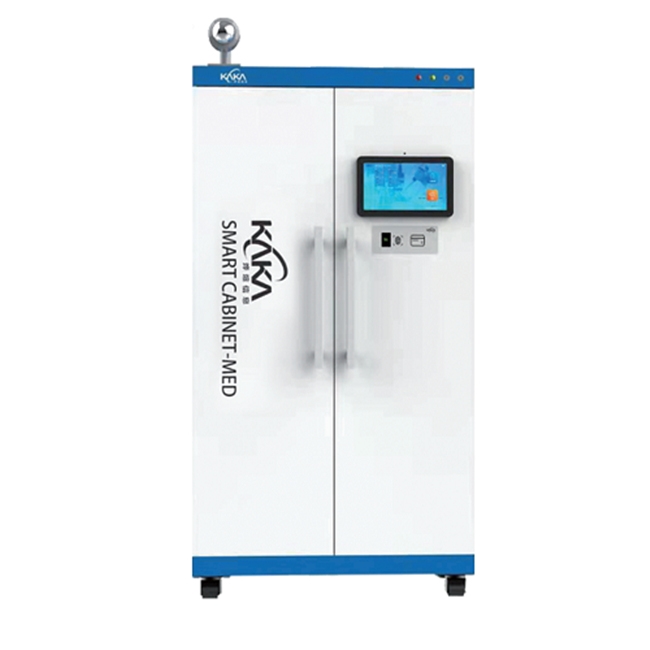
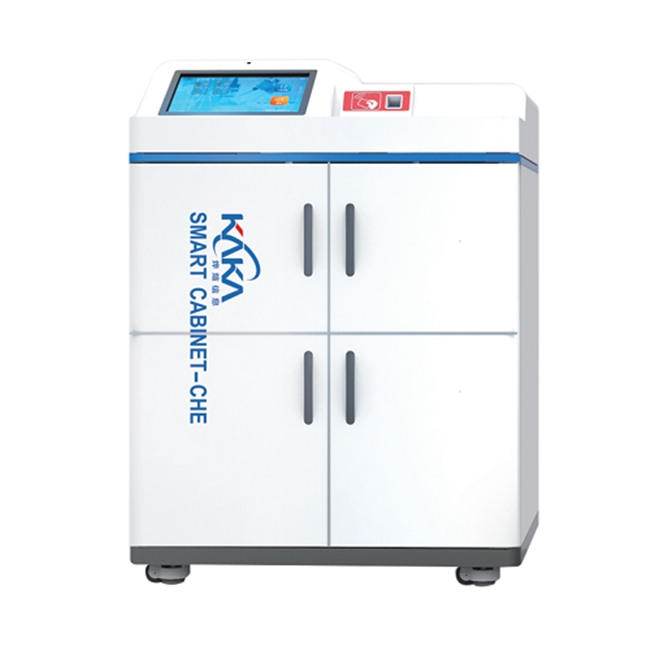
The management of hazardous chemicals and high-value reagents has always been a pain point for safety and efficiency in chemical laboratories, medical testing centers, and research institutes. The traditional manual registration model relies on paper records and key control, which has problems such as easy errors, low efficiency, and difficult traceabilityThe emergence of RFID intelligent reagent cabinets has redefined the intelligent standards for reagent management through the deep integration of RFID technology and IoT systems.

1、 Core function: Solve the three major problems of reagent management
The core value of RFID intelligent reagent cabinets lies in solving the three core problems of traditional management: high security risks, low efficiency, and difficult traceability. For highly toxic and other hazardous chemicals, traditional cabinets rely solely on mechanical locks or password locks, with extensive permission management, making them susceptible to impersonation or misoperation; Manual inventory is time-consuming and labor-intensive, and inventory data lags behind, often resulting in expired and wasted reagents or shortages during emergency experiments; More importantly, once a safety accident occurs, it is difficult to accurately locate the responsible person and the flow of reagents through manual recording. The RFID intelligent reagent cabinet solves these problems one by one through automatic identification, real-time monitoring, and full process traceability - from reagent storage to receiving and returning, every link is digitally recorded, which not only ensures personnel and environmental safety, but also improves management accuracy.
2、 Feature highlight: Intelligent management system for the entire process
1. Automatic recognition and precise positioning
Each bottle of reagent is labeled with an RFID electronic tag (or one-dimensional barcode), and the cabinet automatically identifies the identity of the reagent through ultra-high frequency RFID technology or barcode scanning, without the need for manual input. Some advanced models support precise positioning to the layer/drawer, and the system displays the position of the reagent in real time when the experimenter retrieves it, greatly reducing the search time.
2. Real time inventory and dynamic monitoring
The automatic door closing inventory function can complete the scanning of the entire cabinet of reagents within seconds, update inventory data in real time, and synchronize it to the cloud. Management personnel can remotely view real-time inventory, out of stock alerts, and reagent locations through mobile phones or computers, bidding farewell to the tedious process of manually counting each bottle.
3. Permission grading and security control
Supports multiple authentication methods such as fingerprint, facial recognition, card swiping, or account passwords, and administrators can assign hierarchical permissions to different users. Unauthorized personnel touching the cabinet will automatically trigger an alarm, and dangerous operations will trigger sound and light or text message reminders.
4. Environmental Protection and Data Traceability
The cabinet is made of fire-resistant and explosion-proof materials, with anti-static grounding and pressure relief port design. Some models are integrated with gas filtration systems to ensure storage safety. All operation records are automatically generated into electronic ledgers, supporting near expiry warning, batch number tracking, and audit tracking functions, meeting regulatory traceability requirements.
From precise control of high-risk chemicals to efficient circulation of high-value reagents, RFID intelligent reagent cabinets have become the intelligent core of laboratory safety management with the characteristics of "unmanned operation, full traceability, and safety controllability", promoting scientific research and production towards a more standardized and efficient direction.