-
E-mail
851193598@qq.com
-
Phone
18516586104
-
Address
302, Building B, 951 Qiangye Road, Songjiang District, Shanghai
Shanghai Yaoyou Electric Co., Ltd
Siemens G150 Inverter Maintenance Guide: Practical Guide from Fault Diagnosis to Efficient Repair
Date: 2025-11-23Read: 0
As a core equipment in the field of industrial automation,The Siemens G150 frequency converter, with its high-precision vector control and modular design, is widely used in scenarios such as fans, pumps, and conveyor belts.However, in long-term operation, faults such as overload, overheating, and overvoltage occur frequently. How to quickly locate the problem and implement precise maintenance has become the key to improving production efficiency for enterprises. This article combines real maintenance cases and industry experience to systematically sort out common faults and repair solutions of G150 frequency converters.
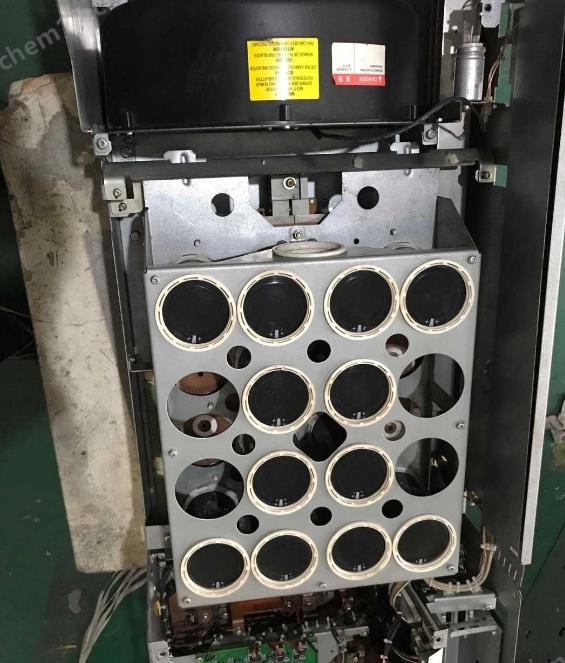
1、 Core fault types and diagnostic logic
1. Overload fault (F0001)
① Typical phenomenon: The frequency converter trips immediately after starting, with alarm code F0001.
② Diagnostic points:
Check if the motor load exceeds the rated power of the frequency converter;
Confirm if there is any jamming in the mechanical transmission components;
Adjust the acceleration/deceleration time through parameter settings to avoid current surges.
2. Overheating fault (F0005)
① Typical phenomenon: Temperature alarm during operation, high-speed operation of cooling fan.
② Repair plan:
Clean the dust in the heat dissipation duct to ensure smooth ventilation;
Check if the cooling fan is damaged and replace it if necessary;
Optimize the layout of the control cabinet to avoid direct sunlight or close proximity to heat sources.
3. Overvoltage fault (OU)
① Typical phenomenon: Trip during deceleration and shutdown, alarm code OU.
② Processing steps:
Check if the resistance value of the braking resistor is within the standard range;
Confirm whether the IGBT module of the braking unit has broken down;
Extend the deceleration time or increase the capacity of the external braking resistor.
2、 High risk faults and emergency response
IGBT module explosion machine
① Risk point: Module explosion may cause a short circuit in the DC bus, leading to secondary faults.
② Emergency measures:
Immediately disconnect the power supply and use a multimeter to measure the resistance of the DC bus to ground;
If the resistance is below 50k Ω, it is necessary to check the driving circuit, absorption capacitor and other components;
When replacing IGBT modules, be sure to use the original model and replace the driver optocoupler synchronously.
2. The power board has no output
① Typical manifestations: No display after power on, and the power indicator light does not light up.
② Repair process:
Check if the input voltage is normal;
Check if the fuse in the anti-interference circuit is blown;
Measure the output voltage of the rectifier bridge, and replace the rectifier module if it is abnormal;
Test the oscillation circuit of the secondary switch power supply, repair or replace the switch tube.
3、 Preventive maintenance and efficiency improvement
1. Regular testing plan
① Daily: Record operating parameters and observe for any abnormal fluctuations;
② Monthly: Clean the cooling system and check the tightness of the wiring terminals;
③ Quarterly: Use an oscilloscope to test the IGBT drive waveform and evaluate the degree of module aging.
2. Parameter optimization strategy
① Adjust the V/F curve according to the load characteristics to avoid low-frequency overload;
② Enable the "flying car start" function to prevent the frequency converter from reporting faults when the motor rotates freely;
③ Configure the "automatic energy-saving" mode to reduce no-load losses.
From fault diagnosis to efficient repair, the maintenance of Siemens G150 frequency converter requires a combination of electrical knowledge, mechanical principles, and industry experience. Through systematic preventive maintenance and precise fault handling, enterprises can significantly reduce downtime risks, improve overall equipment efficiency (OEE), and lay a solid foundation for the transformation of intelligent manufacturing.