-
E-mail
851193598@qq.com
-
Phone
18516586104
-
Address
302, Building B, 951 Qiangye Road, Songjiang District, Shanghai
Shanghai Yaoyou Electric Co., Ltd
Accurate troubleshooting and efficient repair: Siemens 6RA80 DC speed regulator maintenance guide
Date: 2025-09-25Read: 0
The Siemens 6RA80 DC speed controller, as a high-performance and fully digital control device, is widely used in industrial fields such as metallurgy, mining, papermaking, and lifting. Its structure is complex and highly integrated. Once a malfunction occurs, it may cause the entire production line to shut down. Therefore, a systematic and standardized maintenance process is the key to quickly restoring equipment operation and reducing economic losses. This guide aims to provide a clear set of maintenance ideas and operating methods.
1、 Preparation before maintenance: Safety and diagnosis are the primary principles
1. Safety first, power outage: Before maintenance, strict "locking/tagging" procedures must be followed to cut off all incoming power sources of the governor and wait for the DC bus capacitor to fully discharge. Safety is the absolute prerequisite for maintenance work.
2. Information collection and preliminary diagnosis:
① Check the alarm code: Before power failure, if the device can still display, record the fault code (such as F60042) and alarm information on the LCD screen as soon as possible. This is the most direct fault clue.
② Ask the operator: Detailed understanding of the phenomenon at the time of the malfunction, such as whether there is any abnormal noise, smoke, or odor, whether it is a sudden shutdown or a slow abnormality, can help determine the nature of the malfunction.
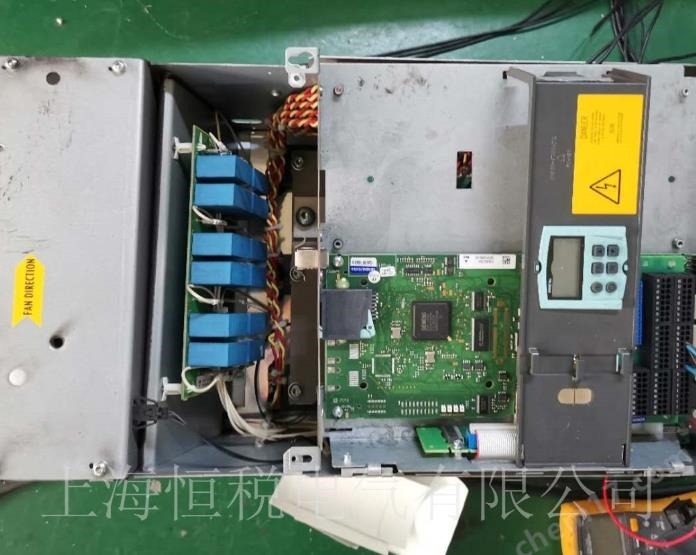
③ Appearance inspection: Open the cabinet door and carefully observe whether there are obvious signs of damage inside the 6RA80 device, such as capacitor bulging, resistor burning, power module explosion, circuit board burning, etc.
2、 Systematic maintenance process: from outside to inside, from soft to hard
1. Peripheral inspection: Do not rush to disassemble the device itself. Firstly, check the external components connected to 6RA80:
① Armature and excitation circuit: Use a multimeter to measure the resistance of the motor armature winding and excitation winding, and check for short circuits, open circuits, or grounding.
② Feedback component: Check whether the connection of the speed generator or encoder is reliable and whether the signal is normal. Feedback faults are a common cause of unstable speed.
③ Power supply and wiring: Check whether the incoming power supply voltage and control power supply voltage are normal, and check whether all wiring terminals are tightened, loose or oxidized.
2. Parameter inspection and software diagnosis:
① Connect the governor through the control panel or use Siemens STARTER software to upload the current parameter backup. Compare with normal backup and check if the parameters have been modified by human error.
② Utilize the tracking and diagnostic functions of the software to view fault records and operating curves, and analyze state variables such as current, voltage, and speed at the moment of fault occurrence.
3. Internal hardware troubleshooting: After confirming that there are no issues with the peripheral components, disassemble and inspect the internal components of the device in a targeted manner.
① Power unit: Check whether the thyristor/IGBT power module is broken down, and use a multimeter diode to measure its forward and reverse characteristics. Check if the fuse is blown.
② Trigger board/control board: Observe the components on the circuit board for abnormalities, and use a magnifying glass to check for virtual soldering or cracks. Focus on inspecting the power supply, sampling circuit, and driving circuit.
③ Cleaning and Corrosion: Use dry compressed air to remove internal dust and check for corrosion or short circuits caused by humid environments.
3、 Maintenance implementation and testing
1. Component replacement: For components that have been confirmed to be damaged, the original manufacturer or a substitute that meets the specifications should be selected for replacement. When replacing the power module, it is important to pay attention to the installation process, such as applying thermal conductive silicone grease, to ensure good heat dissipation.
2. Power on test: After the repair is completed, do not directly connect the motor load.
① No load test: With the motor wiring disconnected, slowly power on and observe if the device starts normally and if there are any abnormal alarms. Use an oscilloscope to measure whether the trigger pulse and output voltage waveform are correct.
② Load test run: After confirming that the no-load is normal, connect the motor for load testing. Gradually increase from low speed to high speed, observe whether the operation is smooth, whether the current and speed are normal, and whether the temperature rise is within the allowable range.
Conclusion
The maintenance of Siemens 6RA80 DC speed controller is a logically rigorous and progressive process. It requires maintenance personnel not only to have a solid foundation in power electronics technology, but also to master systematic diagnostic methods. From safe power outages and information collection to the troubleshooting principle of "external first, internal second, soft first, hard second", every step is crucial. Standardized maintenance can not only solve current faults, but also effectively prevent potential problems, ensure the long-term stable operation of equipment, and provide solid support for the continuity of industrial production.