-
E-mail
shtaifan@163.com
-
Phone
15921940737
-
Address
No. 36, Lane 379, Hongmei South Road, Minhang District
Shanghai Taifan Instrument Technology Co., Ltd
The role of automatic zeroing burette in chemical experiment teaching and scientific research
Date: 2025-10-19Read: 3
Automatic zeroing burette is a high-precision liquid titration instrument used in chemical analysis experiments, widely used in titration experiments, especially in fields such as chemical analysis, environmental monitoring, pharmaceuticals, and food industry. Unlike traditional manual burettes, it has higher accuracy and operational convenience, which can reduce operator errors and ensure the accuracy and reliability of titration results.
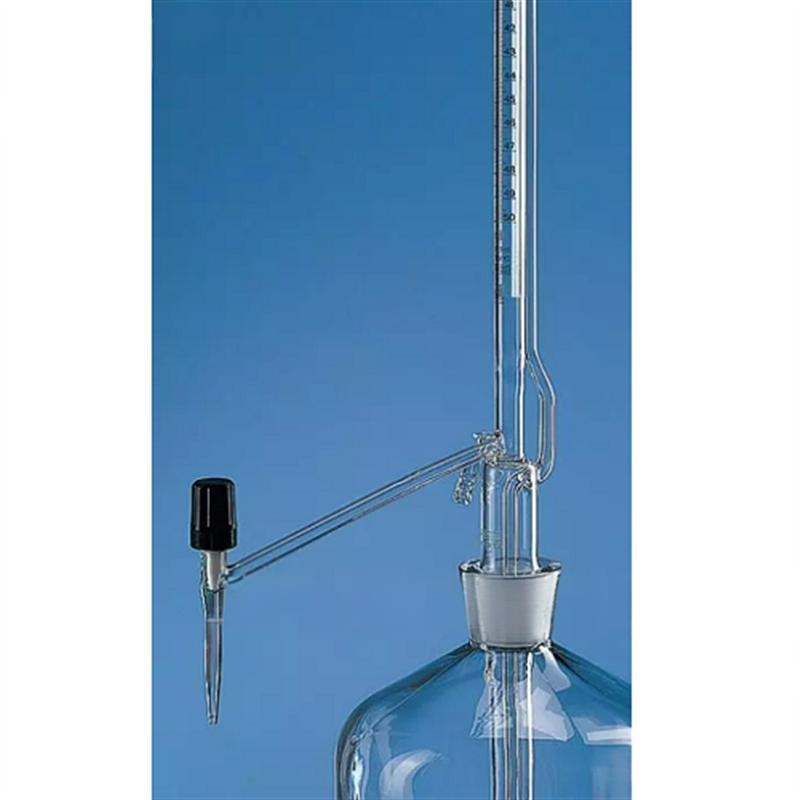
Automatic BuretThe structural composition of:
1. burette: The burette body is usually made of glass or chemically resistant plastic material, with a precise scale used to display the volume of liquid.
2. Zeroing device: The zeroing device is the core component. It includes an electric zeroing valve, a flow sensor, and a control circuit, which automatically flows the liquid in the burette to zero through the electric valve, ensuring the precise starting point of each titration.
3. Liquid sensor: The liquid sensor is used to detect the flow rate and liquid position of the titrant. Common types of sensors include capacitive, ultrasonic, and optical sensors, which can accurately monitor changes in liquid volume.
4. Control unit: The control unit is the "brain" of the burette, which adjusts the opening and closing of the return valve through an electronic control system, controls the flow rate of the titrant, and the stop function at the end of titration. Some models can also be connected to computers or smart devices for automated data recording and analysis.
5. Digital display screen and operation panel: The digital display screen is used to display the volume of titration liquid, titration rate, and other experimental parameters. The operation panel is equipped with buttons for setting the target volume, flow rate, and other parameters of the titration liquid.
6. Inlet and outlet pipelines: The inlet pipeline is connected to the upper end of the burette and is used to inject titration liquid; The drainage pipeline is connected to the bottom of the burette, and the titration reaction is carried out through the outflow of liquid.
Application fields:
1. Chemical analysis: In chemical analysis, titration is widely used to determine the concentration of a solution. It can ensure that each titration starts from scratch, reduce human error, and ensure the accuracy and reliability of titration results.
2. Environmental monitoring: In environmental monitoring such as water quality analysis, soil testing, and gas analysis, it can be used to accurately control the amount of titrant added for quantitative analysis of chemical reactions.
3. Pharmaceutical industry: Quality control in the pharmaceutical industry is very strict and can be used for quantitative testing of raw materials, validation of drug formulations, and monitoring of the production process to ensure precise execution of each step.
4. Food industry: The food industry also requires chemical analysis, especially for the determination of ingredients, acidity, and alkalinity in food. It can be used for the determination of acidity or other components in dairy products, beverages, juices, etc.
5. Education and scientific research:In the teaching and research of chemical experimentsThrough its automated features, it can reduce the burden on operators, improve the accuracy and repeatability of titration experiments, and provide guarantees for the reliability of experimental results.
The advantages of automatic zeroing burette:
1. High precision: It can provide very accurate liquid titration volume, reduce errors in manual operation, and ensure the reliability of titration results.
2. Automated operation: The automatic zeroing function makes the titration process more automated, and operators no longer need to manually adjust the liquid flow rate, saving time and labor costs.
3. Improve efficiency: The titration volume and flow rate of the liquid can be precisely controlled, which improves the efficiency and repeatability of the experiment.
4. Data recording and display: Many are equipped with digital display screens and data recording functions, making it convenient for operators to view data changes during the titration process and conduct subsequent analysis.
5. Reduce human error: The automatic zeroing function can avoid errors that may occur when manually reading the scale and liquid titration amount, especially suitable for titration experiments that require high precision.