-
E-mail
13818112855@139.com
-
Phone
18930698865,13818112855
-
Address
No. 8651 Hunan Highway
Shanghai Shenshe Scientific Instrument Equipment Co., Ltd
Installation Form of Phenolic Resin Online Viscometer Flange: Precise Viscosity Control Scheme in Industrial Scenarios
Date: 2025-11-24Read: 1
As an important synthetic resin, real-time monitoring of viscosity during the production process of phenolic resin directly affects product quality and process stability.The phenolic resin online viscometer is embedded in the reaction vessel or pipeline system through flange installation, becoming the core tool to achieve this goal.Its design integrates high-precision measurement technology with industrial grade installation reliability, providing a standardized solution for viscosity control under complex working conditions.
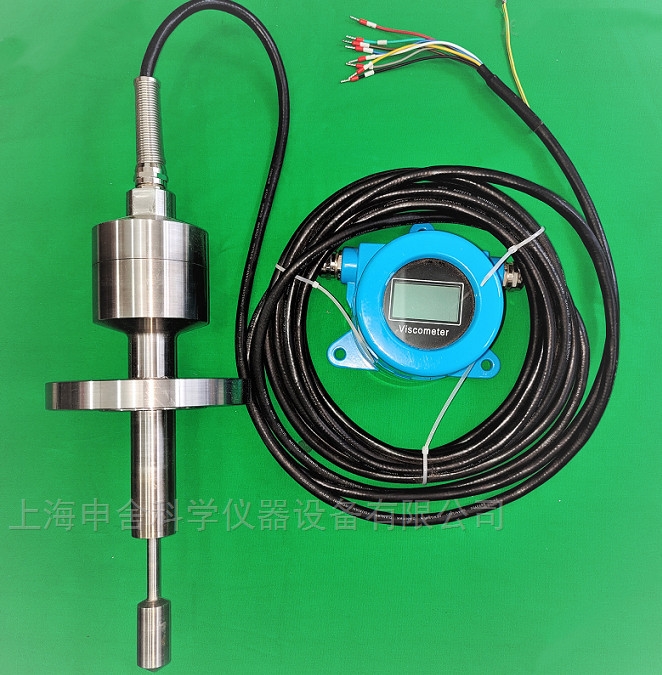
1、 The core structure and principle of flange installation
The flange mounted online viscometer consists of a sensor probe, a transmitter, and a flange connection component. The sensor probe adopts vibration or rotation technology to indirectly calculate the viscosity value by measuring the damping effect or rotational torque change of the fluid on the vibrating element. For example, the Haimsheng XL7 series vibrating sensor achieves a wide range measurement of 0-10000000 cP by detecting the energy attenuation of the vibrating rod in the fluid, with an accuracy of ± 1% and a repeatability of ± 0.3%. The flange connection is used to fix the sensor to the pipeline or reactor wall with bolts, ensuring that the probe is fully immersed in the fluid and avoiding measurement blind spots.
2、 Industrial adaptability advantages of flange installation
1. High pressure and high temperature resistance: Phenolic resin production often involves high temperature and high pressure environments. The flange mounted sensor is made of 316L stainless steel or Hastelloy material, combined with PTFE coating, which can withstand such abnormal conditions.
2. Installation convenience and stability: The flange connection achieves fast installation through standardized interfaces, reducing on-site debugging time. The insertion depth of the sensor probe can be adjusted (usually 80-500mm) to meet the requirements of different pipe diameters.
3. Explosion proof and protective design: For the production environment of flammable and explosive phenolic resin, flange mounted sensors usually have Ex d IIC T6 explosion-proof rating and IP66 protection rating, ensuring stable operation of the equipment under harsh conditions such as dust and moisture.
3、 Typical application scenarios and benefit analysis
In the polymerization reaction of phenolic resin, a flange mounted viscometer can monitor the viscosity changes of the reaction solution in real time, guiding the control of catalyst addition and reaction time. A certain enterprise application case shows that by installing a flange viscometer on the circulation pipeline of the reaction kettle, the following optimizations can be achieved:
1. Production efficiency improvement: The viscosity data feedback cycle has been shortened to 5 seconds, the reaction endpoint judgment time has been reduced by 30%, and the single batch production capacity has been increased by 15%;
2. Stable product quality: The viscosity fluctuation range has been reduced from ± 5% to ± 1.5%, and the uniformity of product hardness has been significantly improved;
3. Maintenance cost reduction: The design without moving parts extends the lifespan of the equipment to over 5 years, reducing annual maintenance costs by 60%.
4、 Future Trends: Intelligence and Integration
With the development of Industry 4.0, flange mounted phenolic resin online viscometers are evolving towards intelligence. The new generation of equipment integrates temperature compensation and pressure correction functions, and supports Modbus RTU/TCP protocol, which can seamlessly integrate with DCS or SCADA systems.
From the reaction kettle to the circulation pipeline, the online viscosity meter for phenolic resin has become a crucial "process eye" in phenolic resin production due to its high accuracy, reliability, and strong adaptability. Its technological evolution not only promotes the improvement of quality control level in the resin industry, but also provides key infrastructure for the intelligent manufacturing transformation in heavy industries such as chemical and energy.