-
E-mail
sanxin@shsan-xin.com
-
Phone
15921272336
-
Address
4th Floor, Building 16, 481 Guiping Road, Xuhui District, Shanghai
Shanghai Sanxin Peirui Instrument Technology Co., Ltd
Turbidity meter - a scientific ruler for water clarity
Date: 2025-11-14Read: 0
In industries such as drinking water safety, sewage treatment, environmental monitoring, and beverage production, water clarity is a crucial sensory and physicochemical indicator. Turbidity, which refers to the degree of obstruction caused by suspended particles in water to light transmission, is a scientific parameter for measuring clarity. Turbidity meter (also known as turbidity meter) converts the turbidity level of water samples into quantifiable data through precise optical measurement principles, becoming a "scientific ruler" for evaluating water quality and monitoring processes.
turbidimeterThe core principle is optical scattering method. The instrument emits a beam of light of a specific wavelength towards the water sample. When the light passes through the water sample, suspended particles in the water will cause scattering of the light. The turbidity meter detects the intensity of scattered light at a 90 ° angle (or other angle specified by the standard) to the incident light, which is directly proportional to the turbidity value of the water sample, in order to perform accurate calculations.
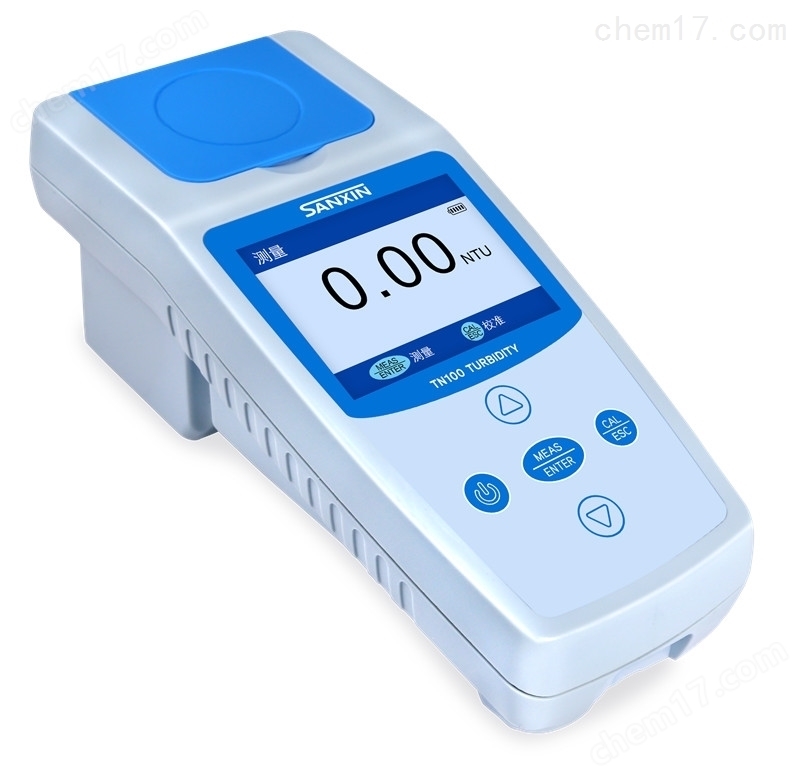
1. Fast measurement and intuitive results
The measurement process only requires placing the water sample to be tested into the sample pool, and the instrument can directly display the turbidity value within seconds. This immediacy makes it very suitable for monitoring the coagulation and sedimentation process in water treatment plants, quickly determining the quality of filtered water, and conducting on-site inspections of environmental water bodies.
2. Objective data with high accuracy
Abandoning the subjective judgment of "transparency" or "clarity" by the human eye, turbidity meters provide digital NTU (scattered turbidity unit) values, which are objective, accurate, and traceable. High precision turbidity meters can distinguish small changes in low turbidity, far exceeding the limits of human visual perception.
3. Both portable and desktop, flexible application
There are both portable turbidity meters that can be used for rapid on-site detection and desktop turbidity meters that can be used for precise laboratory analysis. Portable and sturdy design, suitable for field operations; Desktop instruments usually have higher accuracy and more functions, such as data storage, automatic calibration, etc., to meet the detection needs of different scenarios.
4. Ensure water quality safety and process control
Turbidity is a key indicator for measuring the physical safety of drinking water. Excessive turbidity not only affects the senses, but may also hide pathogenic microorganisms. At the same time, turbidity is an important parameter for strictly controlling the appearance and stability of products in the production of beverages, beer, and other products. Turbidity meters provide a reliable basis for achieving efficient process control and strict quality control.
The turbidimeter converts the vague concept of "limpidity" of water into accurate scientific data. It is a tool to ensure the safety of the entire process from source water to faucet water, optimize water treatment processes, and ensure product quality consistency. It is a scientific benchmark in the fields of environmental monitoring and water quality management.