-
E-mail
15900517856@163.com
-
Phone
15900517856
-
Address
No. 168 Dongshe Road, Songjiang District, Shanghai
Shanghai Pinkui Electromechanical Technology Co., Ltd
What is the Pinkui TE39 sliding bearing friction testing machine? Understanding the core function of an article
Date: 2025-12-17Read: 0
Let's first understand what a sliding bearing friction testing machine is. Simply put, it is a device specifically designed to evaluate the performance of sliding bearings under friction and wear conditions, just like a doctor conducting a 'health check' on bearing materials.
Unique lathe style design structure
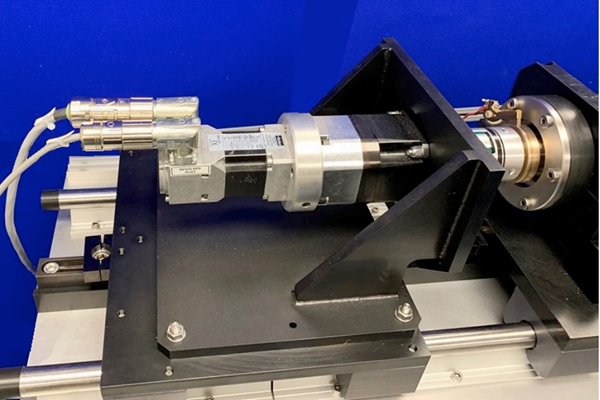
The structure of Pinkui TE39 is very similar to traditional lathes, including three main parts: the 'head seat' for loading shaft samples, the 'tail seat' for installing torque sensors, and the 'tool seat' for applying radial force. The head and tail seats are installed on standard linear slider bearing seats using manual fixtures to ensure testing stability.
The headstock includes interchangeable motors and spindle components, driven by vector servo motors, with a maximum speed of 2000rpm. If swinging motion is required, it can be replaced with a servo motor driven by a reduction gearbox to achieve ± 20 ° angle swinging.
Accurate testing control system
TE39 has high testing accuracy, and the spindle assembly can accommodate sample shafts with a diameter of 5-30mm. The tailstock supports a non rotating combined axial force and torque sensor, which controls reciprocating axial motion through a ball screw actuator with a maximum stroke of 30mm.
The 'knife holder' of the loading system is installed on a linear slide rail connected to the tailstock, equipped with an air bellows and force sensor, to achieve servo pneumatic loading control and ensure testing accuracy.
Widely applicable fields
The application field of Pinkui TE39 is quite extensive. Evaluating the performance of key components such as engine bearings and transmission bearings in the automotive manufacturing industry; Meet the high reliability requirements of bearing materials for aircraft in the aerospace field; Assist in optimizing the selection and design of bearing materials in the field of mechanical manufacturing.
Materials science researchers use it to develop new bearing materials and evaluate the tribological properties of different material combinations. Lubricant R&D uses TE39 to accurately evaluate the lubrication performance of various lubricants and greases.
Actual problems solved
TE39 helps enterprises solve product quality control problems and ensures product performance meets standard requirements through standardized testing. In terms of research and development efficiency, providing fast and accurate testing data greatly shortens the product development cycle.
The device supports multiple testing modes, such as continuous rotation, swing test, etc., which can be flexibly set according to different needs. The high-precision measurement system ensures accurate and reliable test results, provides scientific basis for decision-making, and helps enterprises choose materials and lubrication solutions with higher cost-effectiveness.

Technical advantages of the testing process
TE39 embodies multiple technological advantages: multi station testing capability improves testing efficiency; High precision sensors ensure the accuracy of results;frontierThe data acquisition system monitors real-time changes in friction force and sample wear.
The equipment is highly automated, and operators can accurately adjust the load, control the test speed, and record experimental data. The flexible testing mode adapts to various complex testing requirements and provides researchers with powerful experimental tools.
The Pinkui TE39 sliding bearing friction testing machine, with its unique design, precise control, and wide application, has become an important equipment in modern material testing and product development, providing strong support for product quality improvement, cost optimization, and technological innovation.