A pyrometer is a fixed infrared temperature sensor and infrared temperature measurement device used for non-contact temperature measurement, typically in industrial applications.
In a pyrometer, the electromagnetic radiation emitted by the object being measured in the infrared range is converted into a measurement value, which serves asoutput signalgive.
The pyrometer only passively absorbs the measured objectinfrared radiationIt will not emit any radiation towards the object being tested. ifemissivityIf set correctly, the measured temperature value corresponds to the surface temperature of the object being measured.
The manufacturing range of pyrometers is wide, with various designs and configurations in optics, technology, size, shape, etcTemperature measurement range、spectral rangeThey are different in terms of output signals.
Infrared pyrometer
The infrared pyrometer consists of a sensor head connected to the evaluation/controller unit.
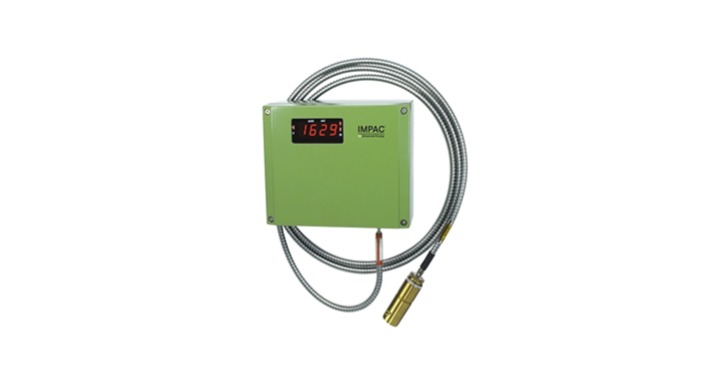
Integrated infrared temperature sensor
The integrated infrared temperature sensor integrates the sensor electronics into the sensor head, eliminating the need for an evaluation/controller unit.
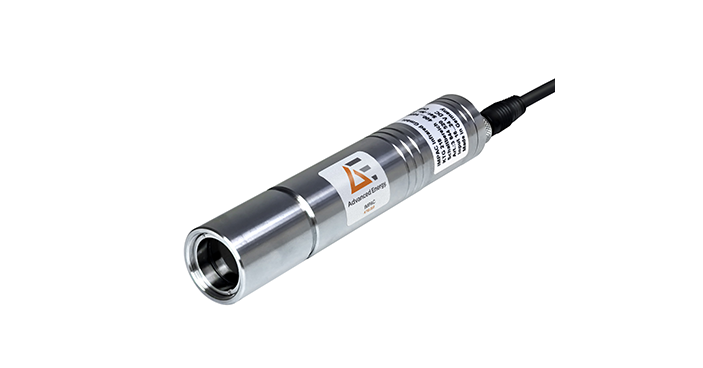
Working principle of pyrometer
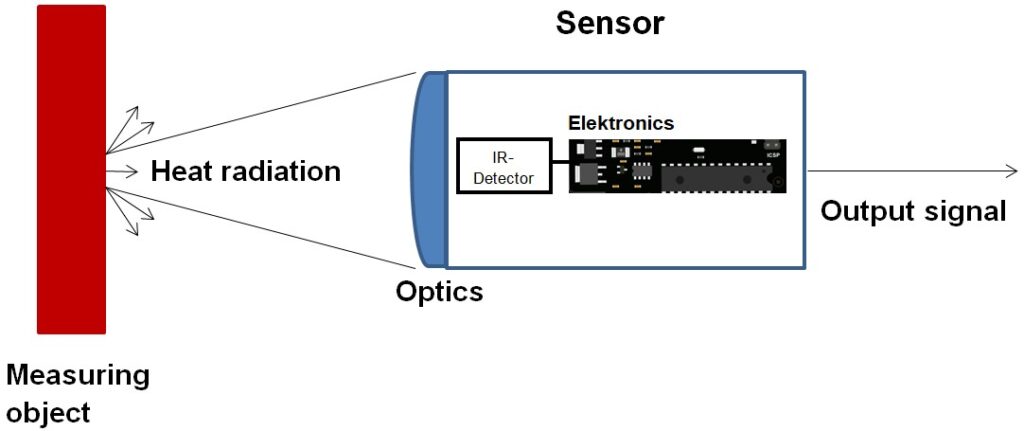
This diagram illustrates the working principle of the pyrometer
1. Measure the electromagnetic emission within the infrared range of the object being measuredradiation.The optical components of the pyrometer willThe specific area of the measurement object is recorded as the measurement point.
The optical components of the pyrometer concentrate infrared radiation onto the infrared detector.
3. The infrared detector converts the infrared radiation from the measured object into an electrical signal and transmits it to the pyrometer electronic device.
4. The electronic equipment of the pyrometer converts electrical signals into temperature values.
5. Determine the temperature to simulate sensor standardsoutput signalOr digital signal output.
Emissivity correction/setting of pyrometer
In order for the pyrometer to accurately measure temperature, it is necessary to know the emissivity of the material being measured and set it in the pyrometer.
Especially in non-contact temperature measurement of metals and other low emissivity measuring objects, when there is a strong deviation in the measurement results, emissivity setting errors are a common source of error.
It should be noted that emissivity is not an absolute value, but depends on other factors. You can find it in ouremissivityWiki page and launchRate tableFind an overview of the most common materials and their corresponding emissivity.
spectral range
There are different types of pyrometers used for non-contact temperature measurement of various materialsspectral rangeThe table below provides a simplified overview of the spectral range. It should be noted that for non-contact temperature measurement of metals and glasses, the spectral range also depends on the temperature range to be measured.
spectral range |
Application field |
8-14 microns |
Paper, laminates, water, textiles, plastics, leather, tobacco, liquids |
2,2 microns |
Measurement of metals in the low temperature range |
2,3-5.0 microns |
Used for glass production, glass refining, and deep processing |
0.8-3.9 microns |
Steel production, forging process, metal precision machining process |
andCompared to traditional contact sensors, the advantages of using an infrared pyrometer are:
- No impact on the surface of the object being tested
- Easy to use - not as worn as contact probes
- Economically efficient measuring equipment
Fast temperature measurement within millisecond range
- Temperature measurement of thermal or charged measurement objects.
For more information on thermometer selection, please contact Shanghai Mingce Technical Engineer!