-
E-mail
DS13564775333@163.com
-
Phone
13564775333
-
Address
1908 Liuxiang Road, Malu Town, Jiading District, Shanghai
Shanghai Huquan Valve Group Co., Ltd
Design Features and Maintenance Matters of Explosion proof Valve Electric Device
Date: 2025-12-14Read: 50
Explosion proof valve electric device is a valve driving equipment designed specifically for industrial sites with flammable, explosive gas or dust environments. It controls the opening and closing of valves through electric means and is widely used in industries such as petroleum, chemical, natural gas, power, metallurgy, especially in environments with potential explosion hazards. The main function is to achieve precise control of the valve through electric drive. Its structure usually consists of motors, valve transmission mechanisms, control circuits, and other parts, which can achieve remote control and automated operation of valves in various harsh environments. The design of explosion-proof electric devices must comply with relevant standards for explosion-proof electrical equipment to ensure that sparks or high temperatures are not caused in explosive environments, thereby avoiding accidents.
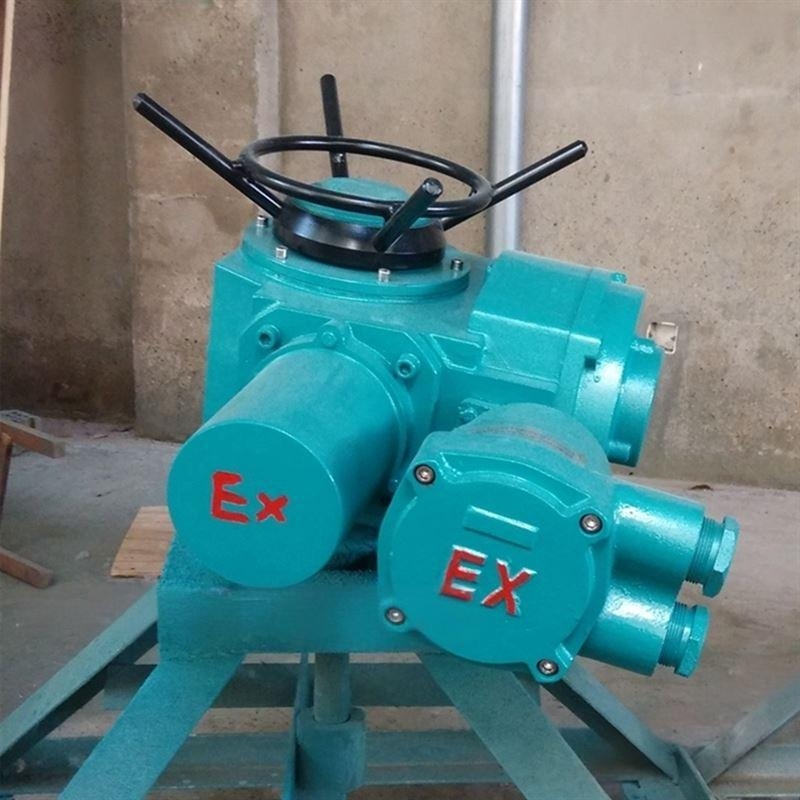
The working principle is based on an electrically driven valve control system. Electric devices are usually equipped with an electric motor inside, which drives the opening and closing of valves through transmission devices such as gearboxes and couplings. The control circuit controls the electric device through switch signals or adjustment signals, drives the motor to rotate, and thus controls the opening or position of the valve. In order to adapt to explosion-proof environments, the casing of electric devices is usually made of materials that are pressure resistant, corrosion-resistant, and impact resistant, and special designs are used to avoid the generation of electrical sparks or high temperatures.
Explosion proof valve electric deviceExplosion proof design:
1. Explosion proof casing: The casing of the electric device is made of steel, cast aluminum or stainless steel material, and has sufficient strength to withstand the pressure that may be generated inside, preventing explosive gases from infiltrating the equipment.
2. Internal explosion-proof isolation: The electrical components inside the electric device must adopt explosion-proof design, and the motor and control circuit must be isolated and protected to ensure that in case of electrical failure, sparks will not escape and cause external explosions.
3. Sealing design: All electrical parts inside the equipment must be sealed to prevent harmful gases or dust from entering from the outside. Common sealing methods include using sealing rings, explosion-proof joints, etc.
4. Temperature control: The motor and other electrical components of the electric device may generate heat during operation, so it is necessary to ensure that the operating temperature of the equipment does not exceed the safety threshold through heat dissipation design or temperature control system to avoid explosion caused by overheating.
5. Grounding protection: Explosion proof electric devices must ensure good grounding to prevent static electricity accumulation or electrical faults from causing sparks or electric shocks.
Maintenance and upkeep of explosion-proof valve electric devices:
1. Regular inspection: Regularly inspect the explosion-proof casing, sealing, electrical connections, etc. of the electric device to ensure that there are no damaged or loose components.
2. Cleaning and lubrication: Regularly clean the electric device to prevent dust or dirt accumulation, and lubricate the transmission components to reduce friction and wear.
3. Temperature control system inspection: Check the operation status of the temperature control system to ensure that the equipment operates within a safe temperature range.
4. Emergency troubleshooting: In the event of equipment failure, it is necessary to quickly locate the problem and take emergency measures to avoid accidents.