-
E-mail
2272872448@qq.com
-
Phone
15618688865
-
Address
Building 5, Cankun Group Lingang Chip Park, No. 550 Gangwen Road, Fengxian District, Shanghai
Shanghai Huitai Instrument Manufacturing Co., Ltd
Controllable vacuum drying oven - hot selling in Hangzhou, Shanghai, Beijing and other places in December 2025
Date: 2025-11-11Read: 1
1、 What is a controllable vacuum drying oven?
Controllable vacuum drying ovenIt is a high-precision experimental or industrial equipment that uses precise temperature control to dry, dehydrate, heat treat, degas, or solidify materials in a vacuum (low pressure) environment.
Unlike conventional drying ovens, vacuum drying ovens reduce air pressure by vacuuming, thereby lowering the boiling point of water and enabling rapid, uniform, and gentle drying of materials at lower temperatures. They are particularly suitable for materials that are sensitive to heat, prone to oxidation, easy to decompose, or contain volatile components.
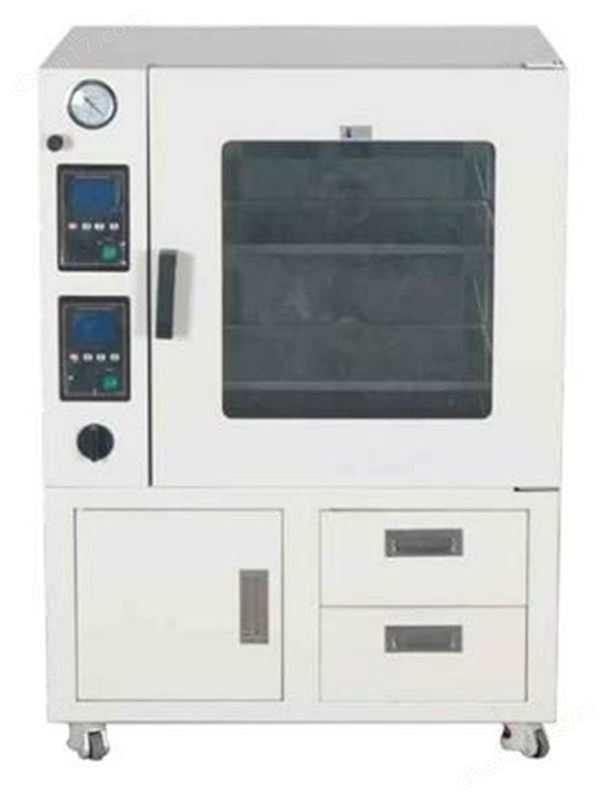
2、 Core features of controllable vacuum drying oven
|
|
3、 Working principle of controllable vacuum drying oven
1. Basic principle:
At normal pressure, the boiling point of water is 100 ℃. But in a vacuum state, as the air pressure decreases, the boiling point of water also decreases (for example, the boiling point of water is about 45 ℃ at 10 kPa and below 50 ℃ at 1 kPa). Therefore:
In a vacuum environment, materials can achieve "boiling evaporation" dehydration at temperatures far below 100 ℃, achieving the purpose of drying.
2. Working process:
1. Loading materials: Place the materials to be dried into trays or specialized brackets inside the vacuum drying box.
2. Close the box door and seal it: Ensure good sealing of the box and prepare for vacuuming.
3. Turn on the vacuum pump: Extract the air inside the box through the vacuum pipeline to reach the set vacuum degree (such as 10-100 Pa).
4. Heating and drying: Start the heating system and gradually raise the temperature inside the box to the set value (such as 50~150 ℃). The moisture in the material evaporates under low pressure and is pumped away by the vacuum pump.
5. Drying completion: After reaching the set time or drying conditions, stop heating and slowly restore normal pressure (to avoid material oxidation or impact), and remove the material.
4、 The main structural components of a controllable vacuum drying oven
5、 Typical technical parameters of controllable vacuum drying oven (example)
6、 The main application areas of controllable vacuum drying oven
✅ 1. Laboratory research
Chemistry and chemical engineering: drying chemical reagents, polymers, nanomaterials, catalysts, sample pretreatment, etc;
Biology and medicine: drying biological products, proteins, enzymes, Chinese medicinal materials, Western medicine powders, culture media, etc. (to avoid heat loss and oxidation);
Materials Science: Dry ceramic powders, battery materials (such as lithium positive and negative electrode materials), metal powders, composite materials;
Electronics and semiconductors: drying electronic components, solder paste, optical adhesive, chip packaging materials, etc;
Food and agricultural research: dried food samples, plant extracts, natural pigments, etc. (retaining nutrition and activity).
✅ 2. Industrial production
Pharmaceutical industry: low-temperature drying of pharmaceutical intermediates, sterile powders, traditional Chinese medicine extracts, etc;
Chemical industry: drying and degassing of fine chemical products, resins, coatings, inks, and intermediates;
• New energy: drying of lithium battery materials (such as ternary materials, graphite, binders) and supercapacitor materials;
Electronics industry: dehumidification and curing of electronic adhesives, packaging materials, optical films, and sensor components;
Food industry: mild drying of high-end food, health food, and natural extracts (such as ginseng and goji berry extracts);
Aerospace/Defense: Vacuum heat treatment and drying of special materials, high polymers, and composite materials.
✅ 3. Special purpose
• Defoaming/degassing treatment: removes bubbles and dissolved gases from the material, improving product density and quality;
• Heat treatment/curing: Heat curing, annealing, stress release, etc. of materials are carried out in a vacuum environment;
• Prevent oxidation: Dry easily oxidizable materials (such as metal powders, lithium materials, and active chemicals) without oxygen;
Pre treatment of freeze-drying: In some processes, vacuum drying is used as a pre-treatment step before freeze-drying.
7、 Controllable vacuum drying oven vs conventional drying oven
8、 Precautions for using controllable vacuum drying oven
1. Sample placement: Do not stack materials too densely to ensure even heat and vacuum transfer;
2. Vacuum pump selection: Choose a vacuum pump with appropriate vacuum degree and pumping speed according to the drying process (such as mechanical pump, molecular pump);
3. Vacuumize before heating: It is recommended to evacuate before heating to avoid the danger of air expansion caused by heat;
4. Slowly restore normal pressure: After drying is completed, the material should be slowly inflated to avoid sudden exposure to the atmosphere and oxidation or damage;
5. Safe operation: It is strictly prohibited to open the box door under vacuum to avoid injury caused by internal and external pressure difference;
6. Regular maintenance: Check the vacuum sealing ring, vacuum pump oil, pipeline interfaces, etc. to ensure the airtightness and vacuum degree of the system;
7. Temperature uniformity: Select models with fan circulation according to process requirements to improve drying uniformity.
9、 Summary: Value and selection suggestions of controllable vacuum drying oven
✅ Core values:
• Achieve a low-temperature, fast, uniform, oxygen free, and pollution-free drying process;
Specially suitable for drying and processing of heat sensitive, easily oxidizable, high-value, and precision materials;
It is equipment used in laboratory research, pharmaceutical production, new material development, and manufacturing.
✅ Suggestion for selection: