-
E-mail
heshengcn@163.com
-
Phone
13918154651
-
Address
201b, Building B, Fufeng Technology Industrial Park, No. 1200 Fenghua Road, Hongqiao Business District, Shanghai
Shanghai Hesheng Instrument Technology Co., Ltd
Thermogravimetric analyzer: a precise detector of material thermal behavior
Date: 2025-12-22Read: 0
Thermogravimetric analyzer (TGA) is a precision analytical instrument based on thermogravimetric method, which monitors the changes in mass of substances with temperature or time under programmed temperature control conditions in real time, revealing the thermal stability, component content, and thermal decomposition laws of materials. It is a research tool in the fields of materials science, chemical engineering, biomedicine, etc.
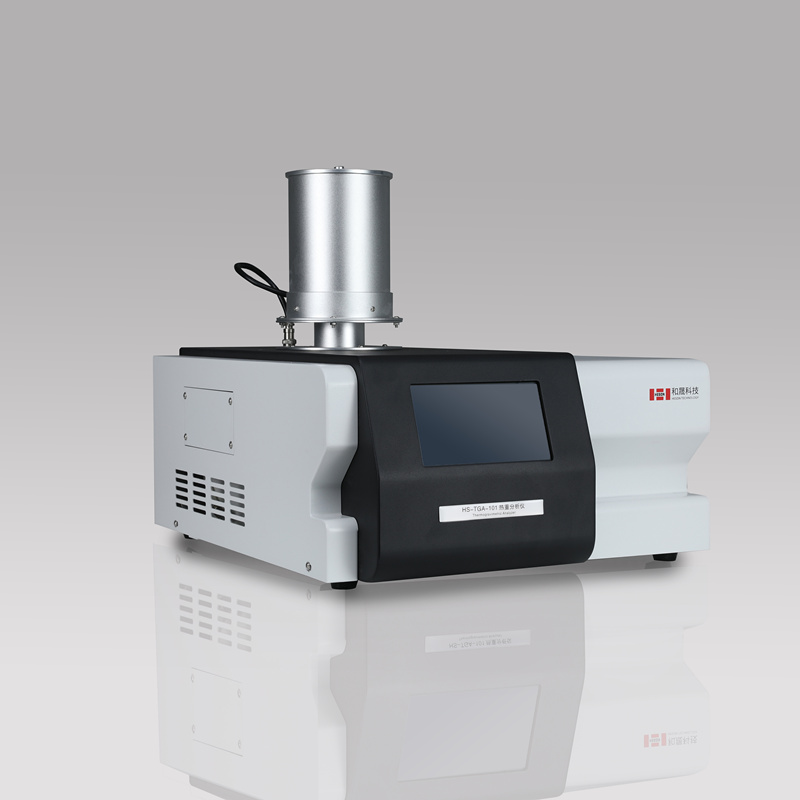
Shanghai Hesheng HS-TGA-101 Thermogravimetric Analyzer
The core working principle is to place the sample in a controlled atmosphere heating furnace, raise the temperature at a preset rate or maintain a constant temperature, and continuously detect changes in sample mass using a high-precision balance, synchronously recording the mass temperature/time curve (TG curve). By analyzing the characteristics such as steps and slopes of the curve, key parameters such as volatile component content, thermal decomposition temperature, and residual amount in the sample can be quantitatively determined, and even combined with derivative thermogravimetric curves (DTG) to accurately locate the starting and peak temperatures of thermal reactions.
In practical applications, the value of thermogravimetric analyzers is ubiquitous. In the field of materials, it can evaluate the thermal aging performance of polymer materials and the sintering characteristics of ceramic materials, providing a basis for optimizing material formulations; Chemical industry, used for catalyst deactivation mechanism research and reaction kinetics analysis; In the field of biomedicine, it can detect the moisture content and thermal stability of drugs to ensure drug quality; In the field of environmental protection, the pyrolysis characteristics of solid waste can be analyzed to assist in the design of resource utilization schemes.
Compared to traditional analysis methods, thermogravimetric analyzers have advantages such as less sample usage, wider detection range, and accurate and reliable data. It can not only visually present the thermal behavior changes of materials, but also provide quantitative data support for in-depth mechanism research, promote technological innovation and industrial upgrading in related fields, and become a "powerful assistant" for interpreting material thermal performance in modern scientific research and industrial production.