-
E-mail
heshengcn@163.com
-
Phone
13918154651
-
Address
201b, Building B, Fufeng Technology Industrial Park, No. 1200 Fenghua Road, Hongqiao Business District, Shanghai
Shanghai Hesheng Instrument Technology Co., Ltd
Synchronous thermal analyzer: a versatile tool for studying the thermal behavior of materials
Date: 2025-11-28Read: 0
As a core testing equipment in the field of materials science, synchronous thermal analyzer (STA) has become an analytical tool in scientific research and industrial production due to its unique advantage of "one machine, two functions". It can simultaneously collect thermogravimetric (TG) and differential scanning calorimetry (DSC) data of samples under the same testing conditions, comprehensively revealing the physical and chemical changes of materials during temperature changes.
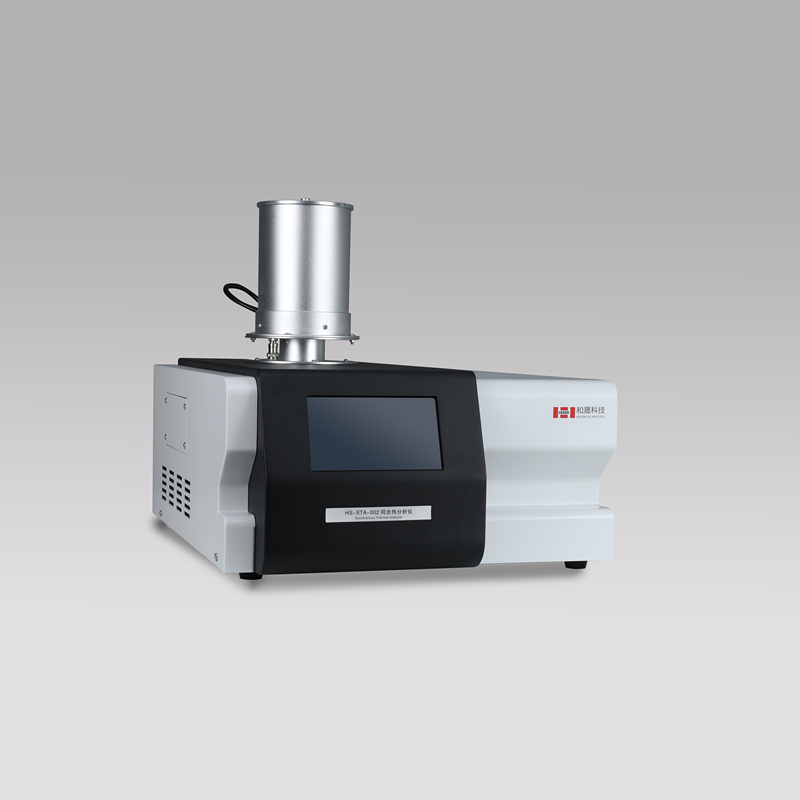
Shanghai Hesheng HS-STA-002 Synchronous Thermal Analyzer
Its working principle is based on precise temperature control and signal detection technology: placing trace samples in an inert or reactive atmosphere, heating, cooling, or maintaining a constant temperature according to a preset program, and synchronously recording changes in sample quality (such as decomposition, oxidation, adsorption) and thermal effects (such as phase transition, melting, crystallization) through high-sensitivity sensors. This synchronous testing mode not only avoids the errors caused by traditional separate testing, but also establishes a corresponding relationship between quality changes and thermal effects, providing a more complete scientific basis for analysis.
The core advantages of synchronous thermal analyzers are reflected in their efficiency and accuracy. The testing process does not require multiple sampling, and multiple data can be obtained in one experiment, greatly improving research efficiency.
In practical applications, this instrument is widely used in multiple fields: in the field of polymer materials, it can analyze the thermal stability, degradation kinetics, and glass transition temperature of polymers; In the research of new energy materials, thermal safety evaluation and energy storage performance analysis of electrode materials for lithium batteries; Assist in exploring sintering processes, phase transition laws, and catalytic reaction mechanisms in the field of inorganic materials and catalysts; It is also widely used in industries such as medicine, food, metallurgy, etc., providing key data support for product research and development, quality control, and process optimization.
As a bridge connecting the microstructure and macroscopic properties of materials, synchronous thermal analyzers are driving the deep development of materials science research with their powerful comprehensive analysis capabilities, becoming an important driving force on the path of technological innovation.