-
E-mail
heshengcn@163.com
-
Phone
13918154651
-
Address
201b, Building B, Fufeng Technology Industrial Park, No. 1200 Fenghua Road, Hongqiao Business District, Shanghai
Shanghai Hesheng Instrument Technology Co., Ltd
Synchronous thermal analyzer: a powerful tool for studying the thermal behavior of materials
Date: 2025-12-15Read: 0
As a core analytical instrument in the field of materials science, synchronous thermal analyzer (STA) has become a key tool for exploring the thermophysical and thermochemical properties of materials with its unique advantage of "one machine, two measurements". It achieves comprehensive analysis of material thermal behavior by synchronously collecting thermogravimetric (TG) and differential thermal/differential scanning calorimetry (DTA/DSC) signals of samples during programmed heating, cooling, or constant temperature processes.
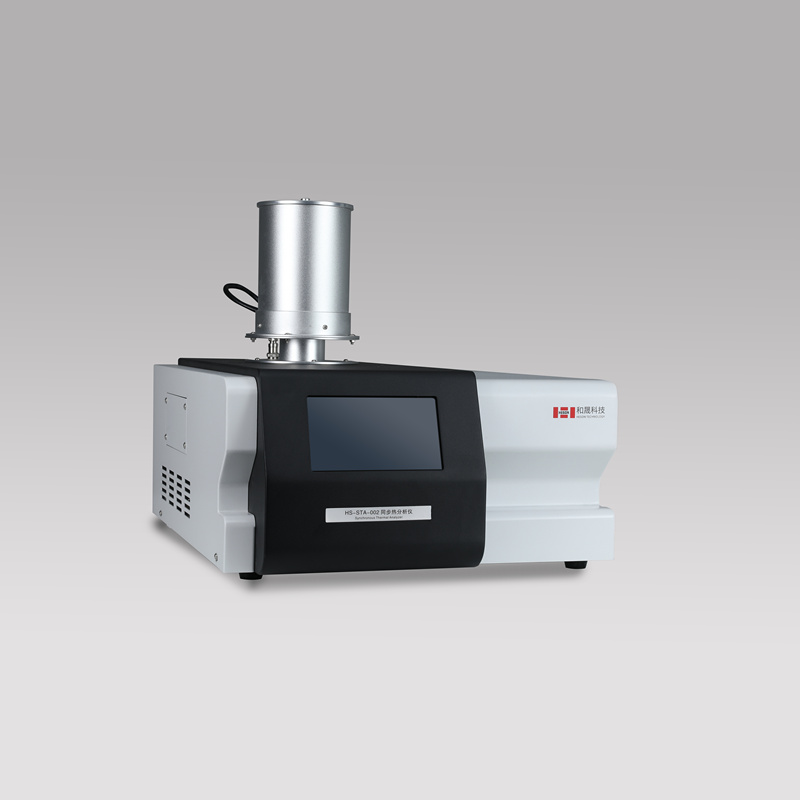
Shanghai Hesheng HS-STA-002 Synchronous Thermal Analyzer
Its working principle is based on precise temperature control and signal detection technology: the sample and reference material are placed in the same heating furnace, and the temperature is raised and lowered at a preset rate. The sensor captures the real-time changes in sample mass (TG) and temperature/heat difference with the reference material (DTA/DSC). This synchronous detection mode avoids systematic errors in individual testing and can more accurately establish the correspondence between thermal effects and quality changes, providing a complete data chain for analysis.
In terms of core functions, STA can achieve multidimensional analysis: it can not only measure the thermal stability, decomposition temperature, redox characteristics of materials, but also quantify key parameters such as enthalpy of phase transition, specific heat capacity, crystallinity, etc. It can also study dynamic processes such as adsorption/desorption, curing crosslinking, etc. From the thermal degradation mechanism of polymer materials, the thermal decomposition pathway of inorganic compounds, to the oxidation behavior of metal materials and the compatibility evaluation of composite materials, its applications cover multiple industries such as chemical engineering, new materials, electronics, and pharmaceuticals.
In terms of technological advantages, modern STA has high sensitivity, wide temperature range, multiple atmosphere controls (air, nitrogen, etc.), and automated operation characteristics, which can adapt to the testing needs of different forms of samples such as powder, film, and solid. In the development of new materials, it can accelerate formula optimization; In quality control, it can quickly identify the authenticity and performance of materials, providing reliable data support for scientific research and production.
As a bridge connecting the macroscopic properties and microscopic structures of materials, synchronous thermal analyzers have become the "thermal behavior decoders" in materials science research and industrial applications due to their efficient and accurate analytical capabilities.