-
E-mail
heshengcn@163.com
-
Phone
13918154651
-
Address
201b, Building B, Fufeng Technology Industrial Park, No. 1200 Fenghua Road, Hongqiao Business District, Shanghai
Shanghai Hesheng Instrument Technology Co., Ltd
Application of Thermogravimetric Analyzer for Thermal Stability or Thermal Decomposition Temperature of PCB Materials
Date: 2025-11-21Read: 0
PCB(Printed Circuit Board), The Chinese name is printed circuit board, also known as printed circuit board. It is an important electronic component, the support body of electronic components, and the carrier for electrical interconnection of electronic components. Due to its use of electronic printing technology, it is called a "printed" circuit board.

Thermogravimetric Analysis is a method of measuring the relationship between the mass of a substance and temperature (or time) under programmed temperature control. TGA can monitor subtle mass changes of substances during program-controlled temperature changes through a precise electronic balance. Based on the relationship between material mass and temperature (or time), the physical, chemical, and thermodynamic properties of materials can be studied and analyzed. TGA has a wide range of applications in the study of chemical reactions or qualitative and quantitative analysis of substances; In terms of PCB analysis, it is mainly used to measure the thermal stability or thermal decomposition temperature of PCB materials. If the thermal decomposition temperature of the substrate is too low, the PCB will experience board explosion or delamination failure at high temperatures during the soldering process.
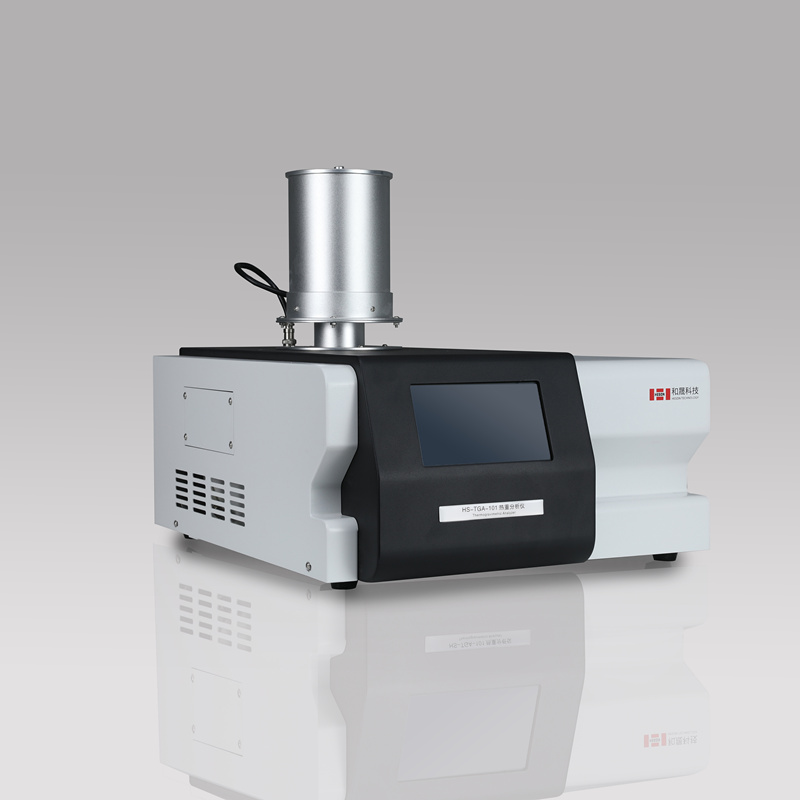
Shanghai Hesheng HS-TGA-101 Thermogravimetric Analyzer
Due to the fact that the location of the failed sample explosion is mainly distributed in areas with fewer devices and larger copper surfaces, during the lead-free reflow soldering process, this location has a higher heat capacity due to the smaller device location and greater heat absorption by the larger copper surface, resulting in a higher temperature at the failed part of the sample compared to other areas. The darker color of the failed part also confirms the above conclusion. The test results of the thermal decomposition temperature of the PCB material show that the thermal decomposition temperature of the PCB is 246.6 ℃. Considering the lead-free reflow soldering process, the highest soldering temperature is usually between 245 ℃ and 255 ℃. Obviously, during the reflow soldering process, the temperature of the three positions with fewer sample components is close to or even higher than the thermal decomposition temperature of the PCB. When the soldering temperature exceeds the thermal decomposition temperature of the PCB, the PCB will undergo thermal decomposition and produce gas, and the stress generated by gas expansion will cause PCB explosion and delamination. Due to the thermal decomposition temperature of the failed sample being close to the highest welding temperature, a certain proportion of the exploded plates failed.
