-
E-mail
heshengcn@163.com
-
Phone
13918154651
-
Address
201b, Building B, Fufeng Technology Industrial Park, No. 1200 Fenghua Road, Hongqiao Business District, Shanghai
Shanghai Hesheng Instrument Technology Co., Ltd
Accurate quantification: Analysis of core applicable materials for carbon black content tester
Date: 2025-12-16Read: 0
In the modification of polymer materials, production of rubber products, and cable industry, carbon black is an important reinforcing agent, coloring agent, and antistatic agent. Its content directly determines the mechanical properties, aging resistance, and electrical conductivity of the material. The carbon black content tester uses precise detection methods such as high-temperature burning and chemical digestion to achieve quantitative analysis of carbon black content in materials, providing core data support for production process optimization and product quality control. It is suitable for materials covering multiple fields such as rubber, plastic, and cable materials, and has developed differentiated testing schemes based on the characteristics of different materials to ensure the accuracy and reliability of the testing results.
Rubber materials are the main target of the carbon black content tester, covering the full chain testing of natural rubber and synthetic rubber products. In tire production, carbon black content usually accounts for 20% -30% of the rubber component, directly affecting the wear resistance and tear strength of the tire - for every 1% deviation in carbon black content, the wear life of the tire may fluctuate by 5% -8%. The tester uses the "air burning weighing method" to burn rubber samples at a temperature of 550 ℃± 5 ℃, remove organic components, weigh the residual carbon black mass, and accurately calculate the content. This method is also applicable to rubber products such as sealing rings and conveyor belts, and can effectively identify problems such as uneven dispersion of carbon black or feeding deviation in production, ensuring that the mechanical properties of rubber products meet the standards.
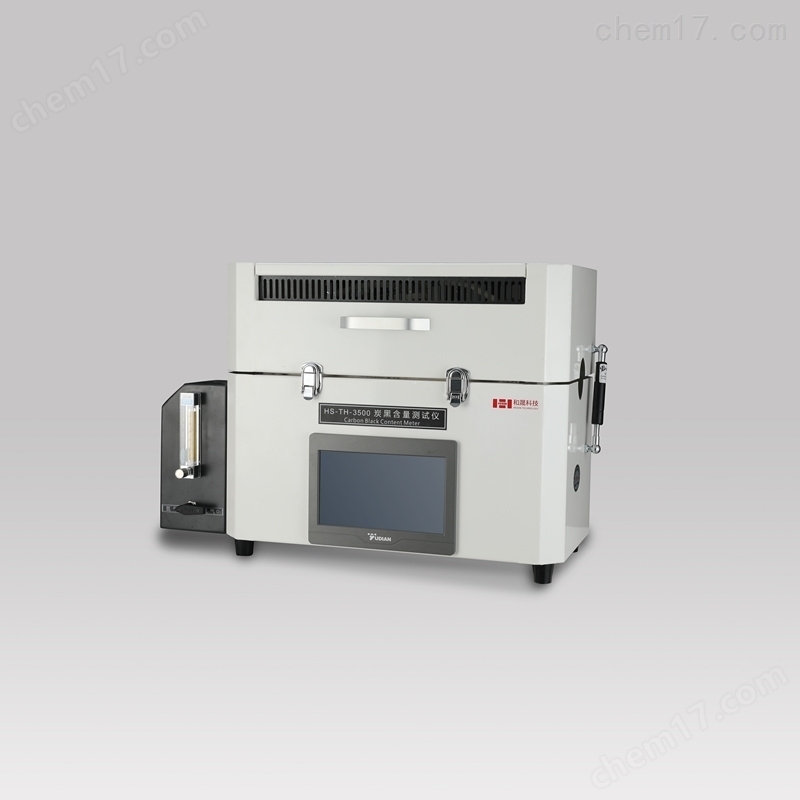
The detection of carbon black content in plastic materials is an important application scenario for testing instruments, especially for functional modified plastics. In the production of black masterbatch, carbon black content is the core quality control indicator. The tester can quickly determine the precise content of carbon black in the masterbatch through "thermogravimetric analysis" (measurement range 0.1% -99%), ensuring the uniformity of masterbatch coloring. For anti-static plastics (such as electronic component packaging trays), the conductivity of carbon black is positively correlated with its content. The precise detection of the tester can help enterprises control the carbon black content within the range of 5% -10%, ensuring anti-static effect and avoiding the decrease in plastic toughness caused by excessive content. In addition, for common plastics such as polyethylene and polypropylene, the tester can be adapted to different pre-treatment methods to eliminate the interference of fillers in plastics on the detection results.
Cable material is a key adaptation material for carbon black content testers, which directly affects the safe operation of cables. Adding carbon black to the insulation layer and sheath material of cables can improve their weather resistance and UV aging resistance. Its content should be strictly controlled within 2% -5% - too low a content can cause rapid aging and cracking of cables in outdoor environments, while too high a content may affect insulation performance. The tester adopts the "high-temperature ashing infrared absorption method", which can not only accurately determine the carbon black content, but also eliminate the interference of inorganic fillers such as calcium carbonate and talc powder in cable materials, with a detection accuracy of ± 0.05%. In the production of high-voltage cables, this testing can ensure that carbon black is evenly distributed in the cable material, avoiding the risk of insulation breakdown caused by local abnormal content.
In addition to mainstream materials, the carbon black content tester can also be adapted to special materials in multiple segmented fields. In conductive composite materials such as lithium battery electrode current collector coatings, the tester can accurately determine the content of nano carbon black, ensuring the stability of the material's conductivity performance; In the masterbatch and ink industry, the coloring and covering power of products can be controlled by detecting the carbon black content to avoid color difference between batches; In the field of rubber recycling, testing equipment can quickly evaluate the residual amount of carbon black in recycled materials, providing a basis for the graded utilization of recycled materials. For these special materials, the tester can achieve personalized adaptation of the detection plan by adjusting parameters such as burning temperature and holding time.
The differences in testing requirements for different materials have driven the technological upgrade of carbon black content testers. For organic components such as rubber that are prone to combustion, the testing instrument is equipped with an efficient smoke and dust filtration system to avoid environmental pollution; For materials with low melting temperatures such as plastics, a stepped heating program is adopted to prevent sample melting and agglomeration from affecting detection; For materials with high impurities such as cable materials, an automatic impurity removal algorithm is integrated to improve data accuracy. At the same time, modern testers often support automatic data recording and export functions, which can generate testing reports that comply with ISO, GB and other standards, meeting the compliance requirements of different industries.
The expansion of the applicability of the carbon black content tester is essentially the precise matching of its detection technology with material properties. From the mechanical performance guarantee of rubber products, to the functional modification control of plastics, to the safety performance control of cable materials, the testing instrument provides quality support for the entire process of material production by quantifying the core indicator of carbon black content. With the development of material modification technology, the carbon black content tester will further adapt to the testing needs of more new materials, help enterprises improve product quality through precise quantification, and promote the high-quality development of the polymer materials industry.