-
E-mail
info@auniontech.com
-
Phone
15601689581
-
Address
3rd Floor, Building 6, No. 2007 Hongmei Road, Xuhui District, Shanghai
Shanghai Haoliang Optoelectronic Equipment Co., Ltd
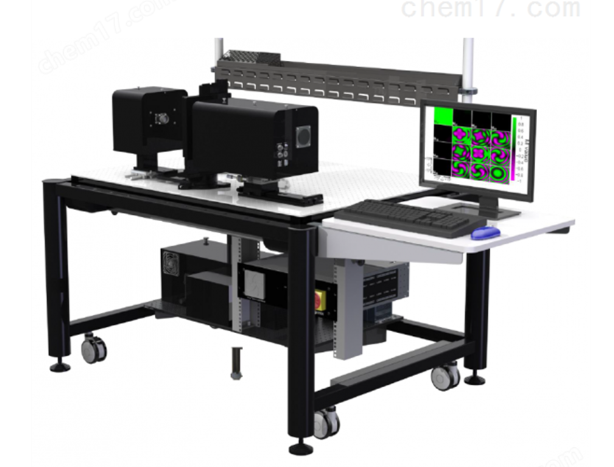
Time domain thermal reflection measurement system: principle, core components, and core value analysis of material thermal property detection
Date: 2025-10-23Read: 0
In the field of materials science and engineering, accurate measurement of the thermal properties of materials, such as thermal conductivity, thermal diffusivity, and specific heat capacity, is crucial for understanding the thermal behavior of materials, optimizing material properties, and designing efficient thermal management systems. Time domain thermal reflection measurement system (TDTR), as a non-contact thermal property measurement technology, has received widespread attention in recent years. This article will delve into the principles, core components, and core value of time-domain thermal reflection measurement systems in material thermal property testing.
1、 Principle
Based on the principle of thermal reflection, the thermal properties of materials are obtained by measuring the changes in reflectivity caused by surface temperature changes. The basic principle is as follows:
When the surface of a material is heated, an increase in surface temperature will cause a change in reflectivity. The change in reflectivity is closely related to the thermal properties of the material. By accurately measuring the changes in reflectivity over time, parameters such as thermal conductivity, thermal diffusivity, and specific heat capacity of materials can be derived.
1. Heat reflection principle
The reflectivity of the material surface varies with temperature, which can be measured by high-precision optical detection systems. When the surface of a material is heated, the change in reflectivity is proportional to the surface temperature. By measuring the changes in reflectivity, the temperature changes on the material surface can be indirectly obtained.
2. Laser heating and detection
Usually, two laser beams are used: one for heating the surface of the material, and the other for detecting changes in reflectivity. Heating laser generates transient temperature changes on the surface of the material, while detecting laser measures changes in reflectivity. By analyzing the curve of reflectivity over time, the thermal properties of the material can be extracted.
2、 Core components
The time-domain thermal reflection measurement system consists of multiple key components, each of which plays an important role in measurement accuracy and reliability.
1. Laser system
The laser system is the core part of the time-domain thermal reflection measurement system, including the heating laser and the detection laser. Heating lasers usually use pulsed lasers, which can provide high energy in a short period of time and quickly heat the surface of materials. Detection laser is used to measure changes in reflectivity, usually using continuous wave laser to ensure high accuracy and stability of the measurement.
2. Optical detection system
Optical detection systems are used to measure changes in reflectivity. High precision photodetectors and optical filters can accurately capture changes in reflected light and convert it into electrical signals. After amplification and processing, these signals are used to analyze the thermal properties of materials.
3. Data Collection and Analysis System
The data collection and analysis system is responsible for recording and processing measurement data. High precision data acquisition cards can record real-time changes in reflectivity, while advanced analysis software is used to extract thermal property parameters. Through complex algorithms and models, analysis software can accurately calculate the thermal conductivity, thermal diffusivity, and specific heat capacity of materials from the reflectance variation curve.
3、 The core value of material thermal property testing
It has significant core value in material thermal property testing, which makes it an important tool in materials science research and industrial applications.
1. Non contact measurement
Traditional thermal property measurement methods typically require contact measurements, which may cause damage or contamination to the material surface. The time-domain thermal reflection measurement system adopts non-contact measurement technology, which avoids direct contact with the material surface and is particularly suitable for measuring sensitive materials and micro/nanostructures.
2. High precision and high resolution
Capable of providing high-precision and high-resolution thermal property measurement results. By precise control of laser pulses and high-precision optical detection systems, small temperature changes and rapid thermal responses can be measured. This high-precision measurement capability enables the system to detect subtle changes in the thermal properties of materials, providing richer information for material research.
3. Multi parameter measurement
Not only can it measure the thermal conductivity of materials, but it can also simultaneously measure the thermal diffusivity and specific heat capacity. This multi parameter measurement capability enables the system to comprehensively evaluate the thermal properties of materials, providing more comprehensive data support for material design and optimization.
4. Suitable for various materials
Suitable for various materials, including metals, semiconductors, insulators, and composite materials. Regardless of the thermal conductivity of the material, the system can provide reliable measurement results. This wide applicability makes the system of significant value in materials science research and industrial applications.
5. Rapid measurement and real-time feedback
Capable of completing measurements in a short period of time and providing fast thermal property data. This rapid measurement capability is particularly suitable for online inspection and quality control in industrial production. At the same time, the system can provide real-time feedback on measurement results, helping researchers adjust experimental conditions in a timely manner and optimize the measurement process.
4、 Summary
Time domain thermal reflection measurement system, as a thermal property measurement technology, has gradually become an important tool for material thermal property detection due to its core advantages such as non-contact measurement, high precision and resolution, multi parameter measurement, wide material applicability, and fast measurement and real-time feedback. By accurately measuring the reflectivity changes on the surface of materials, the system can accurately extract thermal properties such as thermal conductivity, thermal diffusivity, and specific heat capacity, providing important data support for materials science research and industrial applications.