-
E-mail
info@auniontech.com
-
Phone
15601689581
-
Address
3rd Floor, Building 6, No. 2007 Hongmei Road, Xuhui District, Shanghai
Shanghai Haoliang Optoelectronic Equipment Co., Ltd
New perspective on environmental monitoring: the key role of multispectral cameras in ecological protection
Date: 2025-11-17Read: 0
With the continuous advancement of technology, multispectral cameras, as a monitoring tool, provide a new perspective for environmental monitoring and ecological protection. It can capture spectral information beyond the visible range of the human eye, revealing more details about ecosystem health and environmental changes, becoming an important technological means in ecological protection.
1、 Capture multidimensional information and reveal ecological details
The core advantage of a multispectral camera is its ability to capture information from multiple spectral bands. Compared with traditional RGB cameras, multispectral cameras can not only record images in the visible light range, but also capture spectral data in near-infrared, shortwave infrared and other bands. These additional spectral information can reveal more details about vegetation health, soil composition, water pollution, and other aspects.
For example, in vegetation monitoring, multispectral cameras can accurately assess the growth status and health level of plants by analyzing their reflectance spectra. Healthy vegetation typically has high reflectivity in the near-infrared band, while damaged or diseased vegetation exhibits different spectral characteristics. Through this spectral analysis, researchers can promptly detect the stress on vegetation, such as diseases, pests, drought, or pollution, and take corresponding protective measures.
2、 Accurate monitoring of ecosystem health
Another key role of multispectral cameras in ecological conservation is to accurately monitor the health status of ecosystems. The ecosystem is a complex whole, and its health is influenced by multiple factors, including vegetation cover, soil quality, water pollution, and so on. Multispectral cameras can simultaneously capture information from various aspects, providing researchers with a comprehensive assessment of ecosystem health.
For example, in wetland conservation, multispectral cameras can simultaneously monitor the growth status of vegetation, the degree of soil salinization, and the eutrophication of water bodies. By analyzing these multidimensional data, researchers can more accurately assess the health status of wetland ecosystems and develop scientifically reasonable protection and restoration plans. This precise monitoring capability not only improves the efficiency of ecological protection work, but also ensures the pertinence and effectiveness of protection measures.
3、 Assist in ecological protection decision-making
The rich data provided by multispectral cameras provides strong support for ecological conservation decisions. By analyzing multispectral images, researchers can gain a clearer understanding of the changing trends and potential threats to ecosystems. These data can be used to establish ecological models, predict future changes in ecosystems under different protection measures, and provide scientific basis for decision-makers.
For example, in forest conservation, multispectral cameras can monitor vegetation restoration after forest fires, helping researchers evaluate the effectiveness of different restoration measures. By comparing spectral data from different regions, decision-makers can choose suitable restoration strategies to improve the speed and stability of forest ecosystem restoration. This data-driven decision-making approach not only improves the scientificity of ecological protection work, but also reduces resource waste caused by blind decision-making.
4、 Promote innovation and development of ecological protection technologies
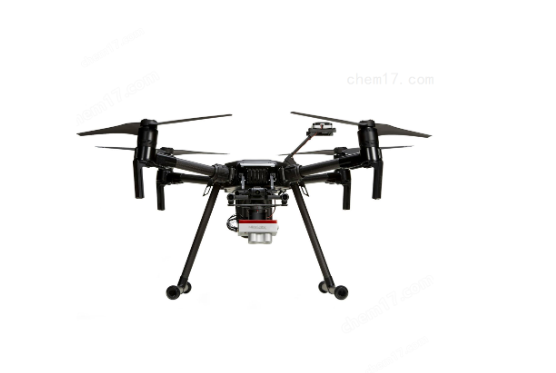
The application of multispectral cameras not only improves the efficiency and accuracy of ecological protection work, but also promotes innovation and development of ecological protection technology. With the continuous advancement of drone technology and satellite remote sensing technology, multispectral cameras can be mounted on drones or satellites to achieve large-scale, high-frequency environmental monitoring. This technological combination not only improves the coverage of monitoring, but also reduces monitoring costs, making long-term and continuous environmental monitoring possible.
In addition, the data from multispectral cameras can be combined with other environmental monitoring technologies, such as meteorological monitoring, soil sensors, etc., to form a comprehensive environmental monitoring network. By integrating these multi-source data, researchers can gain a more comprehensive understanding of the dynamic changes in ecosystems and provide more scientific and accurate technical support for ecological protection.
In summary, multispectral cameras play a crucial role in ecological conservation. It captures multidimensional spectral information, accurately monitors ecosystem health, provides scientific basis for ecological protection decisions, and promotes innovation and development of ecological protection technologies.