-
E-mail
1073869251@qq.com
-
Phone
13564807393
-
Address
No. 216 Gangye Road, Xiaokunshan Town, Songjiang District, Shanghai
Shanghai Forsyth International Trade Co., Ltd
Analysis of the entire operation process of tetrahydrothiophene detector
Date: 2025-11-24Read: 0
As the core equipment for safety testing in the gas industry,The German Delger X-am5000 tetrahydrothiophene detector, with its high-precision sensor and intelligent design, is widely used in natural gas pipeline odorant concentration monitoring, confined space gas detection and other scenarios.This article analyzes the standardized operation methods of the entire process from device startup, calibration detection to data management.
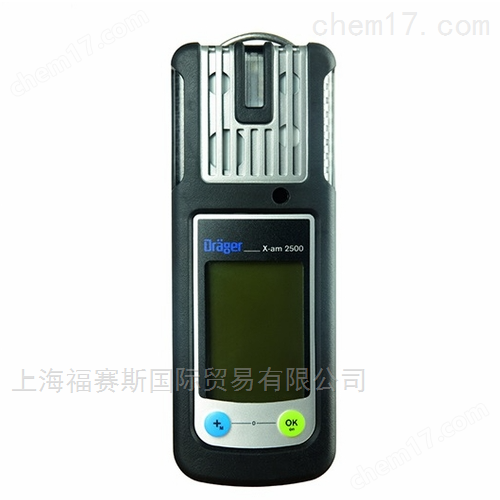
1、 Equipment startup and preheating
1. Power configuration: For first-time use, a rechargeable nickel hydrogen battery or alkaline battery needs to be inserted. The battery compartment supports hot swapping, and the charging kit can achieve continuous 12 hour battery life, which can be extended to 40 hours in energy-saving mode.
2. Power on self-test: Press and hold the OK button for 3 seconds, and the screen will display the software version, sensor status, remaining calibration days, and functional testing interval in sequence. During the preheating period of the sensor, the measured value flashes and is accompanied by a warning symbol. Alarm output is prohibited during this stage.
3. Status confirmation: After preheating is completed, the screen displays the current gas concentration value. If the warning symbol does not disappear, check if the air intake is blocked or if the sensor is damaged. For example, a gas company once experienced abnormal display due to dust covering the air inlet, which was restored after cleaning.
2、 Calibration and testing operations
1. Preparation of calibration environment
Sensor calibration must be completed in the calibration chamber before testing. Taking tetrahydrothiophene detection as an example:
① Connect the calibration chamber to the flow control valve to ensure that the measured gas pressure remains stable at 300-400hPa.
② Use the Delger XXS Odorant sensor to perform two-point calibration using calibration gas.
2. Testing process:
① Place the device into the calibration chamber, open the flow valve, and wait for 3-5 minutes until the concentration display stabilizes.
② When detecting confined spaces, an external pump and a 30 meter extension pipe can be used, and the pump will automatically start and transmit real-time data to the host.
3、 Data Management and Maintenance
1. Data recording and transmission: The device can store 20000 sets of data, connect to a PC via USB or Bluetooth, and generate standardized reports containing time, location, and concentration curves using CC Vision software. For example, a certain refinery used this function to trace the cause of concentration exceeding the standard during a certain period of time, and optimized the strategy of adding odorants.
2. Daily maintenance
① Wipe the casing with a soft cloth every week to avoid solvent corrosion of the sensor.
② Calibrate Ex (combustible gas), O2 (oxygen), H2S (hydrogen sulfide), CO (carbon monoxide) sensors every 6 months, and calibrate other gas sensors once a year.
③ When stored for a long time, the battery needs to maintain 50% charge and the ambient temperature should be controlled between -20 ℃ and 50 ℃.
4、 Typical fault handling
1. Alarm lock: If the concentration of combustible gas exceeds the range, the equipment needs to be restarted in fresh air or the alarm needs to be automatically confirmed through the oxygen channel function.
2. Sensor poisoning: After coming into contact with catalyst toxins such as silicon and sulfur, the sensor needs to be replaced and recalibrated.
The Delger X-am5000 tetrahydrothiophene detector simplifies the complex process of tetrahydrothiophene detection into three steps of "calibration detection analysis" through modular design and intelligent operation, providing an efficient and reliable safety monitoring solution for the gas industry.