-
E-mail
1572356227@qq.com
-
Phone
13701643146
-
Address
No. 334 Jiulong Road, Zhujiajiao Town, Qingpu District, Shanghai, China
Shanghai Fichal Analytical Instrument Co., Ltd
Temperature Range and Application Analysis of Desktop High Speed Freeze Centrifuge
Date: 2025-07-27Read: 1
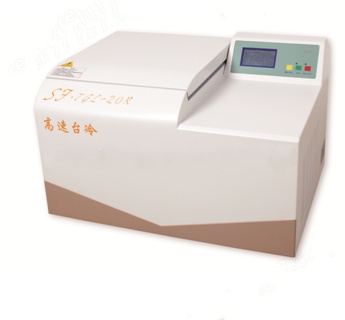
Desktop high-speed freeze centrifuge is a commonly used high-performance equipment in laboratories, widely used in fields such as biology, chemistry, medicine, etc., especially in experiments such as separation, purification, and concentration, playing an important role. One of its biggest features is its precise temperature control system, which can perform high-speed centrifugation operations within a set temperature range, thereby avoiding the influence of high temperature on the sample and ensuring the accuracy and reliability of experimental results. This article will focus on exploring the temperature range of desktop high-speed cryogenic centrifuges and their importance in experiments.
1、 Temperature control system
Desktop high-speed freeze centrifuges are typically equipped with powerful cooling systems that can precisely control temperature during the centrifugation process. The temperature control system usually consists of components such as a freezer, temperature sensor, heater, etc. These components work together to ensure that the equipment can operate stably within the specified temperature range.
The common temperature range is generally between -20 ℃ and+40 ℃, and some models of equipment can reach temperatures of -30 ℃ or lower. This temperature range is crucial for the processing of various samples, especially for biological samples that require low-temperature preservation, such as proteins, enzymes, cells, etc. They can maintain activity at lower temperatures to avoid denaturation or degradation due to high temperatures during centrifugation.
2、 The influence of low temperature on sample separation
Low temperature is crucial for the separation and purification process of samples. In high-speed centrifugation operations, the speed of the centrifuge is often very high, and the centrifugal force also increases accordingly. At this point, if the temperature is too high, the physical properties of the sample may change due to thermal damage, resulting in poor separation efficiency. Especially biological samples, such as DNA, RNA, proteins, etc., are easily degraded at high temperatures. Therefore, by precisely controlling the temperature, the equipment can effectively avoid the sample from being affected by heat, ensuring separation efficiency while protecting the integrity of the sample.
3、 Selection and practical application of temperature range
Application at temperatures below -20 ℃: In some experiments, especially for the separation and storage of biological samples, lower temperatures are usually required. For example, when separating nucleic acids such as RNA and DNA, if the temperature is too high, the nucleic acids may degrade. At this point, setting the temperature below -20 ℃ can effectively prevent degradation reactions and maintain the stability of nucleic acids.
Temperature application from 2.0 ℃ to+4 ℃: For experiments such as maintaining enzyme activity and centrifuging cell samples, it is usually necessary to maintain the temperature between 0 ℃ and 4 ℃. At this point, low temperature can effectively inhibit enzyme activity, prevent enzymatic reactions from occurring, and protect the molecular structure in the sample. Especially for protein separation, enzyme reactions, and cell lysis experiments, which are usually conducted within this temperature range, the reliability of experimental results can be effectively improved.
3. Temperature application from+10 ℃ to+40 ℃: For certain chemical samples or experiments that require operation at higher temperatures, the temperature control system of the equipment can be adjusted to room temperature or even higher temperatures. These temperatures are suitable for some conventional chemical separation and purification operations, while ensuring the separation efficiency and stability of the sample at high speeds.
4、 Summary
The temperature range of a desktop high-speed freeze centrifuge plays a crucial role in laboratory operations, as it can provide precise temperature control according to different experimental needs to ensure the separation efficiency and stability of samples. Understanding and making reasonable use of the temperature control system of the equipment can not only improve experimental efficiency, but also ensure the accuracy of experimental results. Ensuring the efficient operation of equipment through regular inspection and maintenance is a key point that laboratory personnel cannot ignore when using desktop high-speed cryogenic centrifuges.