-
E-mail
shboonsci@126.com
-
Phone
13816245807
-
Address
3rd Floor, Building 6, No. 537 Songda Road, Qingpu District, Shanghai
Shanghai Bono Biotechnology Co., Ltd
Solution of Vacuum Centrifugal Concentrator in DNA/RNA Concentration and Purification
Date: 2025-10-23Read: 1
1 Overview of Vacuum Centrifugal Concentration Technology
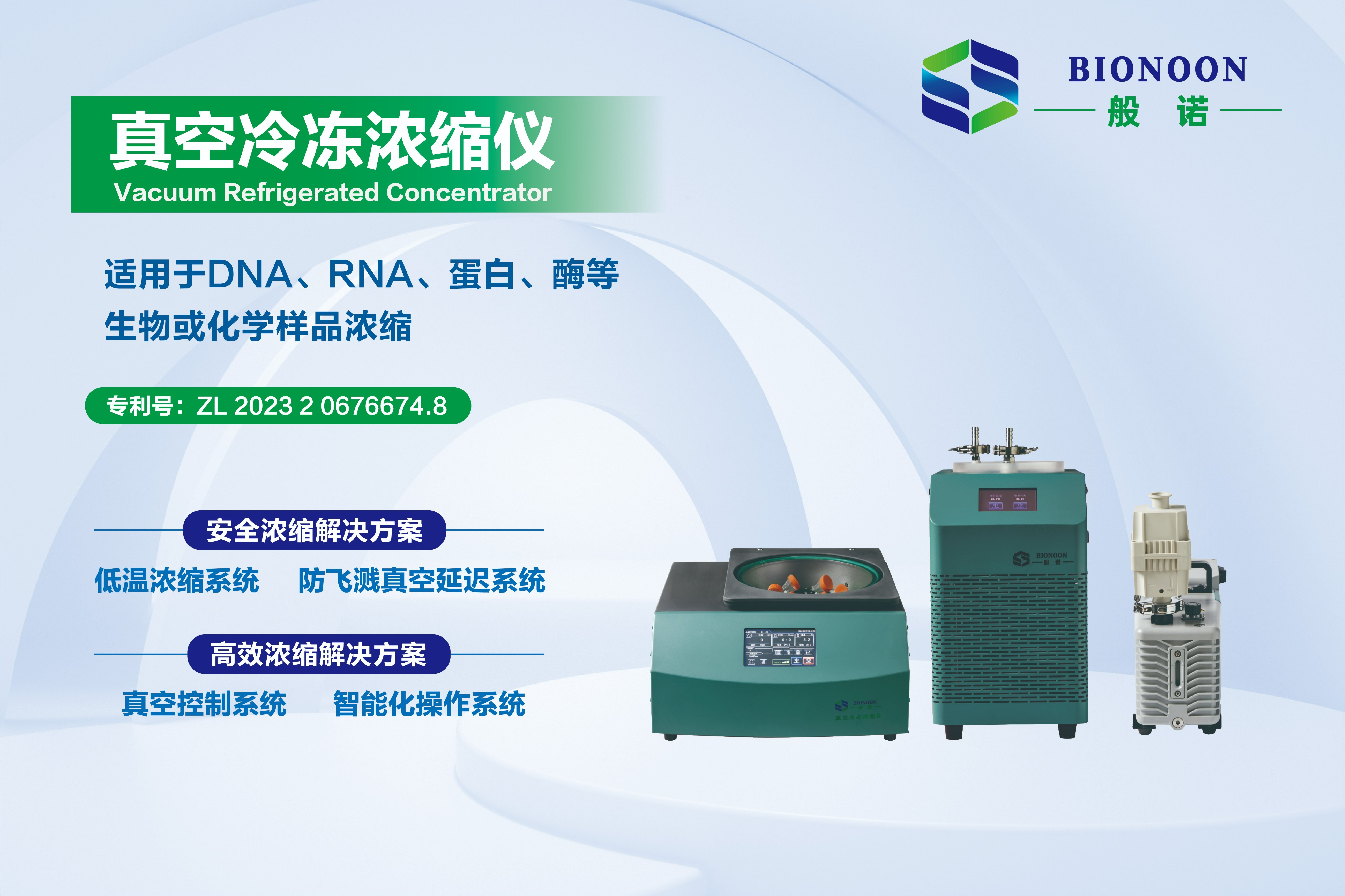
The vacuum centrifugal concentrator is an important equipment used for sample preparation and pretreatment in modern laboratories. It uses a combination of centrifugal force, vacuum, and heating techniques to rapidly evaporate the solvent in the sample, thereby achieving the goal of sample concentration or drying. The core principle is to reduce the internal pressure of the system by vacuuming, significantly lowering the boiling point of the solvent, allowing it to boil and evaporate at low temperatures; At the same time, the centrifugal force generated by centrifugal action can keep the sample concentrated at the bottom of the centrifuge tube, effectively avoiding the occurrence of boiling, foaming or cross contamination of the sample, and ensuring the recovery rate of the sample.
A complete centrifugal concentration system typically includes components such as a vacuum centrifugal concentrator host, dedicated rotor, cold trap, vacuum pump, and condenser bottle. Among them, the role of the cold trap is crucial as it can effectively capture most of the solvent vapor that may cause damage to the vacuum pump, providing effective protection for the vacuum pump.
This technology is widely used inDNA/RNAIt is particularly suitable for handling heat sensitive biological samples in multiple fields such as research, biochemistry, pharmaceutical research, food safety testing, and forensic science. Because in a low-temperature vacuum environment, it can effectively prevent sample deactivation and oxidation.
2 DNA/RNASpecialized solution for concentration and purification
In molecular biology research,DNAandRNAThe concentration and purification arePCRThe important pre-processing steps for downstream applications such as sequencing and cloning. Although the traditional ethanol precipitation method is commonly used, it has the disadvantages of cumbersome operation, long time consumption, and easy sample loss. Vacuum centrifugal concentration technology provides a more efficient and reliable solution to these problems.
2.1 Working principle and advantages
InDNA/RNADuring the concentration process, the vacuum centrifuge concentrator creates a low-pressure environment to allow commonly used solvents such as ethanol and isopropanol to evaporate at lower temperatures. The centrifugal force ensures that temperature sensitive nucleic acid molecules will not be damaged in their structural integrity due to violent boiling; Meanwhile, the low-temperature environment achieved through the use of cold traps (temperatures can be as low as- 50℃to- 110℃)It can ensure that the activity of biomolecules is not disrupted.
Compared to traditional methods, vacuum centrifugal concentration technologyDNA/RNASignificant advantages in processing:
high recoveryCentrifugal action can prevent sample boiling and loss, and the sample retention rate can exceed95%
Maintain activityLow temperature vacuum environment can prevent nucleic acid degradation and inactivation
high-throughputMultiple samples can be processed at once, for example, some models can be processed simultaneously 132 a1.5/2mLSample specifications
Easy to operateAdopting automated program control to reduce human operational errors
save timeFast concentration speed, significantly reducing experimental time
2.2 operating procedure
The following is done using a vacuum centrifuge concentratorDNA/RNAStandard operating procedure for concentration:
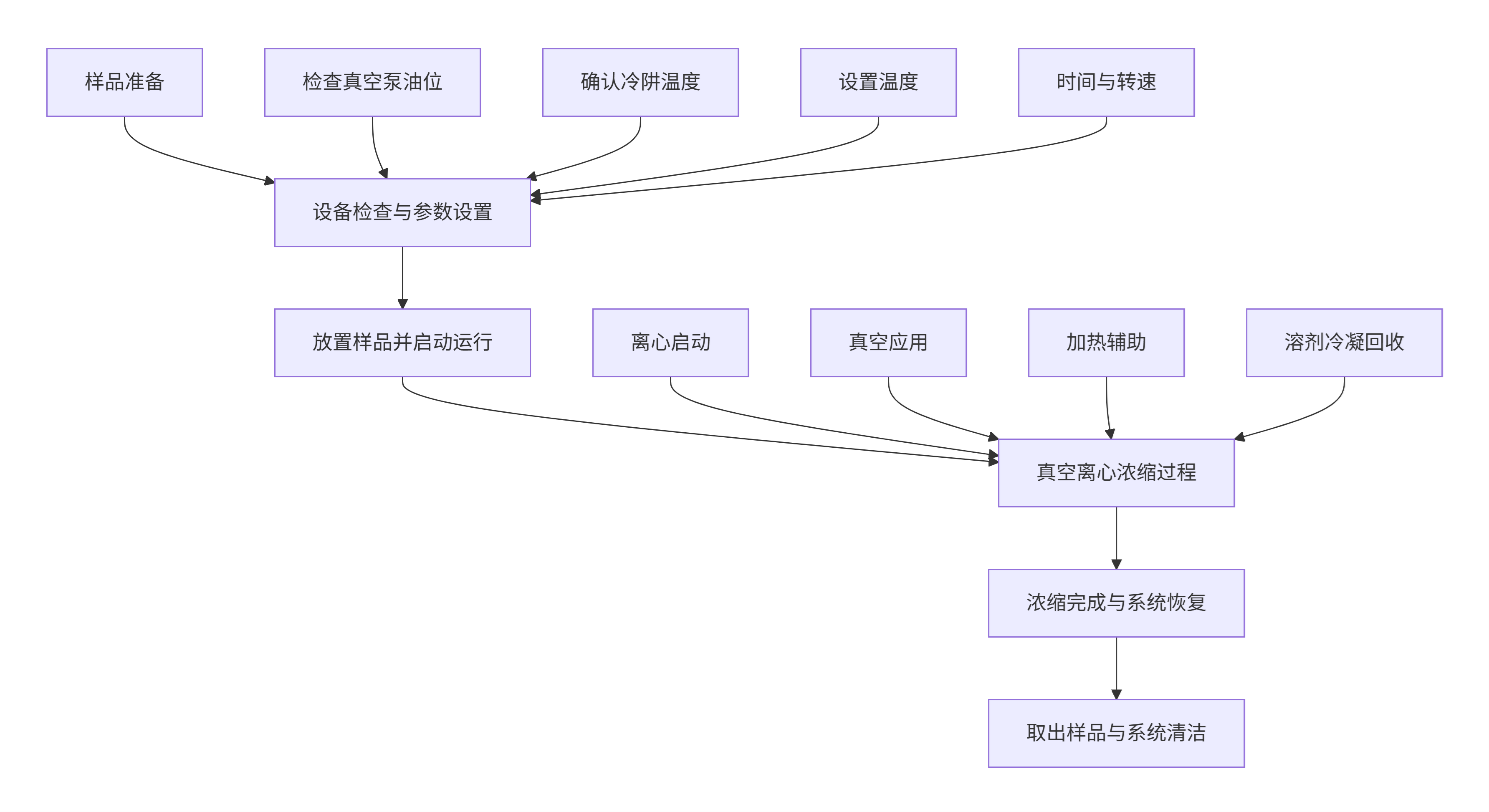
Step 1: Sample Preparation
Will contain targetsDNA/RNAMix the solution with the added organic solvent (such as ethanol or isopropanol) evenly, and then divide it into corresponding centrifuge tubes. Ensure that the sample volume does not exceed the maximum capacity of the centrifuge tube and that the sample loading is balanced.
Step 2: Equipment inspection and parameter setting
Check the oil level and cold trap status of the vacuum pump
Set appropriate parameters based on sample characteristics and solvent type:
Temperature: usually set at30-60℃When processing heat sensitive samples, a lower temperature should be chosen
Speed: Depending on the rotor type, it is usually within100-2000rpmAdjustment between
Time: Set according to the sample volume and solvent properties, generally0.5-2hour
Vacuum degree: usually controlled at10-1000Pawithin the scope of
Step 3: Operation and Monitoring
After starting the program, the instrument will automatically run according to the set parameters
Real time monitoring of concentration process through observation window or centrifugal imaging function
The system will automatically coordinate centrifugation, vacuum, and heating functions to ensure efficient concentration
Step 4: Sample Recycling
After the program ends, the system will automatically release pressure and return to normal pressure
Take out the concentrated sample, which usually gathers at the bottom of the centrifuge tube
Resuspend the concentrated sample with an appropriate amount of buffer solutionDNA/RNA, for future experimental use
Step 5: Maintenance and Cleaning
Clean the recovered solvent from the cold trap
Clean and disinfect the rotor and cavity to avoid cross contamination
2.3 Key parameter optimization
For inDNA/RNATo achieve optimal results during the concentration process, the following key parameters need to be optimized:
temperature control
processDNAWhen sampling, a higher temperature can usually be chosen (such as 60℃)To achieve rapid concentration without affecting subsequent sequencing reactions; And for sensitive onesRNASample, it is recommended to use a lower temperature(30-40℃)To prevent its degradation.
Vacuum degree adjustment
A suitable vacuum degree can significantly accelerate the solvent evaporation rate, and it is generally recommended to control the vacuum degree at10-1000Pabetween. However, for the sample easy to foam, the pressure can be properly increased (that is, the vacuum degree can be reduced) to reduce the production of foam.
Rotor selection
Suitable rotors need to be selected according to different sample capacity requirements, as shown in the following table:
rotor type |
Sample capacity |
Applicable sample size |
Standard rotor |
1.5/2mL×132 |
High throughput small volume samples |
Medium sized rotor |
5mL×72 |
Medium volume sample |
Large rotor |
10-15mL×28 |
Larger volume samples |
Hybrid rotor |
50mL×8+10mL×8 |
Multi specification mixed sample |
Time Settings
The concentration time is influenced by multiple factors such as the initial volume of the sample, solvent type, set temperature, and vacuum degree. In general, it will100μLConcentrate the aqueous solution to10μLAt that time, in 60℃Under certain conditions, it takes about30-60minute.
3 Characteristics and advantages of the solution
This solution is aimed atDNA/RNAThe special requirements for concentration and purification provide a comprehensive optimized technical solution, with the following specific features and advantages:
3.1 Protect the integrity of the sample
Low temperature concentration: to avoid loss, denaturation, or decreased activity of nucleic acid samples
Anti cross contamination: Centrifugal action ensures no loss or cross contamination of the sample
Anti oxidation: Vacuum environment can prevent sample oxidation and maintain biological activity
3.2 efficient processing
Rapid evaporation: The boiling point of the solvent decreases in a vacuum environment, and combined with a heating system, the evaporation rate is significantly increased
High throughput: supports processing tens to hundreds of samples at a time, significantly improving experimental efficiency
Programmatic control: can store multiple sets of programs, achieve one click operation, simplify workflow
3.3 Widely applicable
This scheme is not only applicable to conventionalDNA/RNAConcentrated and can also be applied to the following scenarios:
Pre processing of sequencing samples: for low concentrationsDNAConcentrate the sample again to improve sequencing success rate
Removing alcohol residues: quick removalDNAAlcohol pollutants in the sample do not affect subsequent sequencing reactions
Concentration and purification after nucleic acid extraction: replacing traditional ethanol precipitation method to improve recovery efficiency and result consistency
4 Troubleshooting and Precautions
To ensure that the vacuum centrifugal concentrator isDNA/RNATo maintain optimal performance during the concentration process, the following are common problems and corresponding solutions for reference:
| Problem phenomenon | Possible reasons | Solution |
|---|---|---|
Low concentration efficiency |
Insufficient vacuum |
Check the sealing of the equipment and confirm that the vacuum pump is working properly |
Sample foaming or loss |
Vacuum application is too urgent |
Enable the vacuum delay function, centrifuge first and then evacuate |
Unstable rotational speed |
Power supply issue or motor failure |
Check the power connection and contact technical support if necessary |
High noise or vibration |
Sample placement is unbalanced |
Adjust the sample distribution again to ensure balance |
The efficiency of the cold trap decreases |
Refrigeration system malfunction |
Check the operating status of the compressor and clean the surface of the cold trap |
In addition, the following precautions should be taken during daily use:
Regularly clean the equipment chamber and rotor to avoid contamination
Ensure that the sample tube is well sealed to prevent leakage
Select the appropriate cold trap temperature based on the solvent type
When processing high salt concentration samples, appropriately reduce the temperature and vacuum degree to prevent precipitation
5 summary
The vacuum centrifugal concentrator isDNA/RNAThe concentration and purification provide an efficient, reliable, and automated solution. By optimizing the three key parameters of centrifugation, vacuum, and heating, this technology can quickly complete nucleic acid concentration while protecting the biological activity of the sample, significantly improving experimental efficiency and result reliability. Compared with traditional methods, it has significant advantages in recovery rate, processing flux, and operational convenience, especially suitable for modern molecular biology research and high-throughput sequencing applications that require high-quality nucleic acid samples.
With the continuous development of technology, the functions of vacuum centrifugal concentrators will continue to improve, providing stronger technical support for life science research.