-
E-mail
shbd21@163.com
-
Phone
15021716938
-
Address
Building 2, Bingfeng Technology Park, 288 Chaxi Road, Jiading District, Shanghai
Shanghai Baidie Technology Co., Ltd
The electro-hydraulic servo dynamic fatigue testing machine has the characteristics of real-time data acquisition and analysis
Date: 2025-07-13Read: 0
The electro-hydraulic servo dynamic fatigue testing machine is a testing device used to simulate the fatigue performance of materials or structures under dynamic loads. It combines electro-hydraulic servo control technology with fatigue testing principles, enabling precise control and efficient testing, and is widely used in fields such as aerospace, automotive, mechanical, and civil engineering. The main function is to simulate the fatigue process of materials or structures by applying dynamic loads, in order to evaluate the potential fatigue damage that may occur during long-term use. The working principle of the testing machine is based on an electro-hydraulic servo control system, which controls the pressure changes of the hydraulic system through an electro-hydraulic servo valve, thereby driving the servo cylinder to produce corresponding displacement or force output.
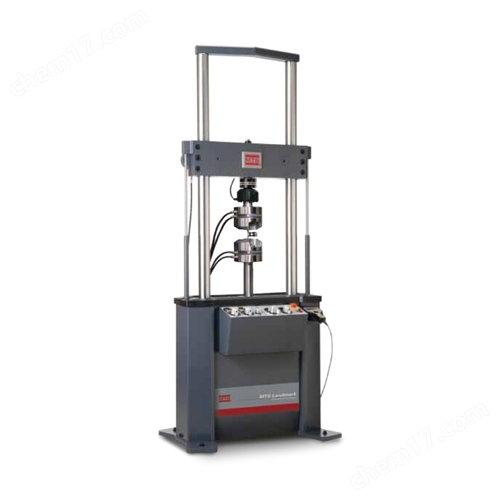
Electro hydraulic servo dynamic fatigue testing machineJob characteristics:
1. High precision and high stability: Adopting electro-hydraulic servo control technology, real-time feedback of test data through high-precision pressure sensors and displacement sensors can accurately control loading force and displacement, ensuring high accuracy and repeatability of test results.
2. Dynamic loading capability: Unlike traditional static loading fatigue testing machines, it can simulate complex dynamic loads, including cyclic loads with different waveforms such as sine waves, square waves, and triangular waves, and is suitable for simulating a wider range of working conditions.
3. Multi channel synchronous control: It can perform multi-channel synchronous control, test multiple samples or parameters simultaneously, and adapt to large-scale experimental needs.
4. Real time data acquisition and analysis: The testing machine is equipped with an efficient data acquisition and analysis system, which can monitor parameters such as load, deformation, stress, etc. in real time during the testing process, and process and analyze the results through a computer. Some systems also support functions such as fatigue life prediction and damage analysis.
5. Complex loading modes: The testing machine supports different loading modes, such as single axis and multi axis loading, loading with different frequencies and amplitudes, etc. It can simulate fatigue situations in various practical working conditions and has strong adaptability.
Application areas of electro-hydraulic servo dynamic fatigue testing machine:
1. Aerospace: High load, high-frequency moving components such as airplanes and spacecraft need to undergo rigorous dynamic fatigue testing to ensure their long-term stability and safety. Capable of simulating complex flight loads and testing the fatigue life of aerospace materials and components.
2. Automotive industry: The suspension system, body structure, engine and other components of automobiles are often subjected to dynamic loads in practical use, which can simulate dynamic loads in road conditions and driving environments, providing important experimental data for the research and quality control of automotive components.
3. Mechanical engineering: Mechanical equipment, transmission systems, etc. often undergo periodic loading during operation, and the accumulation of fatigue damage may lead to equipment failure. Can assist engineers in fatigue life assessment and optimization design of mechanical components.
4. Civil engineering: Civil engineering facilities such as bridges and building structures are often affected by dynamic loads such as wind and earthquake loads. Simulating the effects of these loads can help evaluate the fatigue durability of the structure.
5. Materials Science and Research: This testing machine is also widely used in the study of fatigue performance of materials, especially in the development process of high-strength alloys, composite materials, and new materials, which can provide accurate testing data for the fatigue characteristics of materials.