-
E-mail
347651462@qq.com
- Phone
- Address
Shanghai Analytical Instrument Sales Center First Business Department
Multi sided expert in precise analysis of complex systems using linear ion trap mass spectrometer
Date: 2025-11-24Read: 0
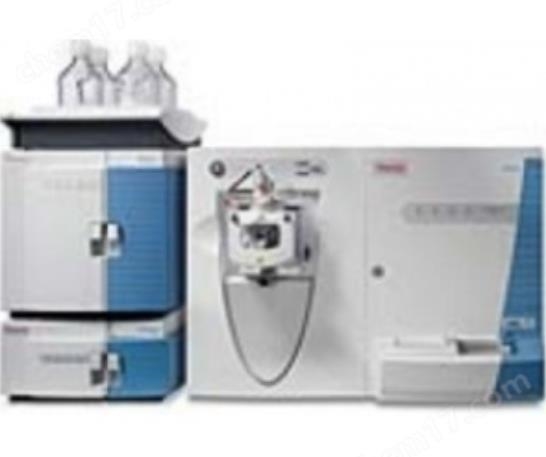
In cutting-edge fields such as proteomics, metabolomics, and environmental toxicology,The linear ion trap mass spectrometer, with its high sensitivity, high resolution, and multi-stage mass spectrometry analysis capabilities, has become a core tool for analyzing trace compounds in complex biological samples and environmental matrices.Its unique working principle and functional design make it irreplaceable in qualitative and quantitative analysis, structural identification, and dynamic process tracking.
1、 Core function: Deep analysis from single level to multi-level
1. Full scan and selective ion monitoring (SIM): Linear ion traps dynamically capture ions and can simultaneously perform full mass range scanning (m/z 50-2000) and specific ion monitoring.
2. Multi stage mass spectrometry (MS ⁿ) capability: By alternately applying auxiliary RF voltage, the ion trap can achieve serial analysis of parent ion fragmentation and daughter ion re fragmentation (MS ³ or even MS ⁴). In protein post-translational modification research, MS ⁿ can gradually strip phosphorylation, glycosylation and other functional groups, accurately locate modification sites.
3. Ion storage and reaction control: The "ion storage" characteristics of ion traps enable them to support long-term reaction monitoring (SRM). In pharmacokinetic studies, the concentration changes of prototype drugs and their metabolites can be tracked in real time, and dynamic curves of more than 10 components can be drawn in a single injection. The data collection frequency reaches 50 times per second.
2、 Technical advantages: sensitivity, flexibility, and high throughput
1. Ultra wide dynamic range: Thermo Fisher LTQ Orbitrap series linear ion trap combined with orbital trap technology, with a dynamic range covering 6 orders of magnitude, can simultaneously detect high abundance proteins and low abundance biomarkers, avoiding sample dilution or enrichment steps.
2. Space charge effect suppression: By optimizing the electrode structure and voltage parameters of the ion trap, signal distortion caused by ion repulsion can be effectively reduced. In the detection of polycyclic aromatic hydrocarbons (PAHs) in environmental water samples, even with an ion density of 10 ⁶ ions/cm ³, peak symmetry can still be maintained, and the quantitative repeatability RSD is less than 5%.
3. High throughput compatibility: When combined with nanoLC, linear ion traps can achieve automated analysis of 30 samples per minute. In single-cell proteomics research, combined with microfluidic chip injection, more than 500 proteins can be identified in a single run, covering cellular heterogeneity information.
3、 Typical application scenarios
1. Discovery of disease biomarkers: Through untargeted metabolomics analysis, linear ion traps can screen for lipid metabolism biomarkers associated with Alzheimer's disease from plasma.
2. Traceability of environmental pollutants: In the study of soil heavy metal pollution, combined with laser ablation sampling, the distribution of lead and cadmium forms in micro areas (diameter<50 μ m) can be located.
3. Drug development screening: In ADME evaluation, the rapid MS capability of linear ion traps can simultaneously analyze prototype drugs, metabolites, and drug protein adducts, accelerating lead compound optimization.
Conclusion
From single-cell protein analysis to component tracing of atmospheric particulate matter, linear ion trap mass spectrometer reveals the deep laws of life activities and environmental changes from a "microscopic perspective". Its technological iteration not only pushes the boundaries of analytical chemistry, but also becomes the core infrastructure in fields such as precision medicine and green chemistry, continuously empowering human cognition and regulation of complex systems.