-
E-mail
wanchensyj@163.com
-
Phone
15550413681
-
Address
No. 4, Zhaozhuang Industrial Park, Liuchangshan Road, Shizhong District, Jinan City, Shandong Province
Shandong Wanchen Testing Machine Co., Ltd
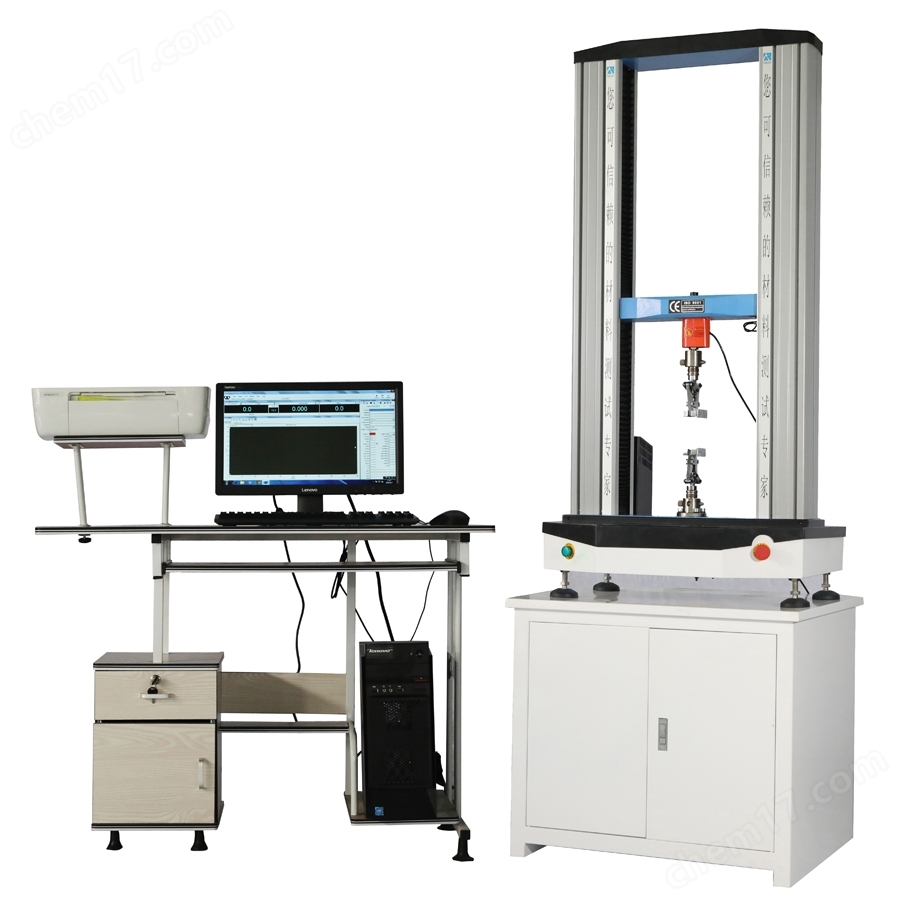
Composite material tensile testing machine: full analysis of core principles and high-precision testing technology
Date: 2025-12-17Read: 0
In the field of modern materials science, composite materials are highly favored due to their unique combination of properties. It is crucial to conduct rigorous mechanical performance testing on these materials to ensure their reliability and safety in practical applications. Among them, the composite material tensile testing machine plays an important role as an important tool for evaluating key indicators such as tensile strength and elastic modulus of materials. This article will delve into the core working principle of the device and the technical key points for achieving high-precision testing.
1、 Introduction to Basic Concepts
Composite material tensile testing machineIt is an instrument specifically designed to measure the behavioral characteristics exhibited by various types of composite material samples when subjected to axial tensile loads. It can simulate various stress conditions that may be encountered in the real world, help researchers understand the performance of materials in different environments, and guide product design optimization and quality control processes.
2、 Core Construction Analysis
1. Loading system: responsible for applying a predetermined amount of force to the object being measured. Usually driven by servo motors, coupled with precision screw pair transmission mechanisms, to ensure a smooth and controllable force application process.
2. Measuring device: mainly includes two parts: load sensor and extensometer. The former is used to record the magnitude of the applied force; The latter is used to monitor the degree of deformation of the sample, and the combination of the two can obtain more accurate results.
3. Control system: Based on computer technology, the operating interface allows users to customize experimental parameters (such as speed range), monitor the experimental process in real time, and automatically process collected data to generate reports.
4. Safety protection measures: Considering the potential risk factors during operation, modern aircraft models are generally equipped with overload protection, emergency stop buttons, and other functions to ensure personal and property safety.
3、 Key technical features
1. High resolution imaging: By using an image acquisition system, the trend of microstructural changes can be clearly observed, which is particularly helpful for understanding fracture mechanisms.
2. Multi channel data acquisition: supports simultaneous connection of multiple different types of sensors, facilitating synchronous acquisition of information on various environmental variables such as temperature and humidity, providing more basis for comprehensive analysis.
3. Intelligent software platform: Built in rich algorithm libraries, it can not only quickly complete the calculation tasks of routine projects, but also customize and develop new functional modules according to special needs.
4. Modular design concept: easy to upgrade and maintain, when new functions need to be expanded, only the corresponding components need to be replaced, without the need to replace the old equipment as a whole.
4、 Examples of application scenarios
Fatigue life prediction of carbon fiber reinforced plastic (CFRP) used for aircraft skin in the aerospace industry; In the automotive manufacturing industry, inspect whether the aluminum alloy sheet used for the body frame meets safety standards; The construction industry uses such equipment to verify the actual load-bearing capacity of new wall insulation materials... It can be said that its application examples can be found in almost every corner from technology to daily life.
In short, with the advancement of science and technology and the growth of social demand, future composite material tensile testing machines will develop towards a more intelligent and networked direction. Through continuous technological innovation and improved service systems, we have reason to believe that such products will play an increasingly important role in promoting the research and application of new materials.