-
E-mail
87692680@qq.com
-
Phone
15689208778
-
Address
3rd Floor, Building 1, Weifang High tech Zone Optoelectronic Industry Accelerator (Phase I), No. 155 Guangdian Road, Yuqing Community, Xincheng Street, Weifang High tech Zone, Shandong Province
Shandong Leiente Intelligent Technology Co., Ltd
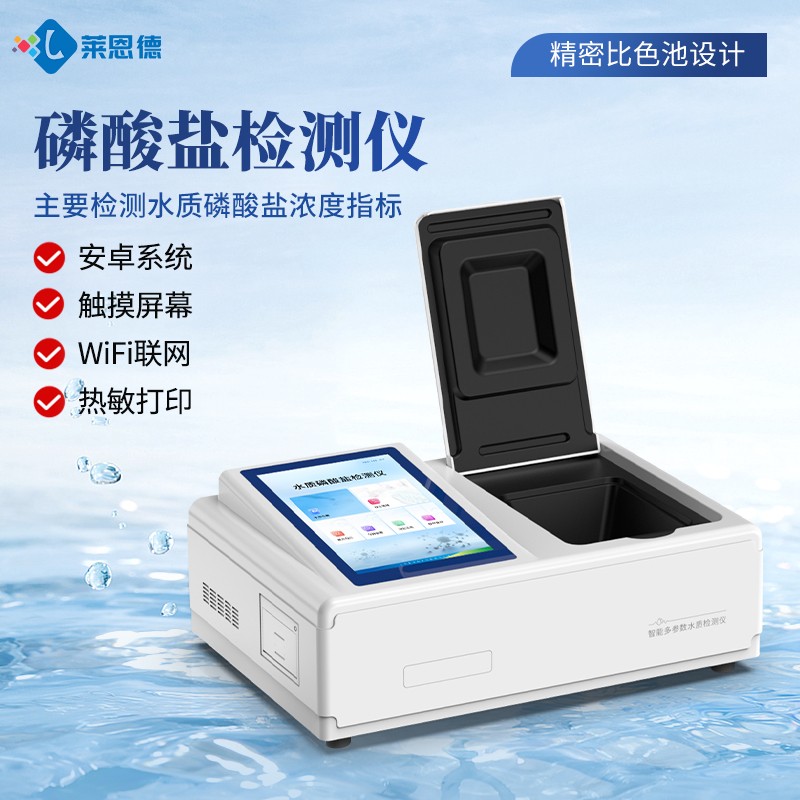
The main use of water quality phosphate detector
Date: 2025-12-17Read: 0
The water quality phosphate detector is a specialized instrument used to measure the content of phosphate (PO ₄³ ⁻) in water bodies. Its core purpose is to quickly and accurately monitor the concentration of phosphate, providing key data support for water quality assessment, pollution control, and ecological protection. The main uses of the water quality phosphate detector are as follows:
1. Environmental water monitoring: safeguarding water ecological security
Rivers, lakes, and reservoirs: Monitor the concentration of phosphate in natural water bodies and assess the risk of eutrophication. Phosphates are the main nutrient source for algae growth, and excessive amounts can lead to algal blooms or red tides, disrupting ecological balance.
Marine monitoring: detecting phosphate content in nearshore waters and analyzing the impact of marine pollution sources (such as agricultural runoff and industrial wastewater) on marine ecosystems.
Groundwater protection: Track the sources of phosphate pollution in groundwater (such as fertilizer leakage, landfill leachate) to prevent the spread of groundwater pollution.
2. Industrial wastewater treatment: Ensure compliance with discharge standards
Chemical, electroplating, and pharmaceutical industries: Monitor the phosphate content of wastewater discharged during the production process to ensure compliance with the Comprehensive Wastewater Discharge Standard (GB 8978-1996) or local environmental protection requirements (such as total phosphorus ≤ 0.5mg/L).
Wastewater treatment plant: Optimize phosphorus removal processes (such as chemical precipitation and biological phosphorus removal), adjust the dosage of chemicals through real-time monitoring, reduce treatment costs, and improve effluent quality.
3. Agriculture and Aquaculture: Scientific Management of Nutrient Input
Irrigation water testing for farmland: Control the concentration of phosphate in irrigation water to avoid soil compaction or surface water pollution caused by excessive fertilization.
Aquaculture: Monitor the phosphate levels in aquaculture water to prevent excessive algae growth and oxygen deficiency, and ensure the healthy growth of fish. For example, the phosphate concentration in shrimp farming needs to be maintained at 0.01-0.1mg/L, as excessive concentration can trigger diseases.
4. Drinking water safety: safeguarding public health
Waterworks: Detect the phosphate content in raw water and factory water to ensure compliance with the requirement of total phosphorus ≤ 0.3mg/L in the "Sanitary Standards for Drinking Water" (GB 5749-2022).
Household water testing: Portable water quality phosphate detector can help users detect residual phosphate in the effluent or well water of household water purifiers, avoiding the potential harm of long-term excessive intake of phosphate to bones and kidneys.
2、 Technical advantages: accurate, fast, and easy to operate
1. High precision detection, reliable data
Detection range: usually covering 0.01-10mg/L, some instruments can be extended to 0.001-50mg/L to meet the needs of different scenarios
Anti interference capability: Adopting anti-interference technology (such as dual wavelength colorimetric method) to eliminate interference factors such as chromaticity, turbidity, heavy metals, etc. in the water body, ensuring the accuracy of the results.
Repeatability: The deviation of multiple measurement results is ≤± 5%, which meets the requirements of environmental monitoring standards.
2. Quick detection to improve efficiency
Detection time: Traditional spectrophotometry requires more than 30 minutes, while modern phosphate detectors can complete a single detection in 3-5 minutes and support multi-channel parallel operation (such as 8-channel models that can simultaneously detect 8 samples), greatly reducing the detection cycle.
Portable design: Some models adopt handheld or backpack design, which is lightweight and suitable for rapid screening in the field or on-site.
3. Easy to operate, no professional background required
Intelligent guidance: Built in standard curve library (such as ammonium molybdate spectrophotometry, vanadium molybdenum yellow colorimetric method), users only need to follow the prompts to add reagents and samples, and the instrument will automatically complete the detection and display the results.
Data management: Supports Bluetooth/WiFi networking, and detection data can be uploaded to the cloud platform in real-time to generate visual reports; The local storage function can save over 1000 records for easy traceability and auditing.