-
E-mail
1950883583@qq.com
-
Phone
15666889815
-
Address
The First Accelerator of the Optoelectronic Industry Park in Weifang High tech Zone, Shandong Province
Shandong Jiucheng Intelligent Technology Co., Ltd
Intelligent Soil Moisture Monitoring Station System - A Multi Depth Soil Moisture Monitoring Station System for Improved Management+Dispatch+Delivery
Date: 2025-12-24Read: 2
Intelligent Soil Moisture Monitoring Station System - A Multi Depth Soil Moisture Monitoring Station System for Improved Management 2025+Dispatch+Delivery [Recommended Model JC-GTS3- Shandong Jiucheng Intelligent Technology, Providing High Quality Equipment and One Stop Service Solutions, Highly Recognized and Recognized by Users] Save agricultural resources and empower sustainable development of winter agriculture. Traditional soil moisture monitoring relies on manual on-site sampling and drying detection, which is not only time-consuming and inefficient, but also has data lag, making it difficult to meet the needs of large-scale and refined planting. The 485 Modbus RTU protocol monitoring station realizes the automation and intelligence of soil moisture monitoring, without the need for manual duty, and can set the collection frequency as needed, with 24-hour uninterrupted monitoring. Its low-power design is suitable for long-term unmanned monitoring scenarios in the field, further reducing operation and maintenance costs. Accurate irrigation based on monitoring data can minimize water waste and save more than 30% of water compared to traditional irrigation methods. At the same time, it improves fertilizer utilization efficiency and achieves dual benefits of water and fertilizer conservation. On the premise of ensuring the safety of crops during winter, effectively improving the efficiency of agricultural resource utilization and promoting green and sustainable development of winter agriculture.
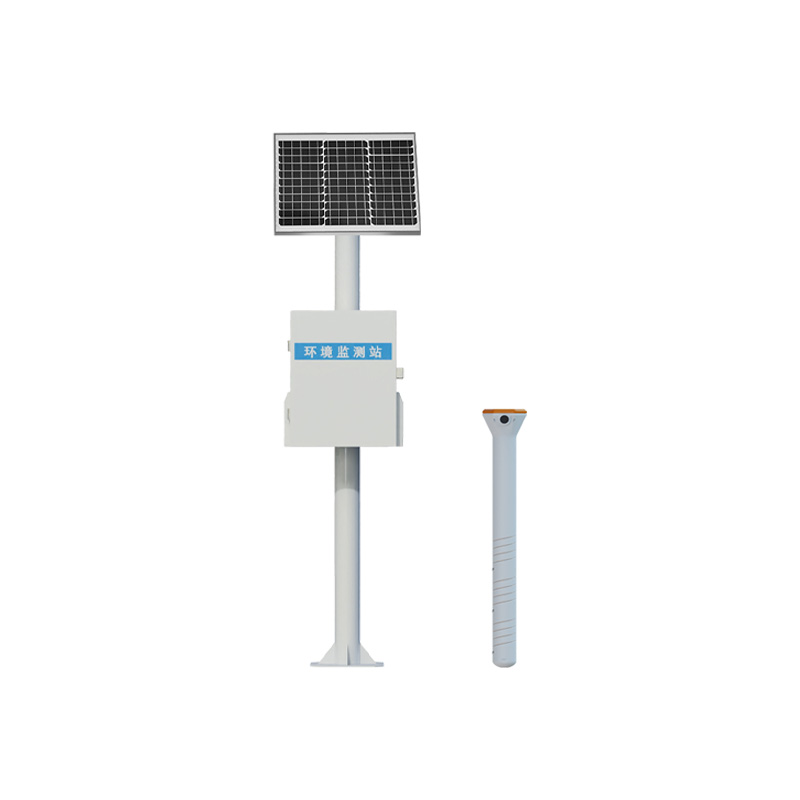
1、 Product Introduction
A tubular soil monitoring station is an online monitoring device used to monitor soil profile temperature, soil profile humidity, and soil profile conductivity. It can be widely used in agricultural engineering fields such as smart greenhouses, smart orchards, and smart irrigation by collecting soil temperature, moisture, and conductivity.
2、 Product parameters
Solar panel power: 8W
Standard operating voltage for solar panels: DC5V
Built in lithium battery capacity: 5000mAh
Sensor startup time: 60 seconds
Sensor supply voltage: DC12V
Sensor power supply current: 22mA
Sensor power consumption: 0.26W
Communication method: 485 Modbus RTU protocol
Measurement parameters: Can measure 3 layers simultaneously (customizable layers below 10 layers)
Measurement principle: Establish a mathematical model by measuring the soil dielectric constant, and design a spiral measuring electrode to measure soil volumetric moisture content data.
| parameter | measurement range | precision | resolution | unit |
| soil temperature | -30~70℃ | ±0.3(-10~70℃) | 0.01 | ℃ |
| soil moisture | 0~100% | ± 3% (loam) high organic matter soil (soil organic carbon content>12%) high clay content soil (clay content>45%) Due to its dielectric relaxation characteristics, calibration may be required for specific soil types | 0.1% | --- |
| soil electrical conductivity | 0~20000us/cm | ± 3% (0~10000us/cm) ± 5% (full range) | 1 | us/cm |
3、 Advantages and Characteristics
A single soil tube sensor can simultaneously measure soil parameters at multiple depths, and the monitoring depth can be customized (less than 1M).
The sensor adopts a low-power design, with a power consumption as low as 0.26W, suitable for long-term unmanned monitoring in the field.
Each layer of the sensor can independently measure temperature, humidity, and conductivity parameters.
The sensor housing is made of imported PC material, which has high strength, corrosion resistance, and no pollution to the environment.
The waterproof level of the sensor reaches IP67, which is suitable for long-term outdoor monitoring.
The sensor measures the average humidity within a certain area, which compensates for the limitations of single point measurement.
The sensor adopts a self-designed spiral measuring electrode to improve the contact between the sensor and the soil, and to avoid measurement errors caused by air gaps as much as possible.