-
E-mail
3830284546@qq.com
-
Phone
19106362018
-
Address
Oulong Technology Park
Shandong Horde Electronic Technology Co., Ltd
Turbidity detector selection guide: core consideration system for precise adaptation needs
Date: 2025-12-23Read: 3
Turbidity, as a core indicator of water cleanliness, is of great significance for accurate detection in water quality control, production process optimization, and environmental supervision. Turbidity detectors achieve turbidity analysis by quantifying the degree of light scattering of suspended particles in liquids, and are widely used in various industries such as water, environmental protection, food and beverage, and pharmaceuticals. Choosing a turbidity detector requires breaking through the limitations of single parameter comparison and establishing a comprehensive evaluation system of "performance accuracy, functional adaptability, environmental adaptability, and ease of use" to ensure that the instrument can meet industry standards and adapt to specific application scenarios. This article combines the core parameters and functional characteristics of turbidity detectors to outline the key points for purchasing, providing professional guidance for precise procurement.
Core performance parameters are the foundation for ensuring detection accuracy, and priority should be given to standard compliance and measurement reliability. When purchasing, first confirm whether the instrument complies with the GB13200-91 reference standard to ensure that the test results are compliant and can meet the dual needs of supervision and enterprise quality control. The measurement range needs to be adapted to the actual detection requirements. The conventional range of 0.5-300 (NTU) can cover most daily detection scenarios. If special high or low turbidity samples are involved, targeted selection of extended range models is required. The measurement accuracy directly determines the value of the data, and instruments with measurement error ≤ ± 10%, repeatability and stability<0.5% should be prioritized. At the same time, attention should be paid to sensitivity indicators. A high-precision configuration with absorbance of 0.001 can improve the detection accuracy of low turbidity samples. In terms of optical system, instruments using imported cold light sources have more stable optical performance, and their long lifespan of 100000 hours can reduce maintenance costs and ensure long-term detection accuracy.
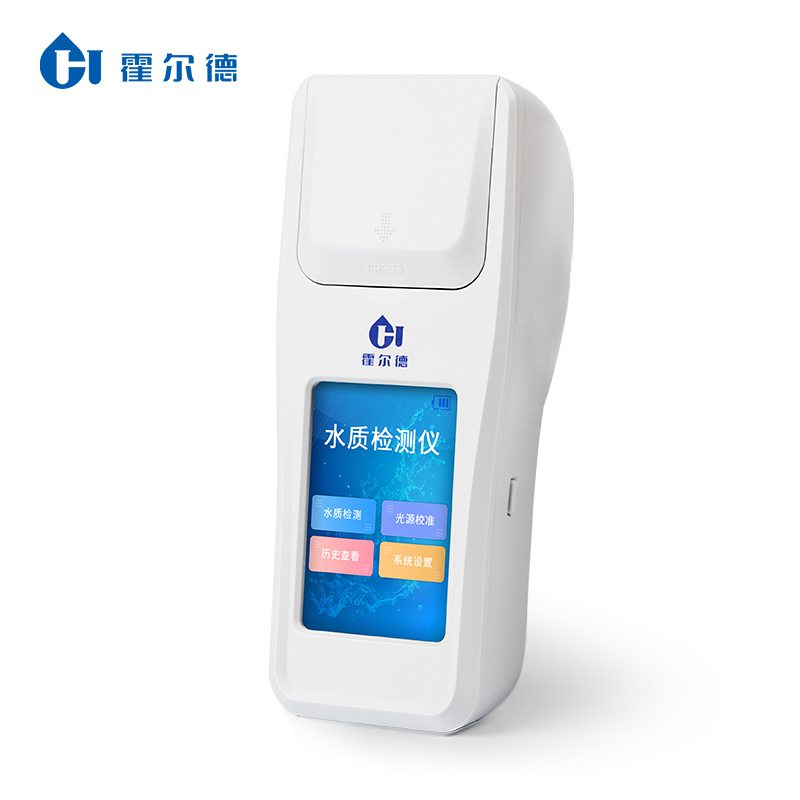
Functional adaptability is the key to improving usage efficiency, and core functional configurations need to be selected based on application scenarios. The operating system and interaction design directly affect the threshold for use. Instruments equipped with the Android intelligent operating system are easier and faster to operate, and with a 3.5-inch color LCD touch screen, intuitive parameter settings and data reading can be achieved; Models with built-in operating procedures can be used without professional training, making them suitable for rapid on-site testing scenarios. The data management and transmission functions need to match the management requirements, supporting instruments with multiple communication methods such as Type-C, WIFI, hotspot, Bluetooth, etc., which can achieve fast export and real-time transmission of detection data; The model equipped with a cloud monitoring platform can complete wireless data upload and long-term/short-term analysis, providing data support for water quality management decisions, especially suitable for environmental supervision and remote control needs of large water enterprises. The data storage capacity also needs to be carefully considered, with a storage capacity of over 80000 records to meet the archiving and traceability needs of batch testing data.
The adaptability and portability of the environment determine the application scope of the instrument, which needs to be accurately matched according to the usage scenario. Portable models with a compact size of 190 * 77 * 72mm and a lightweight design of 325g should be preferred for outdoor testing scenarios, making them easy to carry and operate on site; The model has dual function of AC and DC, built-in 5600mAh lithium battery and supports continuous 12 hour operation, which can eliminate the limitation of external power supply and adapt to outdoor environments without power supply. Indoor fixed detection scenarios can focus on the stability and ease of installation of instruments, without excessively pursuing portability. The environmental tolerance also needs to meet the usage conditions, and the instrument should be able to work stably within the temperature range of 0-50 ℃ and humidity range of 0-90%. It can adapt to environmental changes in different regions and seasons, avoiding the impact of temperature and humidity fluctuations on detection accuracy.
The cost of use and after-sales service are important guarantees for long-term use and need to be included in the scope of purchase evaluation. The maintenance free feature of the instrument can reduce later operation and maintenance costs. Models with stable operation and low failure rates can reduce downtime and improve detection efficiency. The adaptability of power supply also needs to be considered. Models with 5V/DC DC power supply can adapt to conventional power environments, making it easy to install temporary or fixed power supply on site. In terms of after-sales service, it is necessary to choose suppliers with comprehensive technical support to ensure timely maintenance services in case of instrument malfunctions; Simultaneously pay attention to the convenience of consumables supply and calibration services, ensuring the accuracy and stability of the instrument for long-term use. In addition, models that balance aesthetic appearance and high cost-effectiveness can control procurement costs while meeting usage needs.
The selection of turbidity detectors should achieve a unified approach of "meeting performance standards, adapting functions, matching scenarios, and controllable costs". There are differences in the requirements of different industry scenarios. In the field of environmental protection regulation, there is a need for compliance and data transmission functions. Outdoor testing needs to enhance portability and endurance, while laboratory analysis should focus on testing accuracy and stability. When making a purchase, it is necessary to avoid blindly pursuing high configurations, and instead establish personalized evaluation standards based on core elements such as self detection range, usage environment, and management needs. By scientifically integrating multi-dimensional elements such as performance parameters, functional configurations, environmental adaptability, and after-sales service, it is possible to select turbidity detectors that meet actual needs, provide accurate and efficient technical support for water quality testing, and help improve the water quality control system.