-
E-mail
3830284546@qq.com
-
Phone
19106362018
-
Address
Oulong Technology Park
Shandong Horde Electronic Technology Co., Ltd
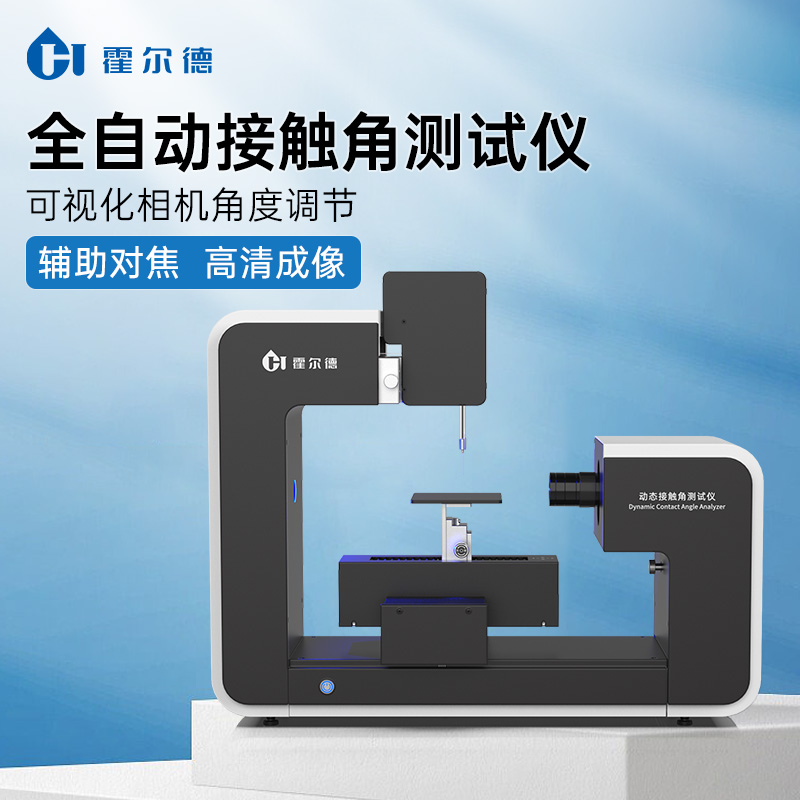
Operation Guide for Fully Automatic Contact Angle Tester: Core Process for Accurately Characterizing Material Wettability
Date: 2025-12-15Read: 3
In the research and production of materials science, chemical engineering, medicine and other fields, the wetting performance of liquids on solid materials is a key indicator for evaluating the surface properties of materials, which directly affects the performance and application effect of products. As a professional instrument for characterizing this performance, the fully automatic contact angle tester has become the core equipment for material surface performance analysis with its standardized operating procedures and precise detection capabilities. Mastering its standardized operating methods is the foundation for ensuring the reliability of testing data and fully utilizing instrument efficiency, providing scientific basis for material research and development, quality control, and process optimization.
Standardized operations begin with thorough preparation, which is a prerequisite for ensuring the accuracy of testing. Firstly, it is necessary to conduct instrument and environmental inspections to ensure that the equipment is placed on a horizontal and stable experimental platform to avoid vibration interference with the optical imaging system; The experimental environment should be kept clean and dry, with temperature controlled between 20 ℃~25 ℃ and humidity maintained between 40% RH~60%, to reduce the impact of temperature and humidity fluctuations on the droplet state and detection results. Secondly, to complete the preparation of samples and reagents, the surface of the solid sample needs to be cleaned to remove pollutants such as oil and impurities, ensuring that the sample surface is flat and representative; Liquid reagents should be of analytical grade and should be allowed to stand at the same temperature as the environment before use to avoid changes in droplet volume or surface tension caused by temperature differences. Finally, initialize the instrument, turn on the host, optical system, and computer software, complete the device self-test, calibrate the optical imaging focal length and droplet injection system, and ensure that all components are in normal working condition.
The standardization of the core detection process directly determines the accuracy of data and requires strict adherence to the operational steps. Firstly, the sample is placed by fixing the processed solid sample on the sample stage. By adjusting the lifting and translation functions of the stage, the sample detection area is placed directly below the optical lens to ensure clear imaging. The second step is droplet preparation and release, using the high-precision injection system equipped with the instrument to extract a quantitative liquid, adjusting the distance between the injection needle and the sample surface to release the droplets at a stable rate, allowing the droplets to naturally adhere to the sample surface, avoiding droplet splashing or volume deviation. The third step is image acquisition and processing. The optical imaging system captures the droplet shape in real time, and the software automatically collects clear droplet images. According to the detection requirements, suitable mathematical models (such as circle method, ellipse method, hanging droplet method, etc.) are selected to fit the droplet contour and accurately calculate the contact angle value. The fourth step is data recording and analysis. The software automatically records contact angle data and can perform surface energy calculation according to requirements. By combining the contact angle data of different liquids with corresponding surface energy models, the surface energy and component (dispersion force, polarity force) values of solid materials are derived to complete the comprehensive analysis of wettability.
The key precautions during the operation process are important guarantees for improving the reliability of detection. In the process of droplet release, it is necessary to control the injection rate uniformly and stably. The droplet volume should be kept consistent in the same group of experiments to reduce the influence of operational variables on the results; Image acquisition should be carried out after the droplet is released and left to stand for a few seconds until the droplet shape stabilizes, in order to avoid data deviation caused by the droplet not reaching an equilibrium state. During the use of the instrument, it is necessary to regularly clean the injection needle and sample stage to prevent cross contamination; Optical lenses should avoid dust adhesion. If cleaning is required, specialized lens paper should be used to prevent scratching the lenses. After the testing is completed, it is necessary to promptly clean up the experimental waste liquid and residual samples, turn off the power supply of each system of the instrument, and keep a record of the equipment usage, including the testing samples, experimental conditions, and instrument operation status, to provide a basis for subsequent data traceability and equipment maintenance.
The standardized operation of the fully automatic contact angle tester is the core to achieve accurate characterization of material wettability. From the initial environment and sample preparation, to every step of the core testing process, and even to equipment maintenance after operation, every link needs to be executed with a rigorous attitude. Through standardized operation, the instrument can stably output reliable contact angle, surface tension, and surface energy data, providing strong support for material surface performance evaluation, helping researchers to deeply understand material characteristics, and promoting technology research and product quality improvement in related fields.