-
E-mail
3830284546@qq.com
-
Phone
19106362018
-
Address
Oulong Technology Park
Shandong Horde Electronic Technology Co., Ltd
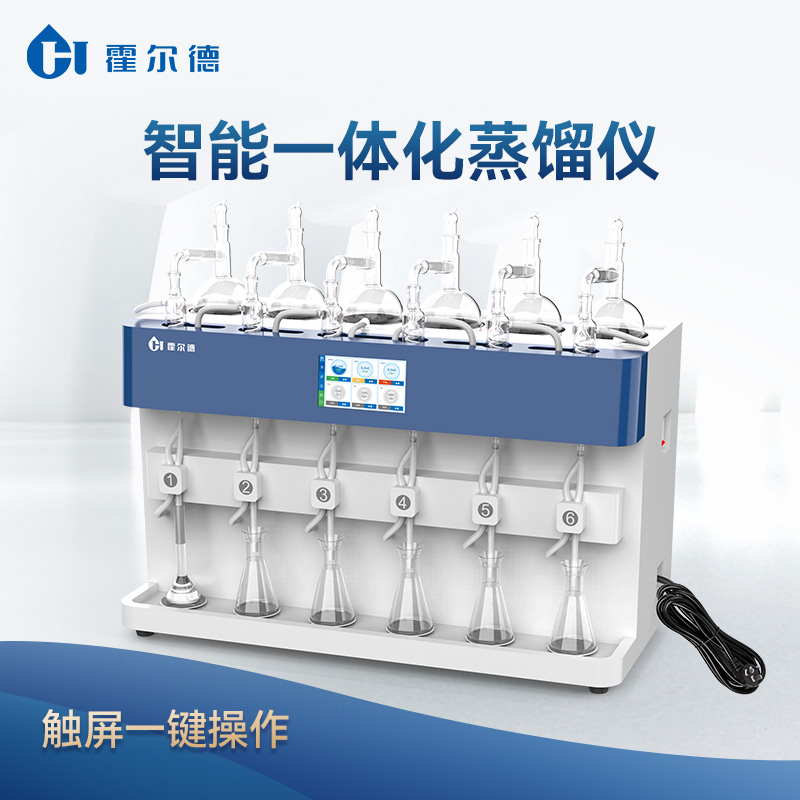
Intelligent integrated distillation apparatus: based on industry standards, innovating the efficiency of pre-treatment experiments
Date: 2025-12-15Read: 1
Distillation, as the core process of laboratory pre-treatment, directly determines the reliability of subsequent testing data through its operational standardization and result stability. Industry standards are the core yardstick for measuring the performance and application value of intelligent integrated distillation instruments. Traditional distillation equipment often suffers from problems such as uncontrolled heating and reflux of distillate due to its dispersed structure and reliance on manual operation, making it difficult to meet the requirements of modern laboratories for standardized and efficient pretreatment. The research and application of intelligent integrated distillation apparatus are guided by industry standards, and through modular design and intelligent control technology, systematically solve the pain points of traditional devices, promote the transformation of distillation experiments from "experience operation" to "standard controllability", and become key equipment in the field of laboratory pretreatment.
The industry standard has established a clear regulatory system for the core performance and safety indicators of intelligent integrated distillation apparatus. In terms of temperature control, the standard requires that the temperature control accuracy of the instrument heating module should be within ± 1 ℃, and the heating rate can be accurately adjusted to avoid a decrease in distillation efficiency or loss of target components due to temperature fluctuations. At the same time, it is equipped with anti dry burning protection devices, which automatically cut off power when no liquid is detected in the heating area, in compliance with laboratory safety operating standards. In terms of distillation efficiency and stability, the standard quantifies the condensation efficiency of the instrument, and the heat exchange efficiency of customized serpentine condenser tubes needs to meet the condensation recovery requirements of specific components to ensure complete collection of distillate; The intelligent endpoint control system needs to be able to accurately determine the distillation endpoint through multiple dimensions such as weight, volume, or time, with errors controlled within a limited range to prevent excessive distillation.
The structural design and functional configuration of the instrument must strictly comply with the compliance requirements of industry standards. Modular design requires integrated linkage of heating, condensing, and receiving units, and the sealing of each module connection must meet standards to avoid the leakage of volatile components that may affect the health and environmental safety of experimental personnel; The response time of the anti backflow protection device should be within the standard range. When the system pressure is abnormal, the protective mechanism should be immediately activated to block the backflow path. In terms of software functionality, the standard requires instruments to have method customization, saving, and reading functions. The built-in standard method library should cover parameter settings for common distillation scenarios, and automatically retrieve historical usage methods when turned on to reduce human operation errors; The data recording function needs to fully retain key parameters such as heating temperature, distillation time, and endpoint judgment criteria to meet industry standards for experimental data traceability.
Industry standards also provide clear guidance on the environmental and economic indicators of intelligent integrated distillation instruments. In terms of energy conservation and consumption reduction, the heating module of the instrument needs to use high-efficiency insulation materials, with a heat loss rate lower than the standard limit value, and standby power that meets energy-saving standards; In terms of consumable compatibility, accessories such as receiving containers and connecting pipelines need to be adapted to standard specifications for easy replacement and maintenance by users. In addition, the standard also requires the operational safety and durability of the instrument. The protective structure of the body should be able to withstand temperature changes and slight collisions during the experimental process. The response sensitivity and anti-interference ability of the touch control interface should meet industrial standards to ensure stability under long-term high-frequency use.
Following industry standards is a prerequisite for the application value of intelligent integrated distillation instruments. It not only ensures the accuracy and repeatability of experimental results, but also promotes the standardization and upgrading of laboratory pre-treatment processes. Instruments that meet standards can effectively reduce manual operation intensity, reduce human errors through automated control, improve experimental efficiency, save personnel costs, and meet the management needs of modern laboratories. With the continuous development of laboratory pre-treatment technology, industry standards will further refine indicators such as intelligent control and environmental performance, promoting the continuous anchoring of intelligent integrated distillation instruments in technological innovation, providing more reliable and efficient standardized solutions for pre-treatment experiments in chemical, environmental, food and other fields, and building a solid defense line for experimental testing.