-
E-mail
sft666888666@163.com
-
Phone
13269083797
-
Address
7th Floor, Building D, Hongkun Cloud Era, Kechuang 12th Street, Yizhuang Economic and Technological Development Zone, Beijing
Sanfu Hezhong (Beijing) Technology Development Co., Ltd
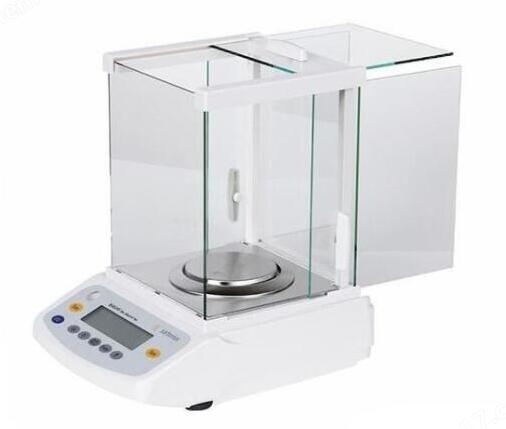
Calibration and Maintenance of BSA224S Electronic Balance
Date: 2025-08-25Read: 3
The BSA224S electronic balance is a high-precision laboratory weighing device, and its calibration and maintenance directly affect the accuracy of measurement results and the lifespan of the instrument. The following is a systematic operation guide:
1、 BSA224S electronic balance calibration process (ensuring measurement accuracy)
1. Preheating stability
Preheat the sensor for at least 30 minutes after startup to achieve thermal equilibrium. The fluctuation of environmental temperature should be controlled within ± 2 ℃ to avoid reading drift caused by direct air conditioning or sunlight exposure.
2. External calibration method (using standard weights)
Steps:
Select E2 level weight combinations that comply with OIML R111 standards;
Zero the empty balance and place standard weights of different ranges in sequence;
Enter the "Calibration" mode through the menu and input the actual mass value of the corresponding weight;
Observe whether the deviation between the displayed value and the standard value is within the allowable range (e.g. ± 0.01g). If out of tolerance, repeat calibration or contact after-sales to adjust parameters.
Attention: Before calibration, ensure that the weighing plate is clean and free of static adsorption. It can be wiped with a neutral cleaner and thoroughly dried.
3. Linear verification (optional advanced operation)
Perform multi-point testing in different range ranges (such as 20%, 50%, 80% of maximum load) and draw error curves. In an ideal state, the error should be randomly distributed and not exceed half of the maximum allowable error.
4. Utilization of internal calibration function
Some models support built-in weight automatic calibration (Auto Cal), but this function is only for daily quick inspection and cannot replace periodic external calibration. It is recommended to conduct an external calibration once a month to maintain long-term stability.
2、 Key points for daily maintenance of BSA224S electronic balance
1. Electrical safety testing
Grounding resistance test: Use a clamp multimeter to measure the resistance value between the PE line of the power cord and the metal shell, which is less than 4 Ω, to ensure effective discharge of static electricity to the ground.
Insulation impedance assessment: After disconnecting the power supply, use a 500V megohmmeter to measure the insulation resistance between the input terminal and the casing, which should be greater than 10M Ω to prevent leakage risk.
2. Chemical protection measures
Corrosive samples (such as acidic and alkaline solutions) must be weighed in a closed container, and in emergency situations, the "anti-corrosion mode" can be activated - temporarily reducing the integration time to reduce the chance of corrosive gas penetration.
After the volatile organic compounds (VOCs) experiment, it is necessary to turn on the machine and ventilate for more than 30 minutes. The next weighing can only be carried out after the sensor signal baseline is stable.
3、 Special precautions for BSA224S electronic balance
1. Prohibited Behavior List
Do not directly press the weighing plate with your hands to test the weight;
Avoid prolonged exposure to dusty environments (dust covers should be installed when PM10 concentration>100 μ g/m);
It is strictly prohibited to disassemble the sensor unit by oneself, as displacement of internal precision optical components can cause long-term misalignment.
2. Optimize usage skills
For moisture absorbing samples (such as metal powders), the "subtraction method" can be used for rapid weighing - first weigh the total mass and then gradually reduce it until the target value is reached;
Using the built-in RS232 interface of the balance to connect to a computer, real-time data recording reduces manual copying errors;
Establish a usage log book to record each calibration result, abnormal event, and handling measures, in order to trace the root cause of the problem.