-
E-mail
sales@thermicore.cn
-
Phone
17372259676
-
Address
Binhe Road, Suzhou High tech Zone
Saimaike (Suzhou) Instrument Co., Ltd
Small jacketed glass reactor: a multifunctional synthesis platform in the laboratory
Date: 2025-12-23Read: 2
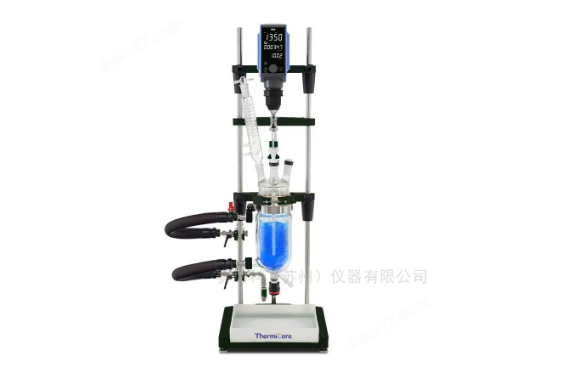
Small jacketed glass reactors are a common and practical equipment in laboratories in fields such as chemical synthesis, pharmaceutical research and development, biotechnology, and materials science. It usually refers to a reaction device with a capacity ranging from several to tens of liters, made of glass material, and equipped with an external jacket structure. This type of equipment takes into account the multiple requirements of chemical experiments in its design, providing good support for scientific research and small-scale preparation.
Main Features
1. Good visibility and corrosion resistance
The body of a small jacketed glass reactor is usually made of materials such as high borosilicate glass, which has good chemical stability and can withstand corrosion from various acids, alkalis, and organic solvents. Its transparent nature allows experimenters to directly observe the reaction status, color changes, precipitation generation, or fluid mixing of the materials inside the kettle, facilitating real-time monitoring of the experimental process.
2. Flexible temperature control capability
The external jacket structure of the equipment is one of its core features. By circulating hot water, cold water, thermal oil or other heat exchange media inside the jacket, the materials inside the kettle can be effectively heated, cooled or temperature controlled. This indirect heat exchange method helps to make the material heated more evenly, reduce local overheating, and provide convenience for some temperature sensitive or precise temperature controlled reactions.
3. Applicable multifunctionality
The standard configuration of small jacketed glass reaction vessels can usually be connected to various commonly used laboratory components. For example, it can be equipped with a mechanical stirring system to promote material mixing and mass transfer; Connect the condensation reflux device to reduce solvent evaporation; Or connect the feeding funnel, thermometer sleeve, sampling valve, etc. This modular design enables it to adapt to various reaction and operation units such as reflux, distillation, extraction, crystallization, etc.
4. Easy to operate and maintain
Due to its moderate size, this type of reactor is easy to install, operate, and clean in laboratory environments. The glass surface is smooth and not prone to residual pollutants, simplifying subsequent cleaning work and helping to reduce cross interference between different experimental batches.
Typical application scenarios
This device is suitable for many experimental stages that require controllable reaction conditions, such as:
1. Conventional reactions, catalytic reactions, or polymerization reactions in organic synthesis.
2. Small batch preparation and process exploration of fine chemicals or pharmaceutical intermediates.
3. Laboratory research and development of new materials such as nanomaterials and functional polymers.
4. As a teaching demonstration device, it helps students intuitively understand the chemical reaction process and equipment operation.
Precautions for use
To ensure safety and equipment lifespan, attention should be paid to:
1. Avoid mechanical impact: Although glass components have a certain degree of heat shock resistance, they are still brittle materials and should be prevented from severe collisions or uneven stress.
2. Follow the temperature change rate: When introducing the jacket heat medium, attention should be paid to avoiding rapid temperature changes to prevent excessive thermal stress.
3. Ensure reliable sealing: For reactions that require sealing, check and ensure that the sealing components (such as PTFE, rubber gaskets) of each interface are intact and installed correctly.
4. Matching pressure range: Conventional glass reactors are usually suitable for operation under normal pressure or lower negative pressure. If the reaction process may generate pressure, it is necessary to confirm the pressure design range of the equipment and equip corresponding safety measures.
Small jacketed glass reaction vessels have become one of the basic equipment in many laboratories due to their intuitive, flexible, and adaptable characteristics. It helps researchers conduct various chemical transformations and process explorations under visible and controllable conditions, providing valuable references for subsequent scale-up production or in-depth research. When choosing, considering the physical and chemical properties, temperature and pressure requirements, and specific operating procedures of the actual reaction system can help better exert its efficiency.
Last Article: Classification of Compressor Refrigerants