-
E-mail
info@systec-lab.com.cn
-
Phone
15601635108
-
Address
Room D1-201, No. 6000 Shenzhuan Road, Songjiang District, Shanghai
Sai Strontium Titanium Krypton (Shanghai) Trading Co., Ltd
Service life and maintenance points of culture medium preparation equipment
Date: 2025-09-22Read: 0
The culture medium preparation device is the "nutritionist" of laboratories such as microbiology laboratories and cell culture rooms. Through precise weighing, dissolution, packaging, and sterilization processes, it provides a suitable growth environment (such as nutrient ratios and pH values) for microorganisms (such as bacteria and fungi) or cells (such as stem cells and tumor cells). Its service life (usually 3-8 years) is closely related to daily maintenance, and mastering key maintenance points is the core to ensure the quality of the culture medium and the long-term stable operation of the equipment.
1、 Core factors affecting service life
Culture medium preparation deviceThe core components of the system include a weighing module (electronic balance), a stirring system (magnetic stirrer or mechanical stirring blade), a heating module (water bath or electric heating plate), a packaging mechanism (peristaltic pump or quantitative packaging head), and a control system (PLC or microcomputer). Its lifespan is significantly affected by frequency of use (such as daily preparation of 10-20L vs 50-100L), operating standards (such as regular cleaning), and environmental conditions (such as humidity>80%) - equipment that is frequently used and poorly maintained may experience component aging within 2-3 years (such as impeller wear and heating tube burnout), while equipment that is regularly maintained can be used for 5-8 years or even longer.
2、 Maintenance points:
Cleaning and pollution prevention: After each preparation, immediately rinse the container (such as dissolution pot, packaging pipeline), stirring blade, and packaging head with pure water (resistivity>18M Ω· cm) to avoid residual culture medium (such as agar, sugar) from solidifying and blocking the pipeline (especially the silicone tube of the peristaltic pump, long-term residue can lead to decreased elasticity and inaccurate flow). Stubborn residues (such as protein and fat) should be soaked in neutral detergent (such as food grade detergent) for 10-15 minutes, then lightly brushed with a soft bristled brush (steel wire balls are prohibited), and finally rinsed with pure water and dried. Wipe the surface of the equipment (such as the operation panel and casing) with 75% ethanol every week to prevent microbial growth.
Key component inspection: The weighing module (electronic balance) needs to be calibrated monthly (using standard weights to verify accuracy, with a permissible deviation of<± 0.1g) to avoid errors in the proportion of culture medium components caused by sensor drift (such as insufficient nutrient addition); The stirring system (stirring blade) should be checked for wear every quarter (observing whether the blade has any gaps or deformations, especially whether the magnetic properties of the magnetic stirring element have weakened). If the stirring efficiency decreases (dissolution time is prolonged by more than 30%), it should be replaced in a timely manner; The heating module (electric heating plate or water bath) needs to be checked for scale on the surface of the heating tube (caused by long-term use of hard water), soaked and cleaned with a 10% citric acid solution (to remove scale and restore heating efficiency), to avoid local overheating and burning of the heating tube.
Calibration and parameter verification: The pH sensor (if equipped with automatic adjustment function) is calibrated every 2-3 months with standard buffer solution (pH 4.01, 7.00, 10.01) to ensure accurate pH value of the culture medium (such as bacterial culture medium usually requires pH 7.2-7.4, deviation>± 0.2 will affect microbial growth); The peristaltic pump (packaging mechanism) checks the flow accuracy every six months (using a standard measuring cylinder to measure the actual packaging volume, comparing it with the set value, with an allowable error of<± 1%). If the flow is unstable (such as fluctuating packaging volume), it may be due to aging of the pump tube (decreased elasticity) or motor failure, and the pump tube needs to be replaced or the motor needs to be repaired.
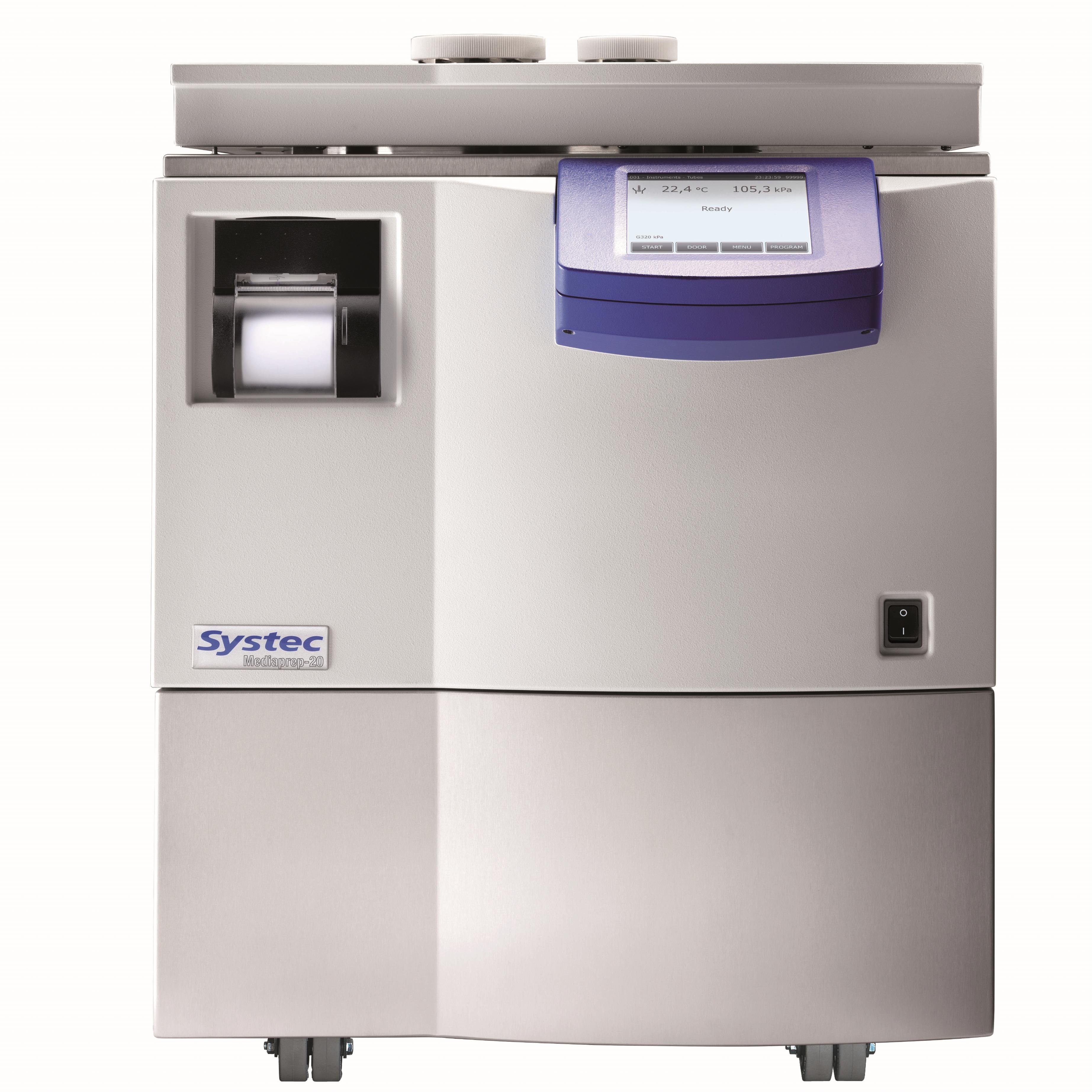
Environment and Storage:Culture medium preparation deviceIt should be placed in a dry and ventilated environment (humidity<60%) to avoid moisture causing short circuits in circuit components such as control boards and sensors; When not in use for a long time, empty the container of water (to prevent algae growth), disconnect the power supply, and cover the equipment with a dust-proof cloth (to prevent dust from entering the weighing module or control panel).
The service life of the culture medium preparation device is not a fixed value, but is proportional to the maintenance investment. Through strict cleaning and pollution prevention, key component inspection, precise calibration, and environmental control, not only can the equipment's service life be extended (from 3 years to over 8 years), but also the quality stability of each batch of culture medium can be ensured (ingredient ratio, pH value, sterility meet requirements), providing a reliable "nutritional foundation" for microbial and cell experiments.