-
E-mail
panyue@sourcescn.com
-
Phone
13475860763
-
Address
501, Building 57, Optics Valley Software Park, 396 Emeishan Road, Huangdao District, Qingdao City, Shandong Province
Qingdao Senquan Optoelectronics Co., Ltd
How to "isolate" vibration for precision equipment? ——In depth analysis of passive vibration isolation principle and its relationship
Date: 2025-11-17Read: 56
How to "isolate" vibration for precision equipment? ——In depth analysis of passive vibration isolation principles and key parameters
In the preliminary content, we have recognized the "invisible damage" of vibration to precision equipment and mastered the method of conducting "environmental physical examination" through VC curve. When vibration problems arise, passive vibration isolation, as the most widely used solution, has become the preferred choice for most precision equipment due to its advantages of no external energy, low cost, and high reliability. This article will focus on passive vibration isolation, systematically dismantling its physical essence, core principles, design logic, and performance evaluation standards, providing theoretical support for the selection and design of passive vibration isolation schemes.
1 The essence of vibration isolation: creating a quiet 'microenvironment'
The core goal of vibration isolation is not to eliminate all vibrations - which cannot be achieved in reality - but to build a "vibration filter" between the vibration source (such as the ground, the surrounding environment of the equipment) and the protected precision equipment. This filter significantly attenuates the vibration energy transmitted to the equipment by changing the transmission path and efficiency of vibration energy, controlling the vibration impact within the allowable accuracy range of the equipment, ultimately ensuring the operational accuracy, data reliability, and service life of the equipment, and creating a relatively static "microenvironment" for the equipment.
Taking the 7-nanometer chip lithography process in the semiconductor industry as an example, the lithography machine worktable needs to move with nanometer level precision. If a vibration of 0.01 millimeters (about 1/5 of the diameter of a human hair) is transmitted from the ground, it will directly cause the lithography pattern to shift, resulting in wafer scrap. At this point, passive vibration isolation technology needs to control the impact of external vibrations on the worktable at the "sub nanometer level". Through the synergistic effect of elastic and damping elements, a stable environment with "negligible vibration" is constructed for the photolithography process, which is a typical manifestation of the essence of passive vibration isolation.
2、 Passive isolation core concept and key performance parameters
The foundation of understanding passive vibration isolation is to master its core concepts and performance indicators, which is the prerequisite for subsequent principle analysis and design.
1. Definition and Function of Basic Concepts
concept |
definition |
core function |
Vibration transmission rate (T) |
The ratio of the vibration response (amplitude/acceleration) of the protected object to the vibration input of the excitation source (dimensionless) |
Directly measuring the isolation effect, the smaller the T, the better the isolation effect (the ideal value tends to be close to 0) |
Natural frequency (f)0) |
The natural frequency (unit: Hz) of a passive isolation system (elastic element+isolated mass) during free vibration |
Determine the starting point of the "effective isolation zone" for passive isolationOnly when the excitation frequency f>f0Passive vibration isolation only takes effect,f0The lower, the wider the frequency range covered by the effective isolation zone |
Damping ratio() |
The ratio of actual damping to "critical damping" of the system(dimensionless)Reflecting the ability to dissipate energy |
1. Suppress resonance peak: When the excitation frequency approaches f ₀ (frequency ratio r ≈ 1), the larger the Zeta, the smaller the resonance amplitude; 2. Impact on effective isolation effect: The larger the Zeta, the larger the T value of the effective isolation zone, and the lower the isolation efficiency. It is necessary to balance resonance suppression and isolation performance |
Quality factor (Q) |
The parameter reflecting the sharpness of system resonance is related to the damping ratio as Zeta=1/(2Q) (dimensionless) |
Indirectly reflecting the damping level: the larger Q, the smaller the damping, and the higher the resonance peak, but the better the effective isolation zone effect; The smaller the Q, the greater the damping, and the lower the resonance peak, but the weaker the effective isolation effect |
Stiffness (k) |
The force required for an elastic element to generate a unit displacement (unit: N/m) is calculated as k=F/Δ x (F is the applied force, Δ x is the displacement) |
Determining the natural frequency of the system: When the isolation mass is fixed, the smaller k (the softer the elastic element), the lower f ₀ |
2. Analysis of Key Performance Parameters
l Vibration isolation efficiency (η): Complementary to vibration transmission rate, the calculation formula is η=(1-T) × 100%. For example, when T=0.2, η=80%, Indicating that 80% of the vibration energy is isolated and only 20% is transmitted to the equipment, intuitively reflecting the energy attenuation capability of the passive isolation system.
l Resonance peak (T)max)The maximum transmission rate of a passive isolation system at the resonance point (r=1, i.e. excitation frequency=natural frequency). When ignoring damping, TmaxApproaching infinity; In practical applications, it is necessary to design damping reasonably to reduce TmaxControl within a safe range of<5 to avoid resonance causing damage to equipment structure or accuracy failure.
l Frequency response range: the frequency range in which the passive isolation system operates effectively,f>f0The frequency band. For example, if the system
F ₀=2Hz, the effective isolation range is f>2.828Hz, and it cannot isolate low-frequency vibrations below 2.828Hz, which is the inherent characteristic of passive isolation.
3、 Passive vibration isolation(Passive Vibration Isolation)Core principle: Single degree of freedom mass spring damping system
Passive isolation is the most commonly used isolation method, which does not require external energy input and only changes the vibration transmission characteristics through a system composed of elastic elements (such as springs, rubber) and damping elements (such as dampers).
The most fundamental and important theoretical model isSingle degree of freedom mass spring damping system(Figure 1)It abstractly describespassiveThe core physical characteristics of the isolation system are the theoretical cornerstone of all complex isolator designs.
1. System model composition
This system is the fundamental model for understanding passive vibration isolation, consisting of three basic elements:
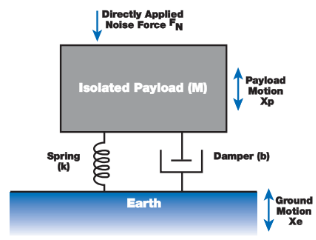
Figure 1
l IsolatedqualityBlock (M:Mass of isolated load):Representatives need to be representedisolationThe load is simplified here as a single mass without internal resonanceBlock (unit: kg).
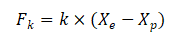
l spring(kThe stiffness of the spring): The elastic support element representing the isolator (such as the air spring in TMC pneumatic isolators) serves toSupport the load and apply a force to it, which is given by the following formula:
among which and
and andRepresenting the ground respectively(Zhenyuan)The dynamic position of the loadThe smaller the spring stiffness k, the lower the natural frequency f ₀ of the system, and the easier it is to enter the effective isolation zone.
l Damper (b)Damping coefficient):Components that represent the consumption of vibration energy, such as damping holes in TMC Gimbal Piston、 Damping oil in MaxDamp),By converting the kinetic energy of the mass block into heat (such as frictional heat of the fluid in the damping hole), energy dissipation is achieved, ultimately restoring the system to rest.This is achieved by generating a force that is proportional and opposite in direction to the speed of the load relative to the ground:

From the mechanical formula, it can be seen that both equations exist ,Ground vibration is transmitted to the isolated mass block in the form of force through springs and dampers. The core of passive isolation is to adjust the parameters of k, b, and M to change the vibration transmission efficiency and achieve the goal of "filtering" vibration.
2 Vibration transmission rate formula and curve characteristics
Usually, we do not use parametersM,k,bTo describe the system, it is to define a new set of parameters that can be more directly associated with the observable characteristics of the mass spring system.
The first one is the natural frequency:

It describes the frequency of free oscillation of the system without any damping (b=0). Usually, one of the following two common parameters is used to describe damping in a system: quality factor Q and damping ratioζ

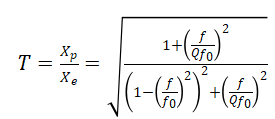
The transfer rate of this idealized system is:
 (1)
(1)
BelowPlotted several different quality factorsQThe curve of system transmission rate changing with frequency ratio. The drawnQThe value range is from 0.5 to 100.Q=0.5The situation is a special case called critical damping,It refers to when the systemoccurWhen released after displacement, the damping level will not exceed the equilibrium position. Damping ratio is the ratio of system damping to critical damping.We use Q instead ofζBecause for Q greater than about 2, when ω=ω 0oftime, moment T≈Q。(among whichOhandO0For angular frequency, ω=2 π f).

Figure 2
The transmission rate of systems with different Q values (damping levels) varies with the frequency ratio r( ,fTo incentivize frequency, f0For natural frequency)The changes show clear patterns and can be divided into three stages
l Synchronous vibration segment (r<1, i.e. f<f ₀): T ≈ 1, the isolated mass block moves synchronously with the ground, and the spring and damper cannot provide vibration isolation. For example, when the ground vibration frequency is 1Hz and the system f ₀=2Hz, the equipment will synchronously shake with the ground vibration of 1Hz without isolation effect.
l Resonance hazard zone (r ≈ 1, i.e. f ≈ f ₀): When T>1, the vibration is amplified by a factor approximately equal to Q value (the larger Q, the higher the resonance peak). If at this moment Tmax> 5 may cause structural deformation or accuracy failure of the equipment, and it is necessary to reduce the resonance peak by increasing damping (reducing Q).
l Effective isolation section (r> That is, f>
 f₀):This is the area where the isolator functions.T decreases with the increase of r ²The isolation effect gradually increases. At this point, the smaller the damping (Q), the smaller the T value, and the better the isolation effect. It can be seen that low damping has more advantages in the effective isolation section.
This curve clearly reveals the core contradiction of passive isolation: increasing damping can suppress resonance, but it will weaken the effective isolation effect; Reducing damping can improve the effective isolation effect, but it will increase the risk of resonance. When designing, it is necessary to balance the relationship between the two according to the actual scenario.
The force directly applied to the load is transmitted to the amplitude of the load's motion, and its form is similar toformula1expressiveSlightly different. This transfer function has the dimension of displacement caused by unit force (such as m/N), so it should not be confused with the dimensionless transfer rate:

BelowThe curve of this function as a function of frequency was plotted, and reducing the Q value would decrease the load response at all frequencies.
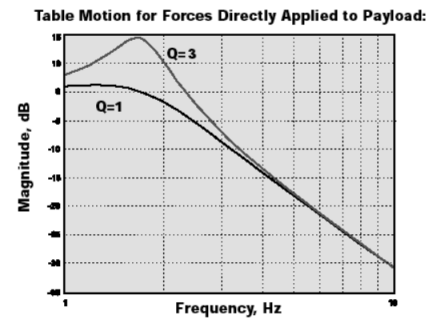
Figure 3
TMC's MaxDamp ® The isolator precisely utilizes this characteristic and is suitable for applications where the main disturbance is generated by the isolated load itself. Figure 4 shows the relationship with the figure3The time-domain response of the load corresponding to the middle curve. This figure also illustrates the attenuation of the system once it is disturbed. The envelope of attenuation is .
.
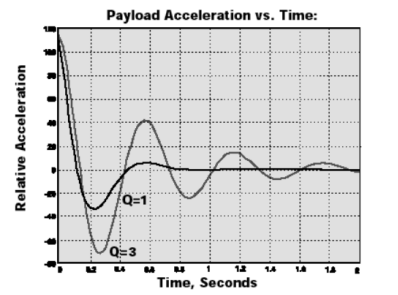
Figure 4
Actual system and diagram1The simple model shown has some significant differences, the most important of which is that the actual system has six degrees of freedom (DOF) of motion. These degrees of freedom are not independent and there is strong coupling in most systems. For example,“Horizontal transfer function”Usually two resonance peaks are displayed, as the horizontal movement of the load can cause tilting motion, and vice versa.
4 Design Objective of Vibration Isolator、Ideas and key trade-offs
(one)Core design objectives
The design core of passive isolators is to "match the natural frequency f ₀ and damping ratio Zeta", achieving two major goals:
(1) Ensure that the system can enter the effective isolation zone (r> ), i.e. the main vibration frequency f that the device actually faces is greater than
 f0
f0
(2) Control the resonance peak within a safe range to avoid damage to the equipment caused by resonance.
Therefore, the core design goal of the isolator is very clear.According to the natural frequency formula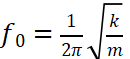 ,Reducing f ₀ is expandingThe key to effective isolation zone - the lower f ₀, the lower the starting frequency of the effective isolation zone(
 f0)The lower the frequency, the more low-frequency vibration scenarios can be covered (such as the common 2-10Hz vibration on the ground).Among them, k is the stiffness of the isolator (the softer the better) and m is the mass carried by the isolator (the heavier the better).
(2) Specific design ideas
The design concept is therefore clearThere are two main ways to reduce f ₀:
1. Reduce the stiffness of the elastic element k by selecting "softer" elastic elements to reduce the force required per unit displacement, thereby reducing the system stiffness. For example:
TMC air flotation isolators utilize the low stiffness characteristics of compressed air, with vertical stiffness as low as 10N/m or less, reducing the system frequency to 1.5-2.0Hz;
Rubber isolators use low hardness rubber materials (such as Shore hardness 30-50 degrees) to reduce stiffness and are suitable for isolating mid to low frequency vibrations.
2. Increase the isolated quality M,When the stiffness of the elastic element is fixed, increasing the isolated mass can directly reduce f.
For example:
A granite platform weighing 500-1000kg is commonly used as the base for precision optical equipment. By increasing M and combining it with the low k value of the air spring, the system f ₀ can be reduced to below 2Hz;
Semiconductor testing equipment can improve system stability and reduce f ₀ by installing cast iron counterweights (with a mass of over 200kg). Key trade-off: "Vibration isolation performance" vs "system stability"
(3) Key design trade-offs
There are two core trade-offs in passive vibration isolation design that need to be flexibly adjusted according to the equipment scenario:
1 The trade-off between "low f ₀" and "static stability"
The softer the system (smaller k and lower f ₀), the better the isolation effect, but the longer the recovery time after disturbance (such as personnel movement or internal equipment movement), the poorer the static stability. For example, a system with f ₀=1Hz takes 5-10 seconds to recover to a stationary state after being disturbed; The system recovery time for f ₀=5Hz is only 0.5-1 second.
Optimization plan: Control static settlement and improve anti tilt by optimizing the center of gravity of the equipment (such as reducing the height of the center of gravity)Covering ability.
2 The right to "resonance suppression" and "effective isolation"balance
Increasing damping (Zeta increase) can reduce the resonance peak, but it will lead to an increase in the T value of the effective isolation zone and a decrease in isolation efficiency; Reducing damping (Zeta reduction) can improve effective isolation efficiency, but it will increase the resonance peak.
Optimization plan: Adjust Zeta based on the ratio r of incentive frequency to f ₀:
If r>3 (excitation frequency far from f ₀, low resonance risk): take a small damping (Zeta=0.05-0.1), prioritize ensuring effective vibration isolation effect;
If r=1.5-2 (excitation frequency close to f ₀, high resonance risk): take a large damping (Zeta=0.2-0.3) and prioritize suppressing the resonance peak.
fiveCommon Misconceptions and Optimization Directions in Passive Vibration Isolation Design
In the design and selection of passive vibration isolation schemes, poor understanding of the principles can easily lead to poor results. The following are three common misconceptions and optimization suggestions:
Misconception 1: Blindly pursuing low natural frequency f ₀
Question:Excessive reduction of f ₀ will lead to static settlement δstA significant increase may cause high center of gravity equipment (such as vertical lithography machines) to overturn, or cause permanent damage to elastic components (such as springs) due to excessive compression; Meanwhile, a too low f ₀ will prolong the system disturbance recovery time and affect the dynamic stability of the equipment.
Optimization direction:Reasonably set according to the device usage scenario:
Low frequency vibration environment (such as laboratory ground vibration of 2-5Hz): f ₀ is controlled at 1.5-2.5Hz to ensureF ₀ < 2Hz, covering low-frequency vibrations;
Medium to high frequency vibration environment (such as factory workshop 10-50Hz vibration): f ₀ is controlled at 3-5Hz to balance stability and isolation effect; Strictly control the static settlement to avoid difficulties in leveling.
Misconception 2: Neglecting the dual role of damping and excessively increasing or decreasing damping
Question:In some designs, in order to pursue "ji induced vibration isolation", excessive reduction of damping (Zeta<0.05) leads to resonance peak Tmax5. The accuracy of the equipment is severely compromised when operating at resonance frequency; Or, in order to avoid resonance, excessive increase in damping (Zeta>0.3) may result in an effective isolation zone T value greater than 0.3 (isolation efficiency<70%), which cannot meet the requirements of precision equipment.
Optimization direction:Adjust damping based on excitation frequency distribution:
Firstly, detect the environmental vibration frequency through the VC curve and determine the ratio r between the main vibration frequency f and the system f ₀;
If r>3, choose Zeta=0.05-0.1 (such as using air flotation isolators with low damping dampers);
Misconception 3: Mismatch between elastic components and loads, imbalance in stiffness or load-bearing capacity
Problem: When selecting elastic components, the stiffness and load-bearing capacity were not accurately matched based on the "equipment weight+base weight":
Excessive stiffness (k too high): causing f ₀ to be too high, resulting in an effective isolation zone starting frequencyF ₀>Main vibration frequency, no isolation effect;
Insufficient bearing capacity (rated load of elastic element < actual load): The elastic element undergoes long-term deformation and stiffness failure;
Excess carrying capacity (rated load far greater than actual load): The deformation of the elastic element is too small to play a "soft support" role, resulting in a high f.
optimization directionAccurately calculate the total load Mtotal=Equipment weight+base weight, based on the target value of f ₀, using the formula Calculate the required stiffness; When selecting elastic components, ensure that their rated load is Mtotal1.2-1.5 times, to avoid overloading or insufficient load;
When using multi support vibration isolation (such as supporting equipment with 4 isolators), it is necessary to ensure that the load on each support point is uniform to avoid stiffness deviation caused by uneven force on the elastic elements.
sixSummary and TMC Practice
Vibration isolation is not about "the stricter the better", but rather requires selecting a solution based on the evaluation results of the VC curve, combined with experimental accuracy requirements and environmental vibration characteristics. The reason why TMC's vibration isolation technology can be widely applied in the global precision field lies in its consistent "theory based, scenario oriented" approach——From the classic Gimbal Piston ™ Air floating vibration isolatortoMaxDamp with high damping ® The series strictly follows these basic principles in its design and achieves precision in engineering, providing vibration isolation solutions for customers in different application scenarios.
In the next article, we will further focus on the specific structural design, parameter selection methods, and typical industry application cases of TMC passive vibration isolation products,Help everyone better master the selection and application of passive vibration isolation schemes, stay tuned!
---