-
E-mail
hitechino@163.com
-
Phone
18519736169
-
Address
A3-3-28, Blue Bay Intelligent Manufacturing Factory, No.1 Jinye Road, High tech Zone, Qingdao City, Shandong Province
Qingdao Haitai Yinuo Technology Co., Ltd
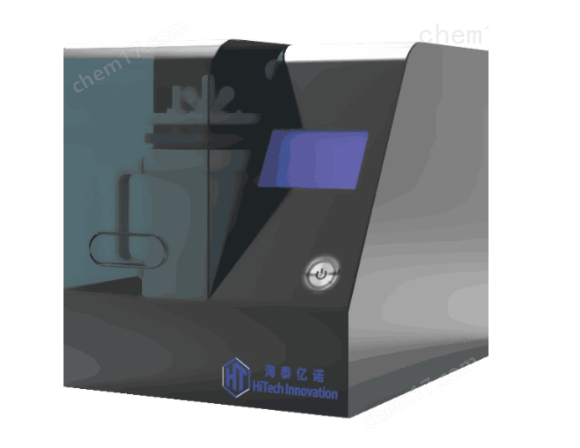
Fully automatic amino acid sample pretreatment equipment: freeing up manual efficiency
Date: 2025-11-17Read: 0
The pretreatment process of amino acid samples is often tedious and time-consuming, requiring a lot of manual operation, which not only reduces work efficiency but also easily introduces human errors. The emergence of fully automatic amino acid sample pretreatment equipment has provided an effective solution to this problem, greatly freeing up manual efficiency and improving the overall quality of experiments.
1、 Complicated pre-processing: pain points of traditional methods
Traditional amino acid sample pretreatment typically involves multiple steps such as sample collection, dissolution, filtration, derivatization, etc. These steps not only require precise operation, but also strict control of experimental conditions such as temperature, time, and reagent dosage. For example, in amino acid derivatization, it is necessary to react at a specific temperature for a certain period of time while avoiding interference from impurities. These complex operational steps are not only time-consuming and laborious, but also prone to sample contamination or incomplete reactions due to improper operation, thereby affecting subsequent analysis results.
In addition, traditional methods require a large amount of manual operation, which not only increases the workload of experimental personnel, but also may lead to poor reproducibility of experimental results. For example, during the sample filtration process, different operators may use different filtration speeds and pressures, which can affect the purity and recovery rate of the sample. These issues are particularly prominent in high-throughput experiments, greatly limiting experimental efficiency and data quality.
2、 Fully automatic equipment: efficient and precise pre-processing solution
The fully automatic amino acid sample pretreatment equipment achieves full process automation of sample pretreatment through an integrated mechanical and automation control system. From sample collection, dissolution, filtration to derivatization, all steps can be automatically completed by the equipment without manual intervention. This automated processing not only improves work efficiency, but also reduces human errors, ensuring the accuracy and repeatability of experimental results.
For example, in the dissolution and filtration steps, fully automated equipment can accurately control the amount of solvent and reaction time, ensuring that the sample is completely dissolved and free of impurities. During the derivatization process, the equipment can automatically control the reaction temperature and time to ensure the complete progress of the derivatization reaction. These automated operations not only improve experimental efficiency, but also reduce errors caused by human error and improve the reliability of experimental results.
3、 Improve experimental efficiency and quality
The use of fully automatic amino acid sample pretreatment equipment greatly improves experimental efficiency. In traditional methods, a skilled operator may need several hours to complete the pre-processing of a batch of samples, while fully automated equipment can process the same amount of samples in a short period of time. This not only saves time, but also improves the overall work efficiency of the laboratory, allowing researchers to devote more time and energy to data analysis and research work.
In addition, the use of fully automated equipment has also improved the quality of experimental results. Due to all operational steps being automatically completed by the equipment, errors introduced by human operation are avoided, and the repeatability and accuracy of experimental results have been significantly improved. This is particularly important for amino acid analysis that requires high precision and high repeatability, such as in protein structure research and disease diagnosis, where accurate amino acid analysis results are key.
4、 Assist in scientific research and production
The fully automatic amino acid sample pretreatment equipment not only plays an important role in scientific research, but also has a wide range of applications in production fields such as food, medicine, and biotechnology. In the food industry, amino acid analysis is used to evaluate the nutritional value and quality control of food. Fully automatic equipment can quickly and accurately complete sample pretreatment, ensuring the efficiency and reliability of food testing. In pharmaceutical research and development, amino acid analysis is used to study the metabolic processes and biological activities of drugs. Fully automated equipment can improve experimental efficiency and accelerate the drug development process.
V. Conclusion
The emergence of fully automatic amino acid sample pretreatment equipment has brought revolutionary changes to the field of amino acid analysis. It not only liberates manual efficiency and reduces tedious manual operations, but also improves the accuracy and repeatability of experimental results. In the fields of scientific research and production, the application of fully automated equipment greatly improves work efficiency and data quality, providing reliable guarantees for amino acid analysis.