-
E-mail
sales@bestyiqi.com
-
Phone
18896733756
-
Address
Room 701, Building 5, No. 5 Datong Road, Suzhou High tech Zone
Pasteur Instruments (Suzhou) Co., Ltd
Elemental Analysis Tool: Core Technology Analysis of Olympus Handheld Spectrometer
Date: 2025-12-16Read: 0
In the fields of metallurgical composition analysis, geological exploration, archaeological identification, and environmental emergency monitoring, rapid and accurate element analysis is the core basis for decision-making. The Olympus handheld spectrometer, with its dual core technology architecture of "X-ray fluorescence spectroscopy (XRF)+laser-induced breakdown spectroscopy (LIBS)", achieves comprehensive coverage from constant elements to trace elements, and is suitable for the detection of multivariate samples from metal alloys to ore soils. The collaboration and complementarity of these two technologies enable the equipment to meet laboratory level detection accuracy and have the flexibility of on-site portable detection, making it an equipment for element analysis in various industries.
The X-ray fluorescence spectroscopy (XRF) technique isOlympus handheld spectrometerThe fundamental core is to achieve efficient qualitative and quantitative analysis through "element fingerprint recognition". The principle revolves around "excitation fluorescence response": the micro X-ray tube built into the device emits high-energy primary X-rays, which penetrate the surface of the sample and collide with the inner layer electrons of the atom, causing them to leave the orbit and form holes; When outer electrons transition to fill holes, they release "characteristic fluorescent X-rays" of energy and wavelength - the atomic structure of different elements determines that the fluorescence signal can be accurately identified like a human fingerprint. This technology does not require sample pretreatment and can complete full element coverage detection from magnesium (Mg) to uranium (U) within seconds, making it an ideal choice for metal material composition screening.
Olympus' deep optimization of XRF technology has enabled it to break through the limitations of traditional detection. At the excitation end, a new generation high-power X-ray tube (with a maximum power of 50W) and an intelligent high-voltage regulation system are used to accurately match the excitation energy for different substrates such as aluminum alloy and stainless steel. The detection sensitivity for light elements such as silicon and phosphorus is increased by more than 30%. The detection end is equipped with a high-resolution silicon drift detector (SDD) with an energy resolution as low as 125eV, which can clearly distinguish the characteristic peaks of adjacent elements such as nickel and copper, chromium and manganese, and avoid compositional misjudgment. In the scenario of stainless steel grade identification, this technology can accurately identify trace elements such as carbon and nitrogen, achieving rapid differentiation between easily confused grades such as 304 and 316L.
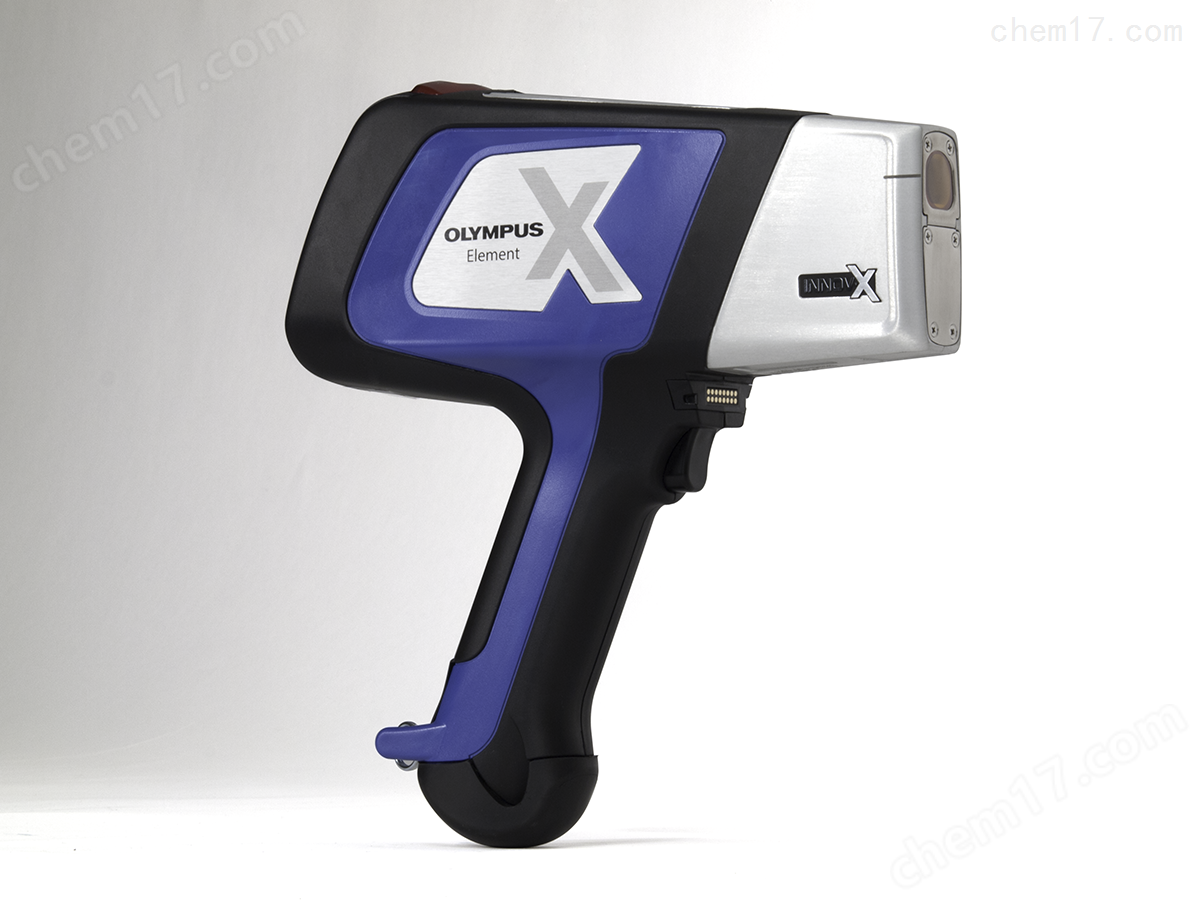
Laser induced breakdown spectroscopy (LIBS) technology is Olympus' distinctive core, specializing in the detection of light elements and non metals that are difficult to cover with XRF. The principle is to focus high-energy pulsed laser on the surface of the sample, instantly forming a high-temperature plasma (temperature can reach 10000K); During the plasma cooling process, atoms will release characteristic spectral signals, which can be captured and analyzed by a spectrometer to complete element identification. The advantage of this technology lies in its efficient detection of light elements such as hydrogen (H), lithium (Li), and carbon (C), filling the gap of XRF technology. In geological exploration, the carbon and hydrogen content in ores can be quickly determined, providing key data for mineralization analysis; In the field of cultural relic protection, non-destructive detection of the composition of organic matter and metallic elements in painted pigments is possible.
Dual technology collaboration and scenario based upgrades enable Olympus handheld spectrometers to meet the needs of the entire industry. In the metallurgical industry, XRF technology quickly completes the analysis of alloy principal components, while LIBS technology synchronously detects trace elements such as carbon and boron, jointly achieving accurate determination of material grades; In environmental emergency scenarios, XRF screens the total amount of heavy metals, LIBS locks in the sources of light element pollutants, forming a complete detection loop. Some models support a "one click switch" function, allowing users to automatically match detection technology based on sample type (metal/non-metal, solid/powder). The device has a built-in multi industry standard spectrum library, covering ISO, ASTM and other specifications, and can directly output analysis reports that meet industry requirements.
Portability and stability design allow core technological advantages to be fully unleashed in on-site scenarios. The device weighs only 1.5-2kg and is equipped with an ergonomic grip and a long-lasting lithium battery (with a range of 8-12 hours). It can be flexibly operated in complex environments such as workshop assembly lines, mining fields, archaeological sites, etc. The IP54 dustproof and waterproof rating and wide temperature range of -10 ℃ -50 ℃ ensure stable operation in harsh conditions such as humid workshops and high-temperature mining areas. Laser positioning and touch screen operation design enable non professionals to master basic operations within 3 minutes, achieving efficient operation of the entire process of "on-site sampling real-time detection data upload".
Non destructive testing is a common advantage of two core technologies, greatly expanding the application boundaries. Compared with traditional chemical analysis, there is no need to grind or dissolve the sample, and the sample remains intact after testing, making it particularly suitable for cultural relic identification, finished product sampling, and other scenarios. In the aerospace field, in-situ elemental analysis can be directly performed on aircraft components to avoid disassembly damage; In jewelry appraisal, non-contact detection of precious metal composition and purity does not affect the appearance of jewelry. The detection speed is dozens of times faster than traditional methods, and the single analysis time can be adjusted from 3-60 seconds. In the quality control of the production line, "every item must be inspected" can be achieved to prevent the flow of unqualified products.
The core competitiveness of Olympus handheld spectrometers lies in the innovative fusion of XRF and LIBS technologies. The precise stability of XRF complements the light element detection capability of LIBS, coupled with portable design and intelligent algorithms, which not only breaks the spatial limitations of laboratory testing but also ensures the reliability of analytical data. From quality control in industrial production to element exploration in scientific research, from rapid response to emergency monitoring to precise analysis of cultural relics protection, this equipment is supported by dual core technology, providing efficient and accurate element analysis solutions for various industries and becoming a core force in promoting the upgrading of on-site detection technology.