-
E-mail
ronzer2009@163.com
-
Phone
13381168196
-
Address
1511 Zeyang Building, Shijingshan District, Beijing
Panyan Qunchuang (Beijing) Technology Co., Ltd
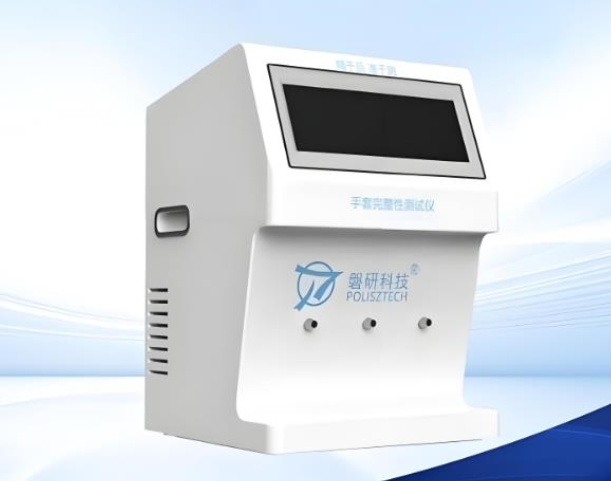
The glove integrity tester is easy to clean and suitable for use in clean areas
Date: 2025-10-29Read: 4
As a key tool to ensure the isolation of operators from sterile or high-purity materials, the easy to clean characteristics of the glove integrity tester's chassis are particularly important. The following will elaborate on why this type of chassis is particularly suitable for use in clean areas and explore its advantages in practical applications.
1. Material selection ensures efficient cleaning
High quality glove integrity testing machine cases are usually made of stainless steel or other corrosion-resistant, non absorbent materials. These materials have a smooth and flat surface, making it difficult for dust, dirt, or microorganisms to accumulate, making daily cleaning work simple and thorough. For example, 304 or 316L stainless steel not only has good chemical corrosion resistance, but also effectively prevents bacterial growth, meeting the requirements of GMP (Good Manufacturing Practice). In addition, some high-end models also undergo special surface treatments such as polishing or electrophoretic coating to further enhance the surface smoothness and antibacterial ability, ensuring that residues can be easily removed with each wipe and maintaining the sterile state inside the equipment.
2. Structural design optimization for hygiene management
In order to meet the strict standards of the clean area, the design of the integrity tester chassis fully considers the convenience of hygiene management. The modular structure allows for quick disassembly and assembly of various components, making it easy to thoroughly clean every corner. There are no complex grooves or difficult to reach internal spaces, avoiding the existence of cleaning dead corners. At the same time, all seams are precision machined to ensure a tight fit and reduce the risk of dirt and grime accumulation in the gaps. The ventilation openings and other openings are also equipped with replaceable filters, which can ensure air circulation and block external pollutants from entering, maintaining the purity of the internal environment. This carefully designed structure enables the entire chassis to be fully cleaned in the shortest possible time, reducing downtime and improving production efficiency.
3. Glove integrity tester ensures sealing performance in a dust-free environment
Good sealing performance is another highlight of the integrity tester chassis. By using high-quality sealing strips and door lock mechanisms, particles, moisture, and other potential pollutants in the external environment can be effectively isolated. Even in frequent opening and closing of doors, stable internal positive pressure can be maintained to prevent unfiltered air from infiltrating. This is particularly important for scenarios that require strict control of cross contamination, such as when testing glove sealing on a filling line, any small leak can lead to product contamination. Therefore, the powerful sealing function not only helps maintain the integrity of the clean area, but also provides a reliable protective barrier for sensitive processes.
4. Strong compatibility and adaptability to multiple disinfection methods
Considering the different requirements of disinfection methods in different industries, modern integrity testing machine cases often have extensive compatibility. Whether it is alcohol wiping, ultraviolet irradiation, or high-temperature and high-pressure steam sterilization, it can withstand them well without damaging the equipment. This means that companies can freely choose suitable disinfection methods based on their own SOP (Standard Operating Procedures), ensuring both cleaning effectiveness and not affecting equipment lifespan due to excessive use of certain methods. Moreover, many manufacturers also provide customized services to adjust the design of the chassis according to the specific needs of customers, making it more suitable for specific disinfection processes.
5. Intelligent glove integrity tester assists in improving cleaning efficiency
With the development of technology, more and more integrity testers are integrating intelligent functions to help users better manage and perform cleaning tasks. The built-in sensor can monitor the pressure difference, temperature and humidity changes inside and outside the chassis in real time, and remind staff to pay attention to abnormal situations in a timely manner. Some advanced models even support automatic spray cleaning systems. With just set parameters, the machine can automatically complete the entire cleaning process, greatly reducing the intensity of manual labor. In addition, by connecting to the central monitoring system, management personnel can remotely monitor the operation status of multiple devices, coordinate resources, and achieve more efficient cleaning management and quality control.