-
E-mail
info@palas.com.cn
-
Phone
02157850190
-
Address
5th Floor, Building 6C, No. 650 Shunqing Road, Songjiang District, Shanghai
Pallas Instruments (Shanghai) Co., Ltd
Installation and commissioning guide for continuous particulate matter monitoring system
Date: 2025-08-18Read: 0
Continuous particulate matter monitoring systemIt is the core equipment for environmental air quality monitoring, and scientific installation and standardized debugging are crucial to ensure the accuracy of monitoring data. 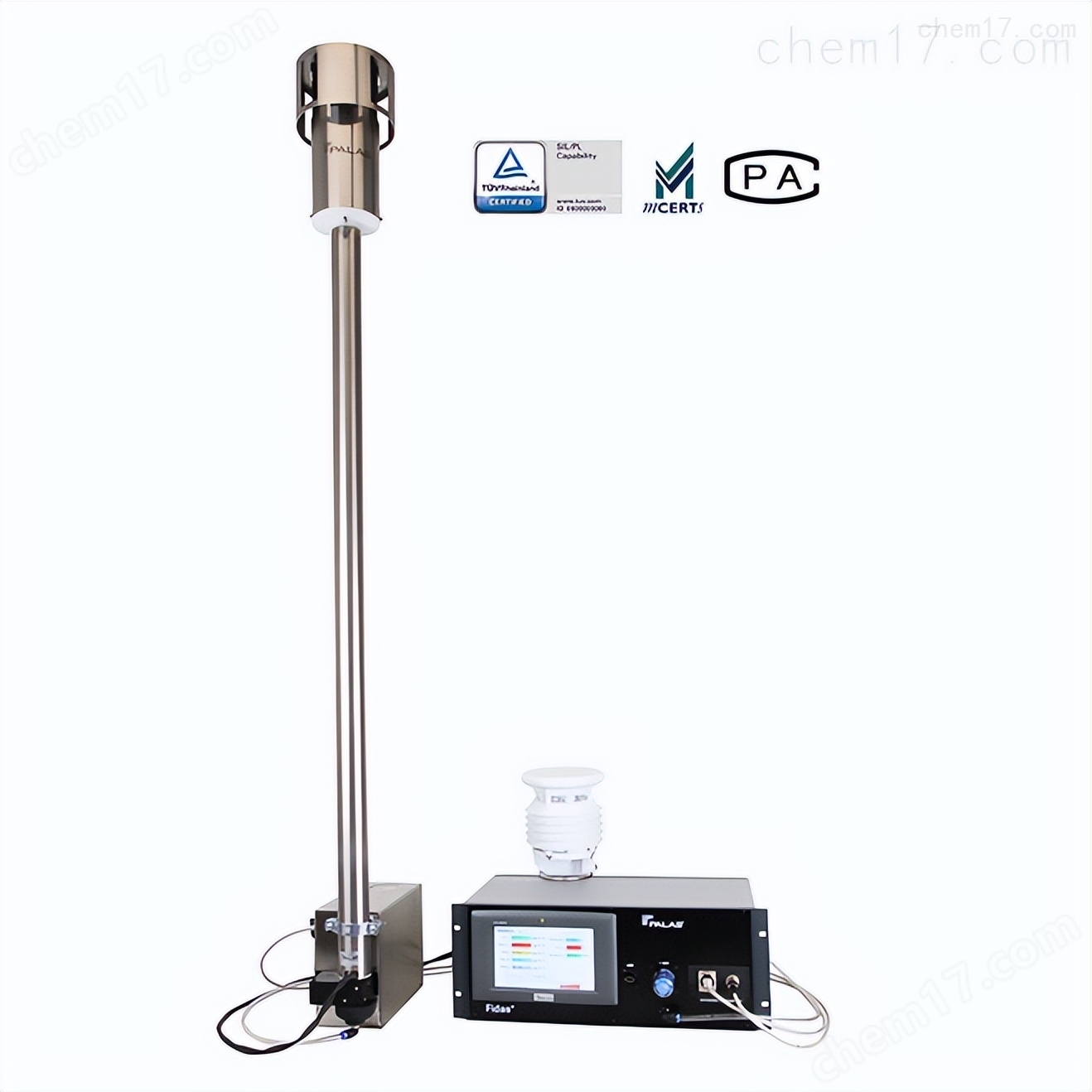
1、 Installation points
Before installing the system, a field survey is required to select representative monitoring points and avoid being close to local pollution sources or ventilation openings. The installation location should be well ventilated for easy equipment maintenance, while ensuring stable and reliable power and network connections. The sampling inlet should be at a certain height above the ground, away from obstacles, and ensure unobstructed airflow. The equipment bracket must be firm and stable, able to withstand the weight of the instrument and resist the effects of harsh weather. The sampling pipeline should be shortened as much as possible and avoid sharp bends to prevent particle deposition from affecting the measurement results. The power system should be equipped with a voltage regulator and power-off protection to ensure stable operation of the instrument. The installation environment should be kept away from strong electromagnetic interference sources to ensure the normal operation of electronic components.
2、 Debugging process
After the equipment installation is completed, conduct a mechanical inspection to confirm that all connections are firm and not loose. Start the system for zero calibration and establish a reliable benchmark reference value. Check if the airflow in the sampling system is stable and ensure that the particle transport path is unobstructed. Perform optical path system calibration to ensure the proper functioning of optical detection components. Debug data collection and transmission functions to verify whether monitoring data can be uploaded in real-time and accurately. Conduct multi-point calibration tests to verify the accuracy of the system's response at different concentrations. Check if the alarm system is functioning properly to ensure timely warning of abnormal situations. Conduct continuous operation testing to observe system stability and data reliability.
3、 Precautions
The installation and debugging process should be operated by professional technicians to avoid improper operation affecting equipment performance. The environmental conditions should meet the requirements for equipment operation, and debugging can be postponed in special weather conditions. All connecting parts must be well sealed to prevent air leakage or contamination. The calibration process should be strictly carried out according to standard procedures to ensure the reliability of the results. During debugging, closely observe the system's operating status and promptly record any abnormal situations. Establish detailed installation and debugging files, recording all operational steps and test results. After the system is put into operation, it should be regularly checked for installation stability and connection reliability.
Through standardized installation and scientific debugging,Continuous particulate matter monitoring systemCapable of long-term stable operation, providing reliable data support for environmental air quality assessment, and assisting in ecological environment protection decision-making.