Attention bias test
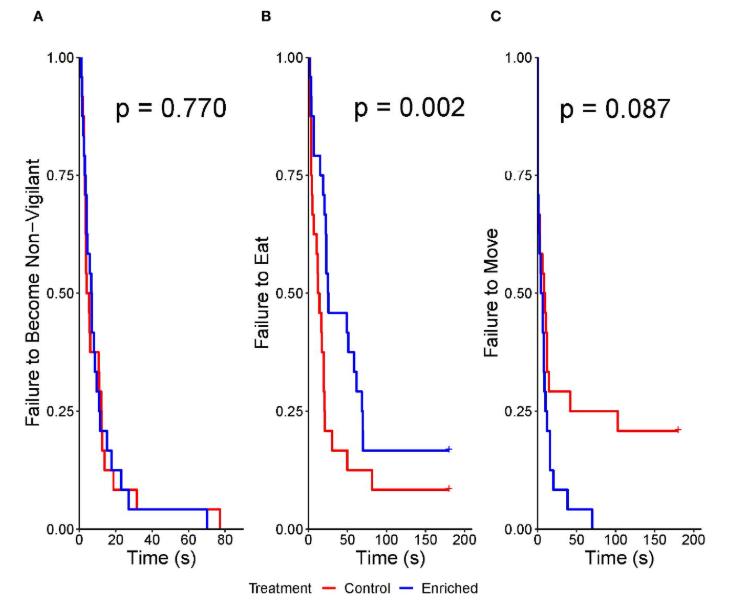
Fengrong has no effect on the latency period of losing alertness; However, bulls have a longer incubation period than cows (Figure 3A). The animals tested first have a longer latency period to become non alert compared to the animals tested last.
Compared with the control group of calves, the feeding likelihood of calves in the Fengrong group was lower, the incubation period of bulls was shorter than that of cows, and animals that received testing later had a shorter feeding incubation period than those that received testing earlier (Figure 3B). Mobile latency is often influenced by processing methods, but not by gender or test sequence (Figure 3C).
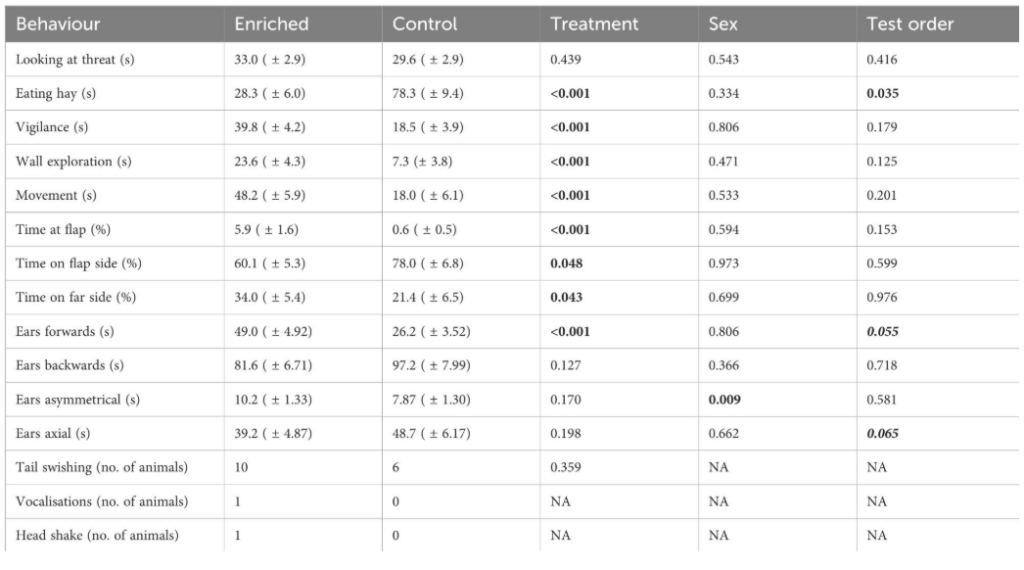
There were no differences between the calves treated with Fengrong and the control group calves in terms of the time of staring at threatening objects (i.e. dogs and dogs), backward ears, asymmetry, and the number of animals wagging their tails (Table 2). However, animals that received Fengrong treatment spent more time maintaining vigilance, keeping their ears forward, exploring the field, and walking, and also stayed longer near the dog gate and at the far end of the field. On the contrary, the control group calves ate hay for a longer period of time, and the feeding time was also affected by the testing sequence, with later test calves having a longer feeding time. However, the interaction between processing methods and testing sequence is not significant. The asymmetry of bull ears lasted for a short period of time, but gender had no effect on any other measurement behavior (Table 2).