-
E-mail
215398148@qq.com
-
Phone
13819825337
-
Address
No. 827, Meteorology Road, Haishu District, Ningbo City, Zhejiang Province
Ningbo Prus Instrument Technology Co., Ltd
The scientific principle and practical application of scientific research grade contact angle measuring instrument
Date: 2025-08-15Read: 0
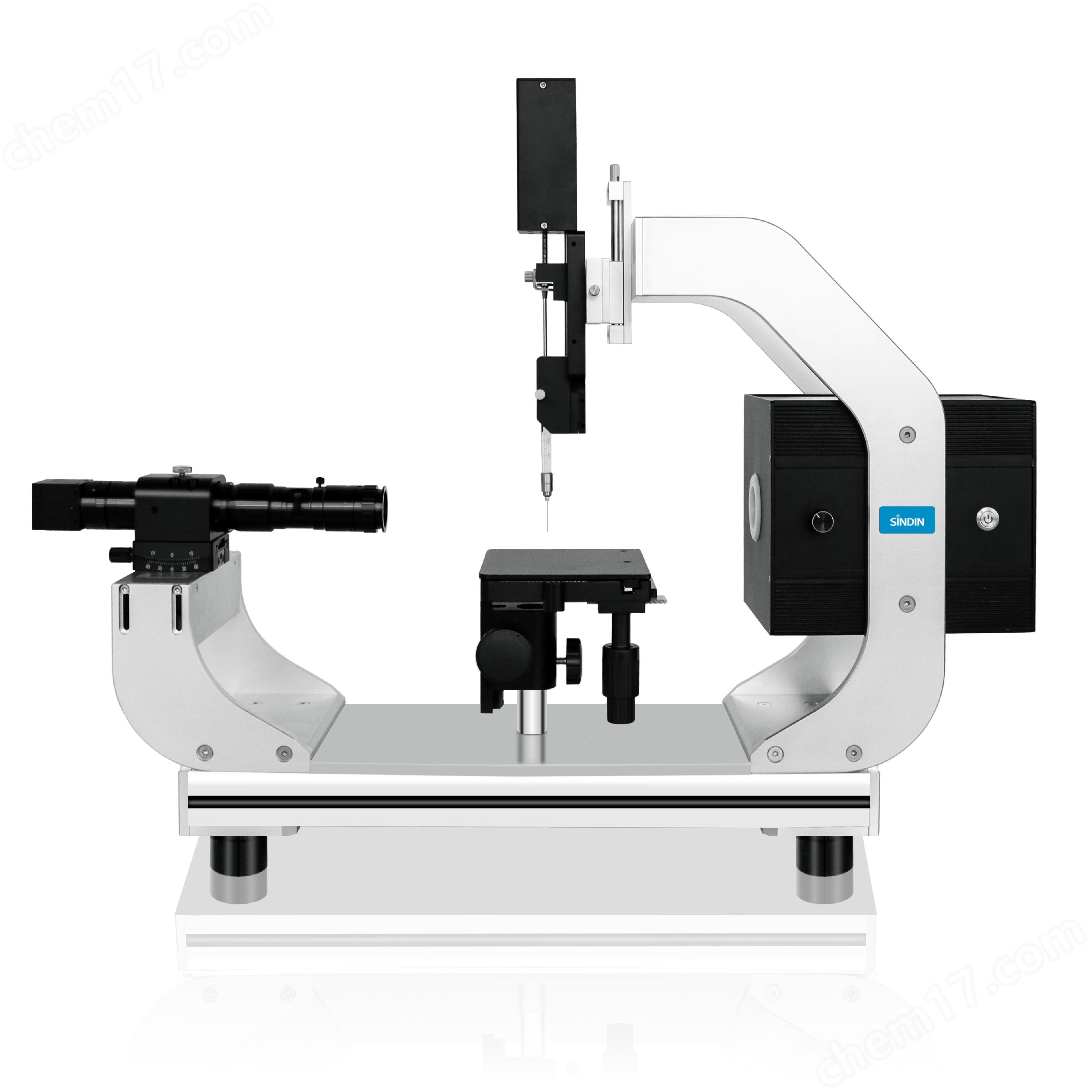
A research grade contact angle measuring instrument is an instrument used to accurately characterize the wettability of solid surfaces, based on the Young Laplace equation and principles of fluid mechanics.
1、 Scientific principle of research grade contact angle measuring instrument:
1. Static contact angle theory (Young's equilibrium)
When a droplet is stationary on a uniform and ideal smooth surface, the three-phase interface (solid/liquid/gas) reaches a mechanical equilibrium state. At this point, the horizontal forces of the liquid surface tension cancel each other out, forming a stable contact angle θ.
2. Expand the application scope of dynamic process analysis
Forward and backward angles: By controlling the injection pump to slowly increase or decrease the droplet volume, monitor the hysteresis phenomenon to evaluate the impact of surface roughness and heterogeneity on actual use.
Rolling angle measurement: Tilt the sample stage to the critical angle at which the droplet begins to roll, quantifying the self-cleaning ability (applied to the development of biomimetic coatings).
Time dependent study: Continuous imaging of droplet contour changes to reveal volatilization, swelling, or reaction kinetics processes (such as performance evaluation of drug sustained-release carriers).
3. Optical precision measurement technology
Using a high-density CCD camera in conjunction with a telecentric lens to capture droplet side view projection images, combined with an adaptive edge detection algorithm to automatically fit circular arc curves. Advanced models equipped with:
Confocal device eliminates perspective distortion;
Multi wavelength light sources can handle samples with different light transmittance;
3D reconstruction software is used to process non axisymmetric complex shapes such as fiber bundles and porous structures.
2、 Frontier scientific research application scenarios of research grade contact angle measuring instruments:
1. In the field of materials science
New alloy development: Study the stability of the oxide layer of titanium alloy after laser cladding and optimize the biocompatibility of artificial joint implants. For example, predicting the deposition threshold of calcium apatite through contact angle mutation points.
Optimization of Graphene Transfer Process: Monitor the changes in interfacial energy after single-layer graphene transfer to the target substrate, and guide the design of transfer solution formulation to improve yield.
2. Biotechnology innovation
Targeted delivery system for anticancer drugs: Quantify the charge reversal behavior of liposome nanoparticles at different pH values, and accurately regulate the timing of drug release in the tumor microenvironment.
Cell culture matrix modification: Screening topological structural parameters that promote directed differentiation of neural stem cells to achieve standardized preparation of organoid engineering.
3. Iteration of new energy technologies
Packaging testing of perovskite solar cells: evaluating the long-term effectiveness of water and oxygen barrier layers, establishing an accelerated aging model to predict module lifespan.
Characterization of water electrolysis catalyst: In situ observation of the kinetic process of bubble detachment from the electrode surface during hydrogen evolution reaction, correlated with the distribution of catalytic active sites.
4. Precision control in micro nano manufacturing
Femtosecond laser texture processing feedback: Real time monitoring of the wetting state evolution of micro column array structures, dynamically adjusting the laser scanning path to achieve superhydrophobic/superhydrophilic patterned preparation.
Lab on chip: Design gradient wetting flow guiding structures on the inner walls of microchannels to enhance the sensitivity of immunoassay test strips.