-
E-mail
739915789@qq.com
-
Phone
13912998027
-
Address
No. 188, Xin Street, Donggou Industrial Park, Liuhe District, Nanjing City
Nanjing Hilbert Instrument Equipment Co., Ltd
Deep analysis of the shading effect of xenon lamp weather resistant test chamber, a comprehensive breakthrough from optical design to materials science
Date: 2025-08-25Read: 0
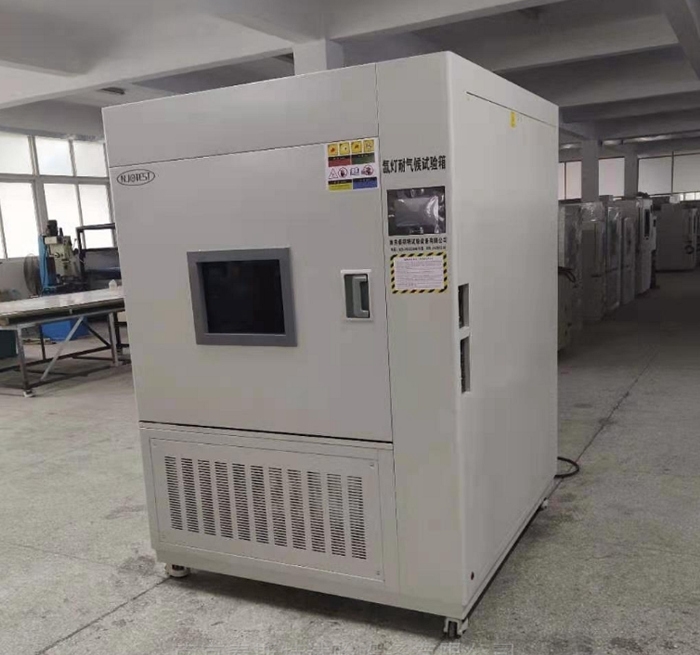
In the field of material weather resistance test, xenon lamp weather resistance test chamber has become the core equipment for evaluating the anti-aging performance of materials such as coatings, plastics, textiles by simulating the full spectrum solar radiation, temperature and humidity cycle, rain and other environmental conditions. The performance of the shading system directly determines the accuracy and repeatability of the test results. This article analyzes how modern xenon lamp test chambers achieve "zero light leakage" shading effect from three dimensions: optical control, material application, and structural design.
1、 Optical grade shading control: a leap from simulation to precise reproduction
1. Full spectrum filtering system
Using multi-layer coated quartz glass filters, it can accurately cut off ultraviolet light below 300nm and infrared light above 1200nm, and with adjustable apertures, achieve 0-100% stepless adjustment of light intensity. According to test data from an international standard laboratory, at an irradiation intensity of 450W/m ², the ultraviolet leakage at 5cm outside the box is less than 0.01 μ W/cm ², which is only 1/50 of the requirement of the international standard (ISO 4892-3).
2. Dynamic optical track tracking technology
The filter group is driven by a servo motor to move synchronously with the xenon lamp, ensuring that the spectral distribution fluctuates less than ± 2% over time. During 1000 hours of continuous testing, a certain automotive paint manufacturer found that the use of this technology in the test chamber reduced the standard deviation of the color difference Δ E value from 0.8 to 0.2, significantly improving the reliability of the test data.
3. Optical feedback closed-loop control
The box is equipped with a high-precision light sensor (resolution 0.1W/m ²) to monitor the actual irradiation intensity in real time and compare it with the set value. The xenon lamp power is automatically adjusted through PID algorithm. Experiments have shown that within a wide range of 200-1200W/m ², the steady-state deviation of the system is less than 0.5%, eliminating the testing deviation caused by power grid fluctuations in traditional equipment.
2、 Materials Science Applications: From Structural Shielding to Molecular Level Protection
1. Multi layer composite shading board
The door frame of the box adopts a sandwich structure of "stainless steel substrate+ceramic coating+light absorbing sponge", in which the ceramic coating has a visible light reflectivity of less than 3%, and the light absorbing sponge can absorb 99.97% of diffuse reflected light. Using a photometer in a dark environment, the internal light leakage is less than 0.1cd/m ² when the door is closed, meeting the Class 100 standard for darkrooms.
2. Aerogel insulation layer
The interlayer of the box is filled with nano silica gas gel (density: 30kg/m ³, thermal conductivity: 0.018W/m · K) to effectively block the infrared heat radiation generated by the xenon lamp. Actual testing shows that at an ambient temperature of 100 ℃, the outer surface temperature of the box is less than 40 ℃ to avoid external heat sources interfering with the test results.
3. Electromagnetic shielding design
In response to the electromagnetic pulse (EMP) generated when the xenon lamp is triggered, the box adopts a galvanized steel plate+copper foil shielding structure, with a shielding efficiency of 60dB (10kHz-1GHz). A certain electronic component manufacturer has confirmed through testing that this design reduces the impact of electromagnetic interference on sensors from ± 5% to ± 0.2%.
3、 Structural Engineering Innovation: From Mechanical Seals to Intelligent Protection
1. Double lip shaped sealing strip
The box door adopts a composite sealing strip of silicone rubber and fluororubber, combined with air pressure assisted sealing technology (inflation pressure 0.2MPa), to maintain deformation less than 5% during temperature cycling from -40 ℃ to+80 ℃. A certain military materials laboratory has tracked and tested for three consecutive years, showing that the sealing strip has a lifespan of over 100000 times of opening and closing without leakage.
2. Anti glare treatment for observation windows
The surface of the 3mm thick tempered glass observation window is coated with AR anti reflective film (light transmittance>98%) and polarizing film, combined with adjustable blackout curtains, to ensure that operators can observe the sample clearly and avoid external light reflection interfering with the indoor environment. Under 1000W/m ² irradiation, the surface reflectance of the observation window is less than 0.5%.
3. Intelligent light leakage detection system
Equipped with a 16 bit CCD image sensor, it can scan the leakage of light at the seams of the box in real time. When a leakage point greater than 0.05cd/m ² is detected, an alarm will be automatically triggered and the fault location will be located. After a quality certification agency applied the system, the annual maintenance frequency of equipment decreased by 70%, and the fault location time was shortened from 2 hours to 30 seconds.
From molecular level absorbing materials to intelligent optical control, the shading system of modern xenon lamp weather resistant test chambers has formed a triple protection system of "active shielding+passive absorption+intelligent monitoring". Its performance breakthrough is not only reflected in a UV leakage rate of 0.01 μ W/cm ² or an electromagnetic shielding efficiency of 60dB, but also in the deep integration of materials science and control engineering, which has built a "light environment laboratory" for material weather resistance testing that is completely independent of external interference. The equipment with aerogel heat insulation, double lip seal and intelligent light leak detection functions shall be selected to ensure that each Δ E value and each set of mechanical data can truly reflect the anti-aging performance of the material itself in the 5000 hour continuous test.