-
E-mail
nj_beio@163.com
-
Phone
18061671095
-
Address
Building D, Wanda Plaza, Jiangning, Nanjing
Nanjing Beiao Instrument Manufacturing Co., Ltd
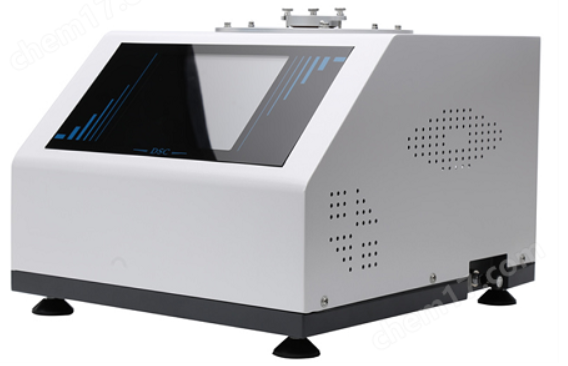
Interpretation of Technical Characteristics of DSC-510C Differential Scanning Calorimeter
Date: 2025-11-18Read: 0
The DSC-510C differential scanning calorimeter, as a high-performance thermal analysis instrument, can be summarized into five core advantages: high precision, wide temperature range, multifunctionality, intelligent operation, and stable reliability. The specific interpretation is as follows:
1、 High precision measurement: precise capture of small thermal effects
1. Temperature control accuracy
The temperature resolution reaches 0.01 ℃, and the temperature fluctuation and repeatability are controlled within ± 0.1 ℃ to ensure the accuracy of experimental data.
Adopting a dual PID temperature control system, combined with the design of mineral insulated furnace body, to achieve precise tracking of temperature curve and reduce the impact of temperature fluctuations on experimental results.
2. Accuracy of heat flow measurement
The DSC range is 0 to ± 600mW, with a resolution and sensitivity of 0.01mW, and can detect weak thermal effect changes (such as glass transition, melting, etc.).
The independently developed high-sensitivity heat flow sensor platform has a thermal accuracy of ± 0.1%, meeting the high-precision data requirements for material research and development.
2、 DSC-510C Differential Scanning Calorimeter with Wide Temperature Range Coverage: Suitable for Extreme Experimental Conditions
1. Temperature range: from room temperature to 500 ℃ (some models support higher temperatures), covering high temperature scenarios such as polymer processing and metal heat treatment.
2. Heating rate: Supports wide range adjustment from 0.1 to 100 ℃/min, meeting the requirements of fast scanning and slow constant temperature experiments.
3. Constant temperature time: It is recommended to be less than 24 hours to ensure the stability of long-term experiments.
3、 Multifunctionality: One stop material thermal performance analysis
1. Test items
Glass transition temperature (Tg): Evaluating the temperature at which polymer materials transition from a glassy state to a highly elastic state.
Melting and Crystallization Temperature (Tm/Tc): Analyze the melting behavior and crystallization kinetics of materials.
Enthalpy value (Δ H): measures the energy changes of a material during the phase transition process, such as melting heat, crystallization heat, etc.
Oxidation Induction Period (OIT): Evaluate the stability of materials in high-temperature oxidation environments and guide the amount of antioxidant added.
Product stability: Monitor the performance changes of materials during heating/cooling processes through thermal analysis.
2. Application Fields
Polymer research and development: optimizing processing temperature, evaluating curing cycle, and detecting material purity.
Chemical and petrochemical industries: analyzing reaction heat, monitoring catalyst activity, and controlling product quality.
Food and Medicine: Study the thermal stability of drugs and evaluate the safety of food packaging materials.
Metals and Ceramics: Analyzing Phase Transformation Behavior and Optimizing Heat Treatment Processes.
4、 DSC-510C Differential Scanning Calorimeter Intelligent Operation: Simplifying Experimental Process
1. Touch screen control
Equipped with an 8-inch industrial grade LCD touch screen, the interface is simple and intuitive, supporting quick setting of experimental parameters and real-time display of data.
The combination of instrument panel frame and touch screen makes operation convenient and reduces the risk of accidental touch.
2. Software functions
Built in professional analysis software, supporting functions such as baseline correction, peak area integration, and data export.
The experimental method library pre stores common testing standards, which users can directly call to improve experimental efficiency.
3. Atmosphere control
Support automatic switching between nitrogen and oxygen, with adjustable gas flow rate from 0-300mL/min, to meet special requirements such as oxidation induction period testing.
Add a protective gas input to prevent sample oxidation or contamination.