-
E-mail
service@lidebio.com
-
Phone
13512186191
-
Address
Room 301, No. 6, Minhang Jindi Science and Technology Innovation Park, 1288 Zhongchun Road, Shanghai
Lide Biotechnology (Shanghai) Co., Ltd
Improve experimental reproducibility! Quantitative concentrator, accurate quantification without deviation, ensuring consistent concentration results every time
Date: 2025-10-21Read: 0
In scientific research and experimental analysis, the repeatability of experiments is one of the key factors in measuring the reliability and accuracy of experimental results. And every step in the experimental process may have an impact on repeatability. Among them, the sample concentration step is particularly important, as inaccurate concentration operations may lead to deviations in sample composition, thereby affecting the stability and credibility of experimental results. However, with the emergence of quantitative concentrators, this problem has been effectively solved. It provides strong guarantees for the reproducibility of experiments with precise quantitative ability and highly consistent concentration results.
Traditional concentration methods, such as rotary evaporation and nitrogen blowing, although widely used in laboratories, often have some unavoidable drawbacks. For example, during the rotary evaporation process, the evaporation rate of the solvent is difficult to accurately control and is easily affected by factors such as environmental temperature and pressure, resulting in differences in the volume and concentration of the concentrated sample. Although the nitrogen blowing method is simple to operate, it is difficult to ensure consistency in each operation when manually controlling the nitrogen flow rate and blowing time, especially when processing large amounts of samples, and this difference may be further amplified. These unstable factors pose challenges to the reproducibility of the experiment.
The emergence of quantitative concentrators is precisely to solve these problems. It achieves precise control over the concentration process through advanced technological means. During the concentration process, the instrument can automatically monitor the solvent evaporation of the sample and accurately adjust the evaporation rate and time according to the preset target volume or concentration. This automated control method eliminates errors caused by human operation and ensures consistent results for each concentration operation.
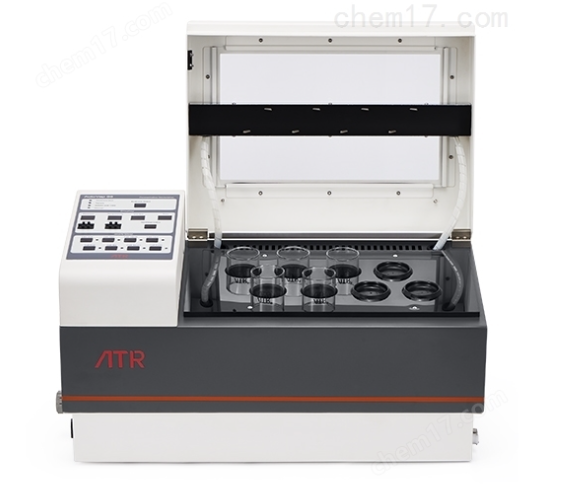
This precise quantitative ability is of crucial importance for the reproducibility of experiments. In the field of drug development, the concentration and purity of drug ingredients directly affect the evaluation of drug efficacy and subsequent clinical trials. By using a concentrator, researchers can ensure that each concentrated drug sample is highly consistent in composition and concentration, thereby ensuring the stability and reproducibility of experimental results. In environmental monitoring, quantitative analysis of pollutants requires high accuracy. The quantitative concentrator can accurately concentrate water samples or soil extracts, ensuring that each sample tested has the same concentration factor, thereby improving the accuracy and reliability of the detection results.
In addition to the advantage of precise quantification, the concentrator also has the characteristics of high efficiency and convenience. It can concentrate the sample in a relatively short time, greatly improving experimental efficiency. At the same time, the instrument has a user-friendly interface, allowing users to easily set parameters according to experimental needs without the need for complex operational skills. Moreover, many concentrators also have automatic cleaning and maintenance functions, reducing manual intervention and further lowering the possibility of operational errors.
In practical applications, the performance of the concentrator is remarkable. For example, in biochemical experiments, researchers need to concentrate biomolecules such as proteins and nucleic acids. Using a concentrator can ensure that these precious biological samples are not damaged during the concentration process, while also ensuring that the volume and concentration of the concentrated samples are highly consistent. This not only improves the success rate of the experiment, but also saves valuable experimental materials and time. In the field of food testing, concentrators can quickly and accurately concentrate food extracts, providing a reliable basis for subsequent nutrient analysis or harmful substance detection. This highly consistent concentration result makes the experimental data more convincing and provides strong technical support for food safety regulation.
In addition, the stability and reliability of the concentrator also provide guarantees for the reproducibility of the experiment. In the design and manufacturing process of the instrument, high-quality materials and advanced technology are used to ensure its stable performance during long-term operation. Even in complex experimental environments, it can maintain stable performance and provide reliable concentration support for experiments.
In summary, the quantitative concentrator has revolutionized the reproducibility of experiments with its precise quantitative ability and highly consistent concentration results. It not only solves the problems in traditional concentration methods, but also provides researchers with an efficient, convenient, and reliable experimental tool. In future experimental research, the concentrator will undoubtedly become an important aid in improving experimental quality and efficiency, promoting further development of scientific research and analytical detection technology.