-
E-mail
sales@light-physics.com
-
Phone
18938877527
-
Address
Room 1010, Kumak Building
Leifei Optoelectronics Technology (Shenzhen) Co., Ltd
Technical analysis of wavelength adjustable LED light source for precise control of light color
Date: 2025-11-24Read: 0
The wavelength adjustable LED light source achieves flexible control from monochromatic light to multi-color mixed light by dynamically adjusting the wavelength range of the output light, and is widely used in fields such as optical communication, biomedicine, agricultural planting, and stage lighting.Its core regulatory technologies are mainly divided into the following three categories:
1、 Multi chip combination dimming: wavelength superposition with discrete control
By integrating multi-color LED chips such as red, green, and blue (RGB) or red, yellow, and blue (RYB), combined with independent driving circuits, wavelength mixing adjustment can be achieved. For example, in stage lighting, by adjusting the brightness ratio of RGB chips, continuous color temperatures from warm white (2700K) to cool white (6500K) can be synthesized, or any colored light can be generated. The advantage of this technology lies in its wide color gamut coverage, but it needs to solve the problem of multi chip heat dissipation balance to avoid color cast caused by temperature differences.
2、 Current driven dimming: Nonlinear correlation between current and wavelength
The emission wavelength of some LED chips will shift with the variation of driving current. For example, some blue LEDs have a dominant wavelength of 450nm at low currents, which may shift to 460nm as the current increases. By precisely controlling the current magnitude, wavelength tuning can be achieved. However, this method requires high material properties for the chip and has a limited wavelength offset range, making it mostly used in scenarios where wavelength accuracy is not high.
3、 Temperature controlled dimming: wavelength drift under thermal effects
The emission wavelength of LED chips is temperature sensitive, and an increase in temperature can cause a wavelength redshift. For example, a certain infrared LED has a wavelength of 850nm at 25 ℃, which may shift to 870nm when the temperature rises to 85 ℃. By integrating a temperature control module, the chip temperature can be adjusted in reverse to achieve active wavelength control. This technology requires a balance between temperature control energy consumption and wavelength stability, and is suitable for laboratory level precision measurement scenarios.
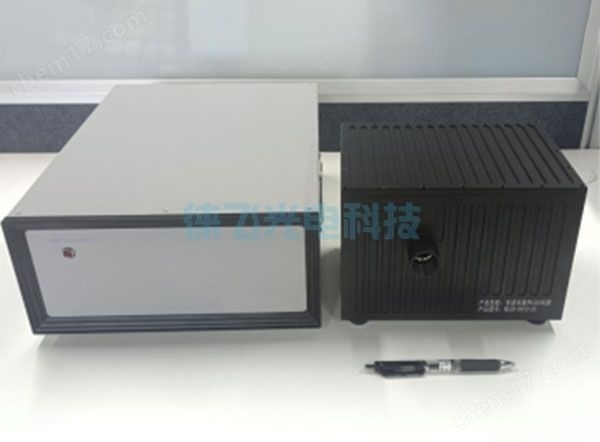
Application scenarios and future trends
Wavelength adjustable LED light sources have penetrated into multiple fields: in agriculture, by adjusting the ratio of 660nm red light to 450nm blue light, the efficiency of plant photosynthesis can be optimized; In the medical field, the combination of 630nm red light and 850nm near-infrared light can promote wound healing. In the future, with the integration of quantum dot materials and Micro LED technology, wavelength modulation will develop towards higher precision and wider range, while combining AI algorithms to achieve adaptive light environment control, opening up new paths for intelligent lighting and healthy phototherapy.