-
E-mail
sales@light-physics.com
-
Phone
18938877527
-
Address
Room 1010, Kumak Building
Leifei Optoelectronics Technology (Shenzhen) Co., Ltd
Key Technologies of Perovskite Spin Coating Monitoring System
Date: 2025-09-25Read: 1
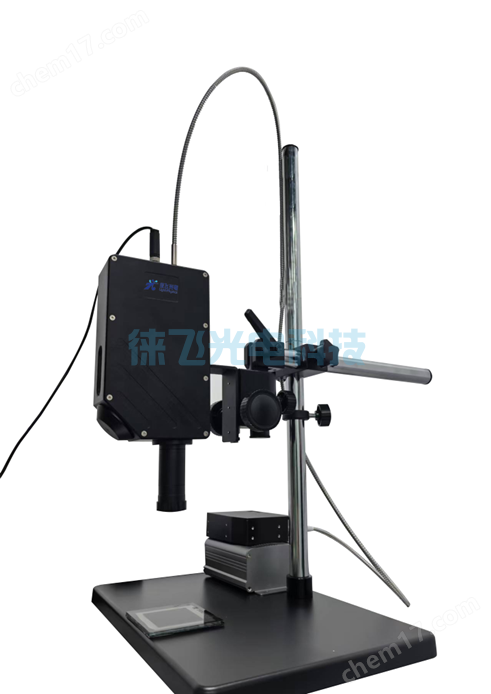
In the research and production of perovskite solar cells, spin coating is one of the most critical process steps, and the spin coating monitoring system is the key equipment to ensure the uniformity and repeatability of the film quality. This system is changing the traditional process mode that relies on experience operation through real-time monitoring and feedback control, and promoting the industrialization of perovskite photovoltaic technology.
1. Real time multi parameter monitoring system
The advanced perovskite spin coating monitoring system integrates multiple sensing technologies: a high-speed CCD camera captures the dynamic process of liquid film spreading in real time, a laser interferometer measures film thickness changes, an infrared thermal imager monitors substrate temperature distribution, and a humidity sensor tracks environmental changes. The system records the changes in contact angle, solvent evaporation rate, and film uniformity during the spin coating process at a collection rate of thousands of frames per second, generating a four-dimensional data matrix in time and space. By capturing key phenomena such as the "coffee ring" effect and Marangoni convection in real-time during the film formation process, direct basis is provided for process optimization.
2. Intelligent feedback control system
Modern monitoring systems use adaptive control algorithms to achieve dynamic regulation through executing mechanisms. When abnormal film thickness is detected, the system can adjust the speed curve in real time (precise control within the range of 100-6000rpm); When it is found that the drying is too fast, the solvent vapor compensation device will automatically start; When defects are detected, the air knife intervention system is triggered immediately for repair. This closed-loop control keeps the uniformity of film thickness within ± 5nm, far superior to the ± 30nm fluctuation of traditional open-loop processes.
3. Data analysis and process optimization
The system has built-in machine learning algorithms to deeply mine historical process data and establish a mapping model between raw material characteristics, process parameters, and film quality. By comparing the film-forming patterns under different formulations, concentrations, and environmental conditions, automatically recommend the optimal process window. The intelligent diagnostic function can identify ten common defects (such as holes, cracks, uneven crystallization), trace the causes of defects, and provide specific parameter adjustment suggestions.
4. Industrial application value
In the production of perovskite photovoltaic modules, the perovskite spin coating monitoring system ensures consistency in large-area film formation (supporting up to 6th generation line sizes), reducing the fluctuation range of cell efficiency from 1.5% to within 0.3%. On the R&D side, the system has accelerated the process of developing new formulas, shortening the traditional process optimization that required weeks to just a few days. At present, advanced systems can monitor 12 workstations simultaneously and process over 300 pieces per hour, meeting the needs of large-scale production.
5. Technological development trends
The next generation of monitoring systems is developing towards higher precision and multifunctional integration: the integration of spectroscopic ellipsometers enables synchronous analysis of film thickness and optical constants, the addition of crystallinity evaluation function in terahertz detection modules, and the autonomous optimization of process parameters through artificial intelligence algorithms. At the same time, the interconnection between the system and other process equipment such as glove boxes and vapor deposition equipment is building a complete perovskite intelligent manufacturing system.
As a key bridge connecting laboratory research and industrial production, the perovskite spin coating monitoring system significantly improves the preparation level and repeatability of perovskite films by transforming traditional "black box" operations into transparent and controllable digital processes. With the continuous improvement of monitoring accuracy and intelligence, this system will continue to promote the industrialization of perovskite photovoltaic technology.