-
E-mail
info@aoxuzhaochen.com
-
Phone
18810818194
-
Address
5th Floor, Building 22, Xingyuan High tech Industrial Park, Yanjiao High tech Zone, Sanhe City, Langfang City, Hebei Province
Langfang Aoxu Zhaochen Instrument Co., Ltd
What is a liquid cooling distribution unit? Introduction to Liquid Cooling Distribution Unit
Date: 2025-08-22Read: 1
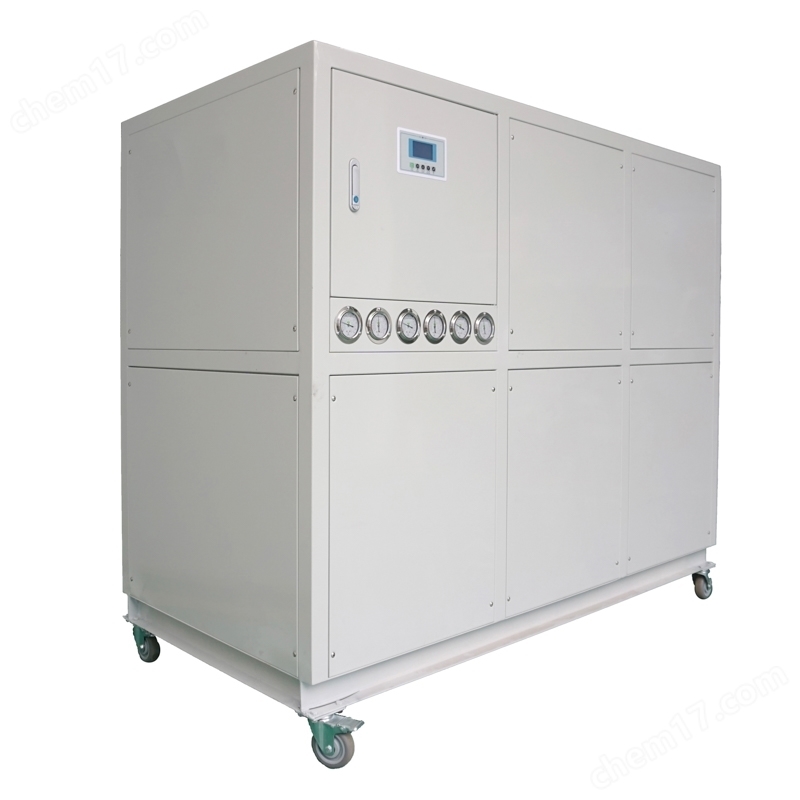
The liquid cooling distribution unit is the "heart" or "hub" of the liquid cooling server system. It is located between the infrastructure of the computer room and the liquid cooled servers inside the IT cabinet. Its core function is to accurately and reliably provide cooling fluid to the servers and remove the heat generated by the servers.
You can compare it to:
• Data center level: Indoor units of central air conditioning.
• Human circulatory system: heart (pump) and kidneys (filter, regulate).
Household water heater: responsible for controlling water flow, temperature, and pressure, providing services to various water usage points.
Why do we need liquid cooled distribution units?
With the popularization of AI computing, high-performance computing, and high-density servers, the power consumption and heat generation of chips have sharply increased, and traditional air cooling is approaching its heat dissipation limit. Liquid cooling has become an inevitable choice due to its much higher thermal conductivity than air. The liquid cooling distribution unit plays an important role in it:
1. Interface conversion and isolation: Separate the "primary side" cooling cycle provided by the computer room infrastructure (usually a cycle with lower temperature and different water quality requirements) from the "secondary side" cooling cycle connected to the servers inside the cabinet. One side water may be impure or corrosive, and there is a risk of directly entering expensive servers. CDU achieves heat exchange through plate heat exchangers without mixing liquids, protecting the precision waterway on the server side.
2. Flow and pressure control: Through built-in pumps and valves, stable and controllable coolant flow and pressure are provided for each cabinet and even each server computing node, ensuring that all servers receive uniform and effective cooling.
3. Temperature regulation: Monitor and regulate the temperature of the coolant delivered to the server to maintain it within the ideal working range, ensuring heat dissipation efficiency and preventing condensation caused by low liquid temperature.
4. Monitoring and Management: As an intelligent management node, it monitors key parameters of the system in real-time, such as flow rate, temperature, pressure, liquid level, leakage, etc., and uploads the data to the data center management system through network interfaces to achieve early warning and remote control.
5. Provide redundancy and reliability: Typically equipped with redundant pumps, power supplies, and controllers, the cooling system can continue to operate in the event of a single component failure, ensuring stable server operation.
Main components:
| component | Functional Description |
|---|---|
| Pump set | The power source of the system drives the coolant to circulate in the secondary side closed-loop circuit. Redundant design is often used. |
| Plate heat exchanger | Core heat exchange components. The coolant on the primary and secondary sides exchanges heat here, but is physically isolated. |
| Control system | Including controllers, sensors (temperature, flow rate, pressure, dew point, liquid level), and actuators (valves, frequency converters). It is the 'brain' of CDU. |
| Liquid storage tank/expansion tank | Contains coolant that undergoes volume changes due to thermal expansion and contraction, while maintaining stable system pressure and replenishing water. |
| Filter | Filter possible particle impurities in the secondary circuit to protect the server cold plate and water circuit from blockage. |
| Distribution unit | Power the CDU's own pumps, controllers, and possibly integrated cabinet PDUs. |
| Leakage detector | Detect whether there is liquid leakage inside the CDU or at the bottom of the cabinet, and promptly sound an alarm. |
| Human computer interface | Local touch screen, used for displaying status, setting parameters, and viewing alerts. |
workflow
1. Primary side circuit (machine room side): Low temperature cooling water from the machine room dry cooler or chilled water flows into the primary side of the plate heat exchanger.
2. Secondary side circuit (server side): Pump driven dedicated coolant flows through the secondary side of the plate heat exchanger, where it is cooled by the cold water on the primary side.
3. Coolant distribution: The cooled secondary liquid is distributed to various servers inside the cabinet through quick couplings and hoses. The liquid flows through the cold plate inside the server, directly absorbing the heat generated by CPU/GPU and other heating elements.
4. Heat recovery: The coolant that absorbs heat and becomes hot returns to the liquid cooling distribution unit.
5. Heat exchange: The hot coolant flows through the plate heat exchanger again, transferring heat to the cold water on the primary side, and is cooled by itself, completing a cycle.
This process continues continuously, efficiently dissipating the heat generated by the server.