-
E-mail
18618173207@163.com
-
Phone
18618173207
-
Address
2-3-101, Beiqing Creative Park, Life Science Park, Beiqing Road, Changping District, Beijing
Lanbeishi (Beijing) Technology Co., Ltd
What is a drug stability test box
Date: 2025-11-17Read: 0
1、 Equipment definition and core positioning
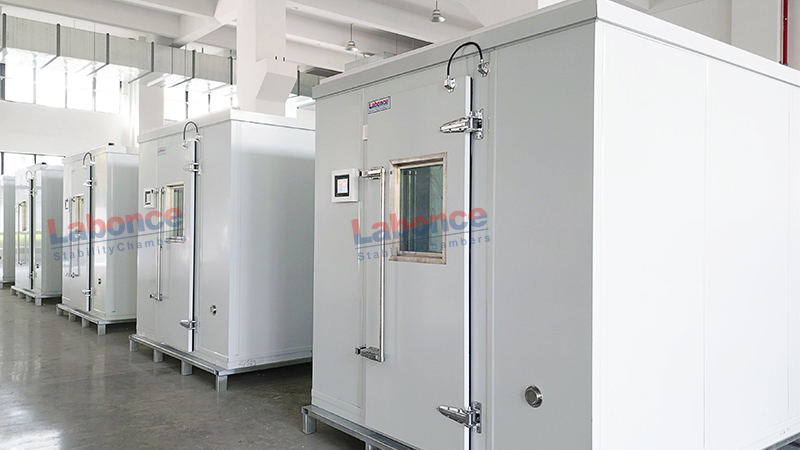
As a key testing equipment in the pharmaceutical industry, the core function of the drug stability test chamber is to simulate the environmental conditions that may be encountered throughout the entire life cycle of the drug. By accurately controlling key parameters such as temperature, humidity, and light, it provides a controllable testing environment for drug stability assessment. Its original design intention revolves around drug quality assurance, which needs to meet the environmental adaptability verification requirements of drugs from research and development to post market storage and transportation. It is an important technical support for connecting drug quality standards with practical application scenarios.
2、 Main functions and quality assurance value
In the drug development stage, the device can simulate the environmental characteristics of different climate regions (such as high temperature and high humidity in the southern region, low temperature and dry winter in the northern region), observe the content of active ingredients, changes in impurities, and appearance stability of drugs, and provide core experimental data for determining the expiration date of drugs; In the production quality control process, it is necessary to conduct sampling tests on each batch of products to verify whether the production process stability and packaging sealing meet the standards, in order to avoid drug deterioration caused by environmental factors; In the drug registration application, the generated test report is an important basis for regulatory authorities to evaluate the safety and effectiveness of drugs, directly affecting whether the drug can be approved for marketing.
3、 Key technical parameters and regulatory requirements
From the perspective of technical indicators, the temperature control range usually covers-10 ℃~65 ℃, in actual operation, it is necessary to ensure a control accuracy of ± 0.5 ℃ to meet different testing requirements such as high temperature acceleration test (such as 40 ℃± 2 ℃), low temperature stability test (such as 2 ℃~8 ℃ refrigeration conditions), etc; The humidity control range is 20% RH~98% RH, and the accuracy needs to be maintained at ± 3% RH. It can simulate scenarios such as wet warehouses and dry transport carriages; The lighting system must comply with the pharmacopoeia regulations, with adjustable light intensity within the range of 0-6000lx. It is mainly used to investigate the degradation of photosensitive drugs (such as some antibiotics and vitamin preparations) under light conditions, in order to avoid a decrease in efficacy or the production of harmful substances due to light exposure.
4、 Applicable scenarios and industry applications
This device is widely used in the R&D laboratories and quality testing centers of pharmaceutical companies, and is also an important equipment for drug inspection agencies (such as drug testing institutes at all levels) to conduct drug sampling and quality review; In the drug development projects of research institutes, it is commonly used for stability research of new formulations (such as biologics and sustained-release formulations), helping to overcome the quality maintenance challenges of formulations in complex environments. In practical applications, equipment needs to be calibrated and maintained regularly to ensure the accuracy of parameter control, avoid the reliability of test results affected by equipment errors, and thus ensure the quality and safety of drugs in market circulation.