-
E-mail
sales@care-mc.com
-
Phone
18702200545
-
Address
Taikang Zhida Industrial Park, Jinnan District, Tianjin
Kyle Measurement and Control Test System (Tianjin) Co., Ltd
Research on Multimodal Wrinkle Behavior of Flexible Thin Films under Triaxial Mechanical Loading
Date: 2025-12-16Read: 1
The design and application of artificial surface micro nano structures have received widespread attention in the past few decades. Although traditional lithography or template strategies have advantages such as high accuracy and good repeatability, they also have inherent limitations such as special equipment, high cost, and low efficiency. In contrast, the self-assembly method based on stress driven surface instability provides a low-cost, efficient, and reliable alternative path to rapidly generate ordered micro nano structures over a large area without the need for traditional lithography tools and masks. However, the folded structures generated by existing methods usually have a single morphology and are uniformly distributed on the surface, making it difficult to achieve large-scale multimodal control in a single sample. Therefore, Professor Hu Liang's team from Hangzhou University of Electronic Science and Technology and Professor Ni Yong's team from University of Science and Technology of China proposed a simple and efficient method for preparing controllable multi-mode wrinkles by applying three-axis mechanical loading.
This study employed a custom designed three-axis (120 ° angle) stretching device to apply uniform pre strain to triangular flexible substrates (such as PDMS, Ecoflex), followed by the formation of a rigid surface layer on the pre stretched substrate using techniques such as magnetron sputtering or ultraviolet ozone (UVO) surface modification; By synchronously releasing triaxial pre strain, the thin film is induced to undergo compression instability, thereby forming a wrinkled structure (Figure 1). Further utilizing optical microscopy and atomic force microscopy (AFM), the morphology, size, and evolution of folds with position (from corner to edge) were systematically characterized (Figure 2), and combined with finite element simulation and theoretical analysis, the stress distribution characteristics of triangular thin films under triaxial compression were revealed (Figure 3).

Figure 1 Preparation of Multimodal Wrinkles under Triaxial Strain

Figure 2 Wrinkle morphology of two different film systems at different positions (corners, edges, and centers)

Figure 3 Finite Element Analysis Results
The experimental results showed that the fold morphology exhibited significant position dependence: from straight striped folds in the corners of the sample, it gradually evolved into maze like folds in the central region, and finally transformed into wavy folds near the edges (Figure 4). The wavelength and amplitude of wrinkles increase approximately linearly with the increase of film thickness, but their basic mode characteristics remain unchanged. Finite element simulation confirms that this multi-mode distribution originates from the continuous variation of stress anisotropy inside the thin film with position under triaxial loading. Further functional performance testing shows that different modes of folds exhibit unique application potential: the frictional force of stripe and ripple folds shows strong anisotropy (Figure 5), while the frictional force of maze folds shows isotropy (Figure 6). At the same time, wrinkles at different positions produce vastly different laser diffraction patterns, and these optical properties can be reversibly and stably controlled through mechanical strain. These results collectively indicate that the multi-mode wrinkles prepared using triaxial strain have important application potential in the fields of intelligent surface engineering and tunable devices (Figure 7).

Figure 4 Position dependence of multimodal folds

Figure 5 Friction characteristics of striped folds
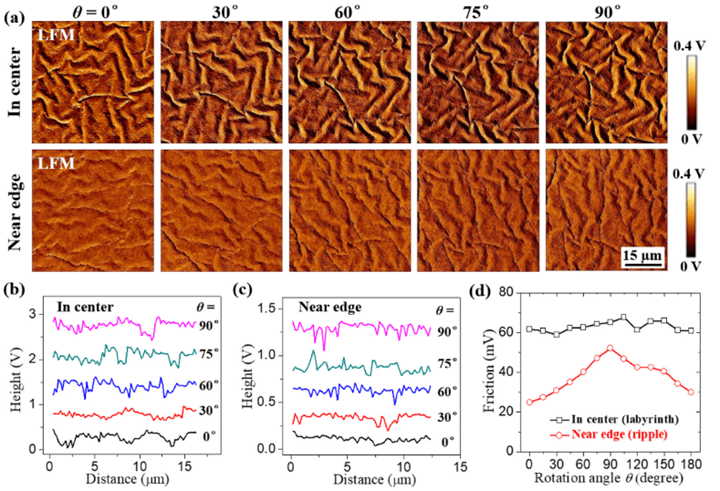
Figure 6 Friction characteristics of labyrinth and corrugated folds
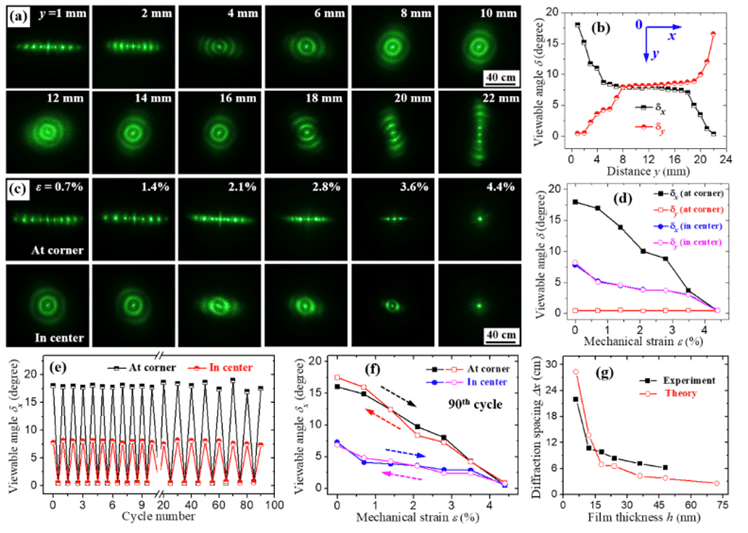
Figure 7 Optical characteristics of multimode wrinkles
In summary, this study developed a simple method based on triaxial strain loading for preparing controllable multi-mode wrinkles in flexible thin film systems. The core advantages of this method lie in its simplicity, efficiency, and universality, without the need for complex photolithography or template processes. It has broad application prospects in fields such as stretchable electronics, elastic optics, surface engineering, and biomimetic devices. The current method is implemented on a two-dimensional planar substrate. However, many practical application scenarios, such as wearable devices and robot joints, involve complex three-dimensional surfaces. How to adapt this three-axis loading strategy to surfaces and predict their wrinkle patterns can be further studied in depth.