-
E-mail
yyang@industrialphysics.com
-
Phone
15821974398
-
Address
Room 803, Building 1, Lane 88, Shengrong Road, Pudong New Area, Shanghai
Industrial Physics
Structural composition and application field analysis of friction coefficient meter
Date: 2025-12-03Read: 0
A friction coefficient meter is a device used to measure the ratio of frictional force to normal force between surfaces of objects. The coefficient of friction is an important parameter for measuring the frictional resistance between two surfaces in contact, which directly affects the wear, heat generation, energy efficiency, and safety of mechanical components. Therefore,coefficient of friction testerIt has important application value in multiple fields such as materials science, mechanical engineering, and automotive industry.
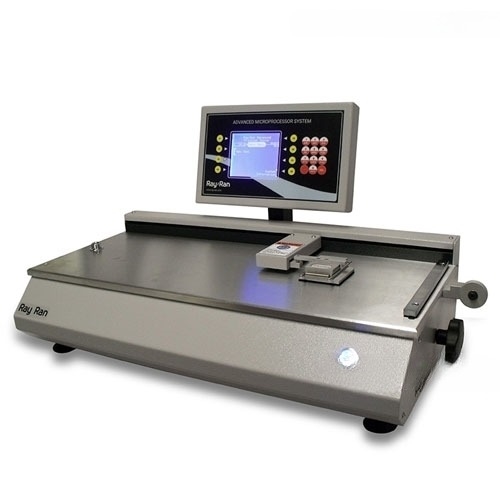
1、 Components
1. Loading device: This device is used to apply a known normal force. The loading device generates a stable load through an electric motor or pneumatic device. The magnitude of the normal force can be adjusted according to experimental requirements.
2. Friction force measurement sensor: Friction force sensor is one of the core components used for real-time measurement of friction force. Commonly used sensors include strain gauges, force sensors, and pressure sensors, which can accurately record changes in friction force.
3. Sliding table and sample table: The sliding table provides a sliding surface for the friction pair, while the sample table places the material sample to be tested. The sample stage generally provides smooth or rough contact surfaces depending on the material, simulating real working conditions.
4. Data acquisition and analysis system: Friction and normal force data are collected by sensors and sent to the data acquisition system for processing and analysis. Users can adjust experimental parameters as needed, obtain experimental data, and conduct subsequent optimization designs based on data analysis results.
2、 Application Fields
1. Materials research and development: Friction coefficient meters are widely used in the field of materials science to study the friction characteristics between different material surfaces. By measuring the friction coefficients of various materials under different load, temperature, and humidity conditions, engineers can choose suitable materials for different application scenarios, such as bearings, seals, brake pads, etc.
2. Automotive industry: Used in the manufacturing process of automobiles to test the friction performance of automotive components such as brake pads, clutches, tires, etc. under different conditions. The friction coefficient directly affects the braking performance, handling performance, and fuel efficiency of the vehicle. Through testing, automotive engineers can optimize the design and material selection of components, enhancing the overall performance and safety of the vehicle.
3. Mechanical Engineering and Lubrication Research: In the process of mechanical design and operation, the coefficient of friction has a significant impact on the friction and wear of machine components. Used in mechanical engineering to test the friction performance of mechanical components, in order to optimize lubrication conditions, reduce friction losses, and extend equipment service life. It is also widely used in the research and development of lubricants, testing the friction performance of different lubricants under specific working conditions.
4. Aerospace: The aerospace industry has very strict requirements for friction coefficient, especially in harsh working conditions such as high temperature, low temperature, and high-speed motion. It can also test the friction characteristics of key components such as spacecraft, engines, and aircraft in different environments. Through these tests, engineers can ensure the safety, reliability, and efficiency of aerospace vehicles.
The friction coefficient meter is an important measuring tool that plays a crucial role in multiple industry fields. It can provide accurate friction performance data, helping engineers and researchers make scientific decisions in material selection, component design, lubrication optimization, and other aspects. With the continuous progress of tribology and materials science, their application scope will become more extensive, which is of great significance for improving product performance, reducing energy consumption, and extending equipment service life.